How to Choose a Hospital
- Do your homework. Some hospitals have Yelp reviews. There is also a relatively new website from the Centers for Medicare and Medicaid Services allowing comparisons of hospitals, and U.S. News & World Report publishes annual state-by-state listings of the best hospitals. Check doctor and nurse certifications and any special partnerships that add depth to patient health services. For example, VHC’s partnership with the Mayo Clinic Network gives it access to world-class clinicians and research.
- Choose a hospital that has taken significant steps to avoid COVID. Most hospitals are generally safer today from infections as a result of COVID. The Inova Health Care System in Northern Virginia just required its 18,000 healthcare workers to get vaccinated.
- Talk to your doctor or healthcare providers. Fnd out which hospitals they work with, and ask which hospitals give the best care for your condition.
- Consider the basics. Make sure the hospital you like takes your insurance. And if you want a hospital close to your family, make that an important factor, too.
- Choose carefully. This could literally be a life or death decision. If you went to a subpar hospital, you might be coming back soon depending on either the service from the hospital or the diagnosis. The average cost of readmission is higher than the original admission for two-thirds of the types of principal diagnoses, according to the Agency for Healthcare Research and Quality. Circulatory system and digestive system diseases had higher-than-average readmission rates.
- Finally, find a hospital that commits to following up with you after you transition home so you can avoid the so-called “post hospital syndrome.” According to the New England Journal of Medicine, nearly one fifth of Medicare patients discharged from a hospital—approximately 2.6 million seniors—develop an acute medical problem within 30 days that requires another hospitalization . These readmissions result in an excess healthcare expenditure of $12 billion to $17 billion annually, and puts patients at risk for hospital-acquired infections and medical errors.

Preparing for a loved one’s return from the hospital
- Have a discharge plan in place. Ideally, this happens as soon as possible after the loved one is admitted. That includes the evaluation of the patient by qualified personnel; referrals to a home care agency and/or appropriate support organizations in the community; and arranging for follow-up appointments or tests.
- Move obstacles out of the way in any heavily trafficked area of the home. That includes not only furnishings, but electric cords, area rugs, or other objects that could cause a trip or fall. Change doorknobs from the standard round one to an easier-to-use lever. Consider buying or leasing an adjustable hospital bed.
- Make the primary patient area user-friendly. All notepads, TV remotes, and other devices—especially the cell phone—should be in one location, preferably on a roller table.
- Dedicate the entire environment outside of the bedroom to that person’s need to get around, relax on the couch, or recline in a special chair with extra pillows. Try to eliminate or work around stairs, or cover them with a customized wheelchair ramp.
- Consider hiring a service to help with difficult tasks such as bathing, dressing, and personal hygiene. Telephone calls from knowledgeable professionals to patients and caregivers within two days after discharge help anticipate problems and improve care at home.

Why now is the time to book your non-emergency elective procedure
- Thanks to COVID, hospitals are generally cleaner than ever. The pandemic has “laid bare some of the most entrenched problems in healthcare,” according to the Emergency Care Research Institute (ECRI), including healthcare supply-chain issues related to PPE and an interest in patient-centered reform. Healthcare facilities have been more closely scrutinized than ever before for infection risks, and are still following COVID protocols (masks, social distancing) in a renewed focus on their culture of safety. The pandemic also inspired research into pandemic preparedness and planning by creating a robust, long-term national preparedness strategy—such as modernized data and reporting infrastructure, and a fully developed vision for the Strategic National Stockpile.
- New ways of conducting the business of healthcare were rolled out during the pandemic. That includes the use of Zoom for visits with doctors, as well as new ideas for helping patients in remote rural settings. For example, patients in West Virginia who have had fingertip amputations can now go to a hospital website, take a picture of their hand, and have a highly functional fingertip created by 3-D printing mailed to them.
- Waiting can mean a less effective outcome. Studies in patients with chronic pain have shown that prolonged wait time for elective orthopedic surgeries can affect postoperative clinical outcomes by delaying improvements in pain and function due to physiological variables such as muscle mass deterioration, according to Pain Reports. The study also projected 50 percent greater odds of worse outcomes when orthopedic surgery is delayed by more than 6 months—far less time than thousands of patients have already waited.
- What if you tested positive for COVID and now want to schedule an elective procedure? Guidelines from the American Society of Anesthesiologists recommend a wait of four weeks for an asymptomatic patient; six weeks for a symptomatic patient who did not require hospitalization; eight to 10 weeks for a symptomatic patient who is diabetic, immunocompromised, or hospitalized; and 12 weeks for a patient who was admitted to an intensive-care unit due to COVID infection.
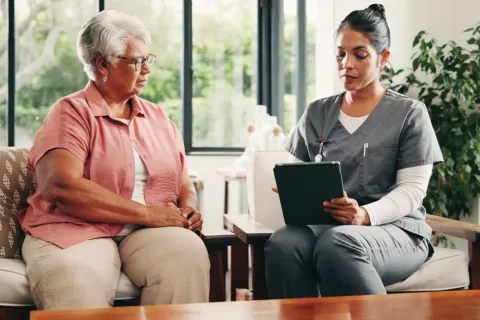
Feature image, spotmatikphoto/stock.adobe.com
This story originally ran in our August issue. For more stories like this, subscribe to our monthly magazine.