
The life of Peter Chang, the highly acclaimed chef and owner of 18 DMV-area restaurants, sounds like something you’d see on the big screen.
Chang, 61, grew up in Wuhan, China, with no electricity and few resources, but became a professional chef in 1981 and went on to become head chef for the Chinese ambassador in Washington, DC. Then, like a climactic scene from a movie, he snuck away from the Chinese Embassy with his wife, Lisa, and daughter, Lydia, in 2003, evading Chinese bureaucrats and American immigration for years. He was supposed to leave the U.S. once his contract at the Chinese Embassy was up and head back to China, but Chang and his family saw more opportunity by staying in the United States.
Under cover of assumed names, the master chef jumped from town to town and Chinese restaurant to restaurant. He couldn’t risk detection (and deportation), so Chang lived in the shadows for years.
“It had to be the most difficult time in my career when I first left the embassy, until maybe 2010,” Chang says. “I used the first seven years to work in a lot of restaurants in different states and cities, trying to understand the market. I wasn’t sure if the U.S. market liked what I cooked at the beginning. I felt very lost as well, not sure if there was a home for me in the U.S., where to settle down and settle in.”
(Chang’s limited English means others translate to and for him. For this article, his daughter, Lydia, acted as translator.)
Chang’s concern over whether Americans would embrace his style of cooking was short-lived; in fact, that talent may have garnered too much attention. Foodies followed the innovator as he leapfrogged restaurants, and they marveled at his distinct skills.
“I found his cooking in those days to be electric,” says journalist Todd Kliman, who was the first to write about Chang. “Really focused and defined, and his use of spice, the varied effects he achieved, was revelatory to me.”
Akin to a search for Bigfoot, Kliman religiously hunted the elusive Chang from kitchen to kitchen, expounding on Chang’s talent in a column he wrote for the Washington City Paper. He also crafted a 9,000-word piece for The Oxford American in 2010, which came out the same week Calvin Trillin wrote a Chang story in The New Yorker.
“That twofer made P.C. into a phenomenon and turned him into an empire-builder, which tarnished his rep as a chef and cook,” Kliman writes in an email.
Looking back, Chang calls those first years after leaving the embassy “extremely challenging, winding, long, and at times disheartening,” but the experience forged a connection with diners that has proven contagious.
“The one thing that brought me comfort was meeting a diverse array of diners along the way. Their support and pursuit, along with their influence on various platforms, helped me find my true home,” he says. “This is the joy of having these fans, and I deeply felt the dignity and value of being a chef in the United States.”
Creating a Conglomerate
In light of such impressive media attention for a guy who habitually skipped town, Chang finally set down culinary roots in Charlottesville in 2009, opening Taste of China — and presumably facing U.S. immigration issues. (According to his daughter, even today his green card approval has been pending for two years: “All we can do is wait.”)
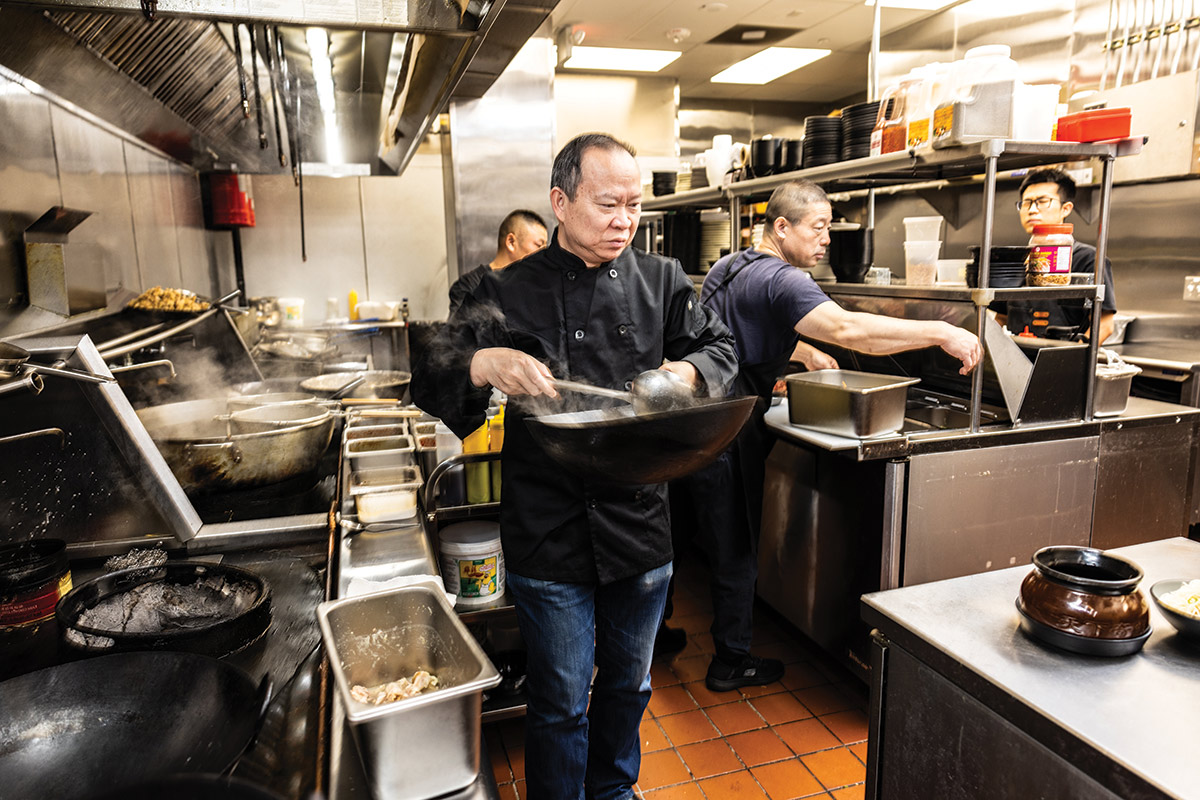
From there, Chang partnered with chef and restaurateur Gen Lee to open Peter Chang’s China Grill, also in Charlottesville. Next, Chang hit the ground running, gaining momentum with a dining empire that displays rare qualities in today’s culinary landscape. For those keeping score at home, there are 18 restaurants in Chang’s dossier, with five in Northern Virginia. The others include dining destinations across Virginia, Maryland, and Connecticut.
“With each new restaurant, the serial restaurateur maintains the high standards for which he is known,” says The Washington Post food critic Tom Sietsema. “The Chang brand stands for consistency — one of the industry’s biggest challenges — and I like that each of his many establishments has its own personality.”
The Faces of Chang
Just as Disney devotees make pilgrimages to the legendary theme parks worldwide, Chang fans visit his Sichuan-laden eateries across the DMV and beyond. Though diners are bound to find a cohesive culinary dynamic among his restaurants, various X factors set each apart.
Mama Chang in Fairfax, for instance, puts Chang women front and center, celebrating the culinary skills of Peter’s grandmother, mother, wife, and daughter with a focus on Hunan, Szechuan, Hubei, and home-style Chinese cooking. (Confesses Lydia: “Believe it or not, my grandma is the best chef in my family.”) In August, The New York Times named Mama Chang one of the 25 best restaurants in DC and it was among the Top 10 restaurants on Northern Virginia Magazine’s Best Restaurants list for 2024.
“The chef’s family is steeped in the business, which helps,” Sietsema says. “Let’s not forget that his wife, Lisa Chang, is the one who created what might be the collection’s most famous dish, the scallion bubble pancake.”
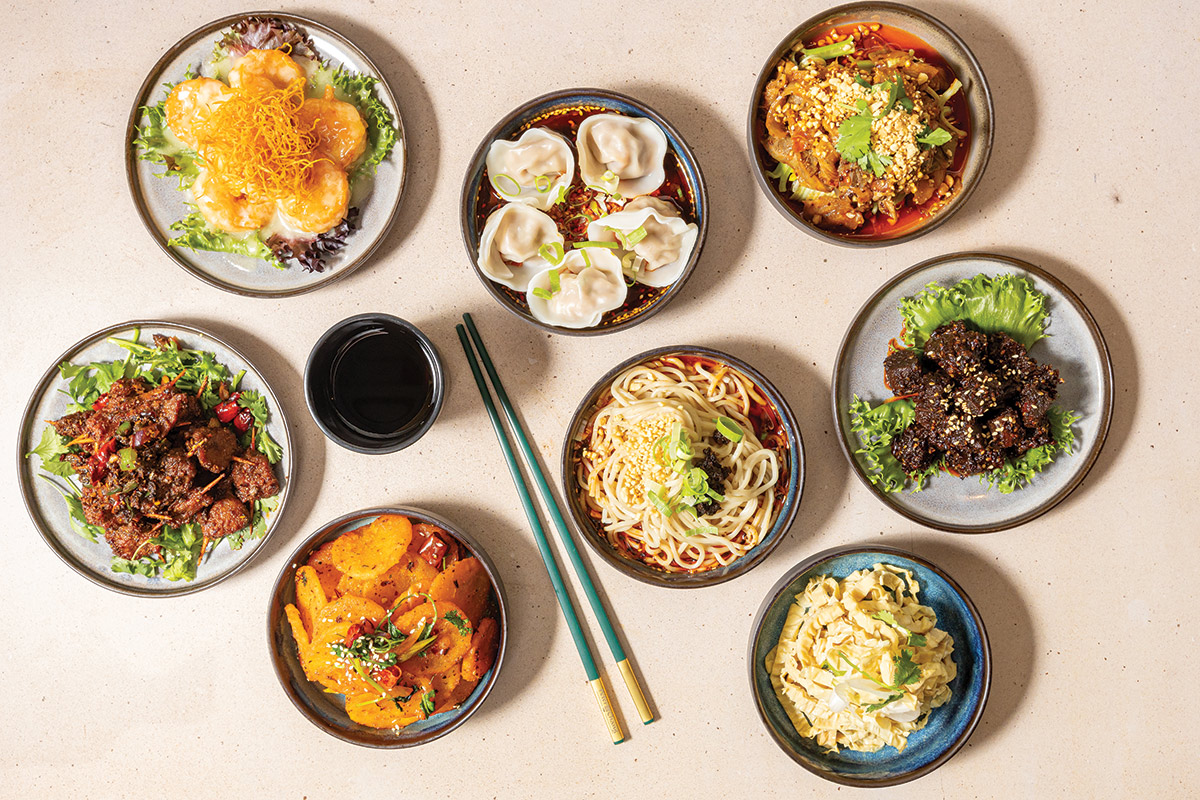
The chef’s newest restaurant, Peter Chang Herndon, opened in late September, offering tapas-style and dim sum dining. The “let’s bring a crowd and order lots of plates” mindset encourages fellowship and family gathering. Half or whole orders of Chang’s signature Peking Duck (he says it’s his favorite dish to cook) are available as well.
Family Ties
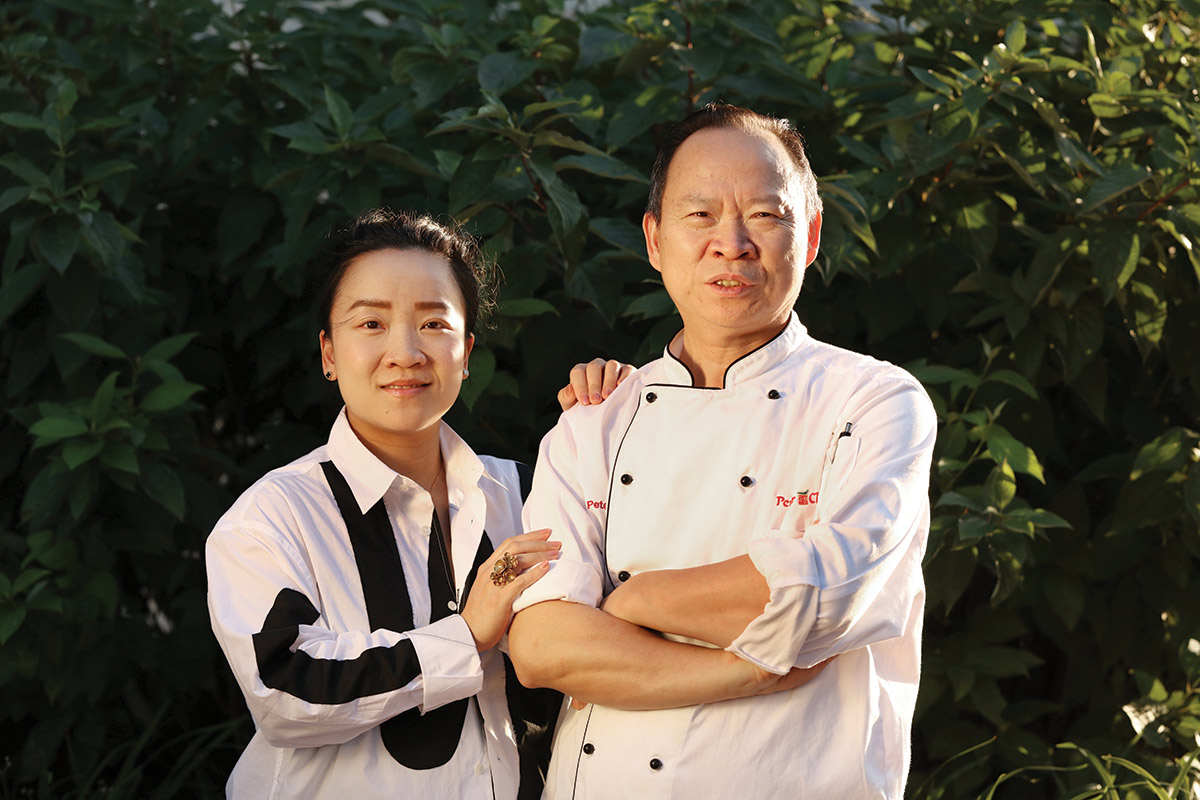
In Chang’s growing restaurant group, daughter Lydia, 36, is a co-owner and key player. She works on Chang’s newer restaurant concepts, like Mama Chang, Q by Peter Chang, and NiHao Arlington.
“My goal is to find the market needs in terms of demand, and make sure that we are creating the supply to meet the demands,” she says. “There’s a lot of interior design, there’s a lot of working with the dishes, and I think about how we can progress with the markets.”
She notes while her father was working as a chef in China and at the Chinese Embassy in DC, her grandmother took care of her in China.
“I was living with my grandma growing up and didn’t live with my parents until I moved here in 2002,” she says. Eventually, she graduated from Fairfax’s Woodson High School and King’s College in London, where she earned a bachelor’s degree in economics.
Lydia is a single mom, and her own mother, Lisa, cares for (and cooks for) her 2-year-old daughter, London, while she helps build the family business. Lisa also acts as a mediator between Peter and Lydia when the occasional business conflict flares up.
“My mom is a huge hero,” Lydia says.
Keeping Consistency
These days, Lydia’s dad darts from one eponymous restaurant to the next. In his well-traveled SUV — where he has logged over 80,000 miles in less than two years — he crisscrosses restaurants, checking on staff, delivering equipment, strengthening the kitchen, and looking for new opportunities.
“He is always looking out on the street when he drives, always interested in ‘For Lease’ signs,” Lydia says. “He makes a lot of single ideas into an actual business and an actual space.”
Chang’s restaurant group keeps expanding: He plans to open restaurants in Philadelphia and Annapolis, Maryland, in 2025. The James Beard Award finalist also invests considerable time and effort into training his chefs and creating consistency in sauces and recipes across his 18 locations. He ensures his chefs benefit from the restaurants’ success.
“I make sure that all the core staff, meaning like the general manager, our chefs, our head chefs, are all invested in the company as well, so they are equity partners,” Chang says. “Any success the restaurant, the business has, they all share a part of that.”
In the end, quality, consistency, and diversity keep Chang’s fans returning again and again.
“The most important thing is we want our guests to be adventurous and to know that Chinese cuisine comes in so many different regional cuisines,” he says. “We try to offer a different variety of regional cuisine, like the Hunan cuisine and a little bit of Hubei, which is our hometown.”
Though Chang’s compelling life story may not be available on the big screen just yet, thankfully, his award-winning cuisine is ready for Northern Virginia diners in a variety of locations. Focusing on his strengths has been a gratifying labor of love for Chang, and he readily acknowledges what helped him rise to the top.
“In nearly 24 years in the United States, as a Chinese chef who could barely speak English, I have been very lucky — truly fortunate,” he says. “I am grateful to this land for helping me find the best version of myself.”
Feature image of Peter Chang by Michael Butcher
This story originally ran in our December issue. For more stories like this, subscribe to Northern Virginia Magazine.