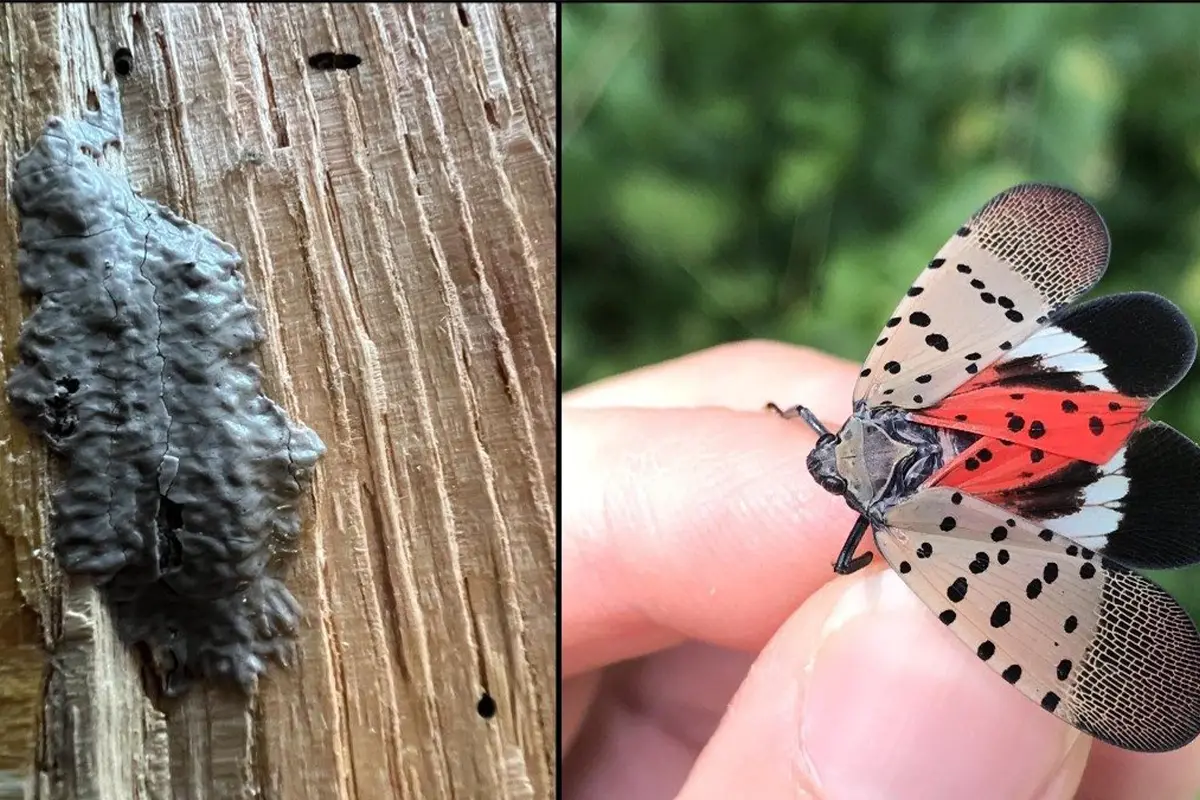
Many Northern Virginia residents have reported seeing fewer invasive spotted lanternfly this summer. But the insects are still alive and well in the region. And soon, lanternflies will begin laying eggs — possibly even in your backyard.
According to Leland Rudner with American Pest, that means you could be seeing a lot of the insects in the coming weeks.
“Adults are going to be at large this time of year. … There’ll be more flying around, there’ll be more looking for structures to move into,” Rudner says. He adds that this time of year, as well as the early emergent season when they first start to hatch, are when the pest service receives calls for lanternflies.
Egg Masses
Spotted lanternflies lay their egg masses beginning in the late summer and into the early winter, according to the Penn State Extension. Each egg mass has between 30 and 50 eggs.
The egg masses are about 1.5 inches long and are a brown-gray color, looking similar to smears of mud. They’re found on trees – often high off the ground and on the undersides of branches. They can also be found on other hard items outside, such as outdoor furniture or rocks.
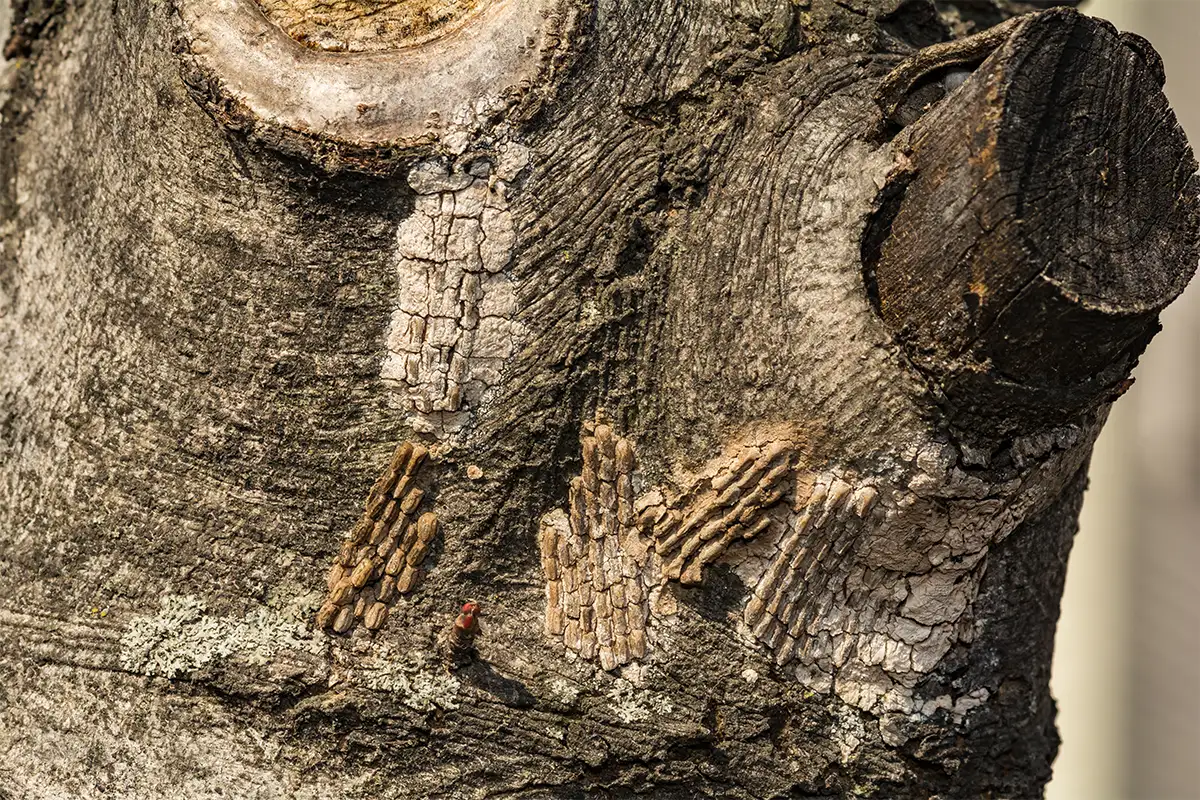
The best way to remove them is to scrape them off the tree to stop them from developing. “Scraping them off of whatever host they’re attached to … is the way to go,” Rudner says. Once you’ve scraped the eggs off, you can drop them into a plastic bag with rubbing alcohol or hand sanitizer to kill them.
Target Tree-of-Heaven
Spotted lanternflies feed on many types of plants, but their preferred meal is the tree of heaven. This invasive weed is a fast-growing deciduous tree with compound leaves.
“[The spotted lanternfly] really heavily relies on the tree of heaven in order to breed,” Rudner says. “So, I would say if you’re seeing a lot of spotted lanternflies, very likely you have a lot of tree of heaven in the area as well.”
In fact, the lanternflies’ tree of heaven diet could actually be protecting them from predators like birds or other insects.
A study published last fall led by entomologists in Penn State’s College of Agricultural Sciences found that birds were less likely to feed on lanternflies that had fed on tree of heaven. The study suggests that the plant gives the bugs a bitter taste, deterring predators.
“It just becomes a bitter taste, and [predators] tend to not like that,” Rudner says.
Removing tree of heaven is one of the most effective ways to control lanternfly populations. But it’s not as simple as just cutting it down: Unless you kill the root, it just spreads more.
“The best thing to do is cut the tree down and then remove the stump and the roots,” Rudner says. There are also chemical treatments that can help kill the plant.
Feature photo of a spotted lanternfly egg mass. left, and a mature insect by Theresa Dellinger for Virginia Tech