Consumer habits shift quickly, and the places that rely on them must be agile. Nothing made that clearer than the emergence of online shopping and the COVID-19 pandemic. Both led experts to ring the death knell for shopping malls. In fact, Coresight Research estimated in 2020 that a quarter of America’s roughly 1,000 malls would close by 2025.
But don’t cry, “Et tu, Orange Julius?” just yet. Mall owners and managers adapted. They’re filling vacant spaces with businesses that require an in-person presence. And they have embraced the concept of “retail-tainment,” a shopping industry term that describes the juxtaposition of entertainment venues such as racetracks and parkour centers with traditional mall stores.
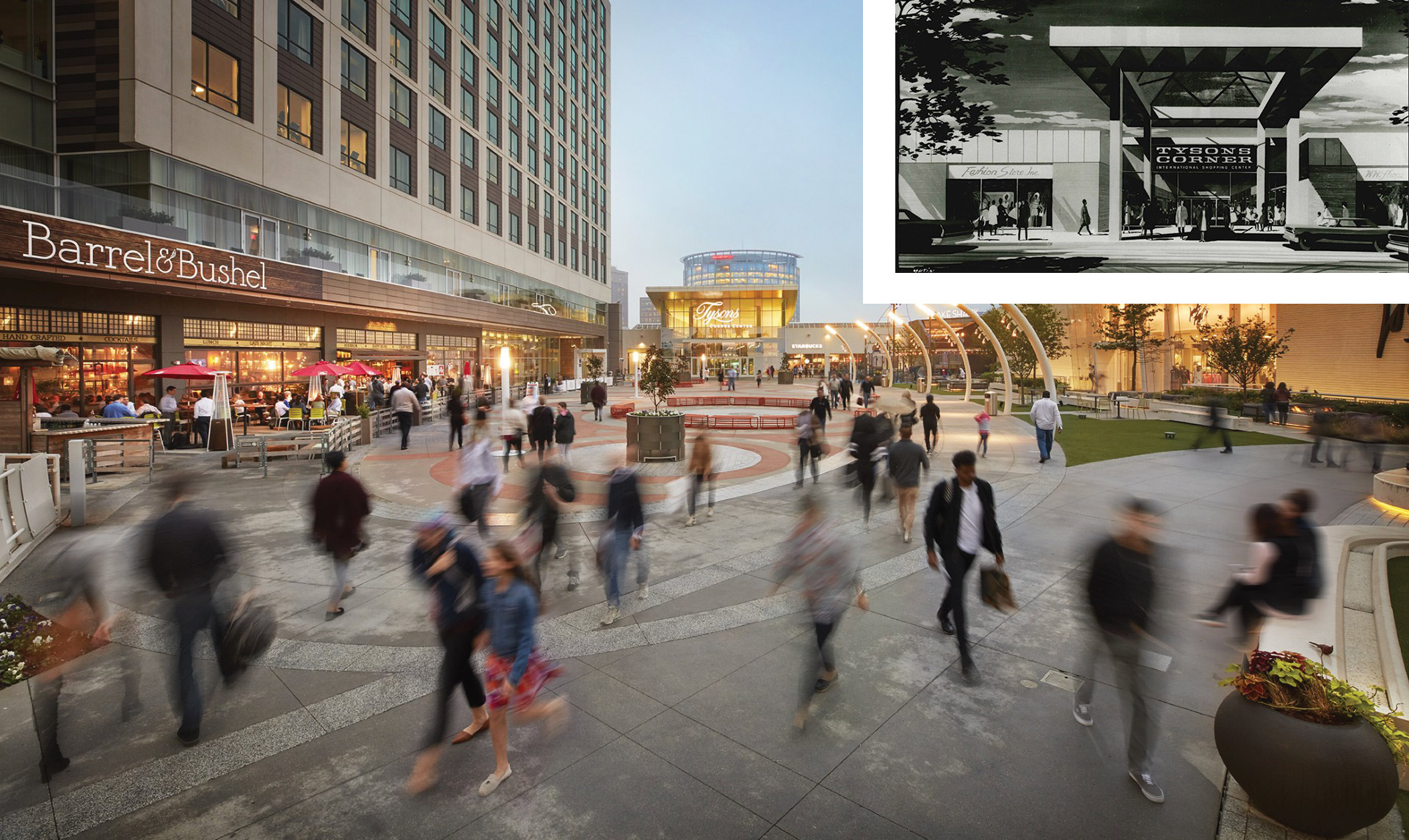
Mall property owners are also planning expansions beyond the mall footprint a la Tysons Corner Center’s 2014 to 2015 expansion, when it added a 300-room Hyatt hotel, Vita apartments, and the Tysons Tower office building.
Here’s a look at how eight local malls have adapted with the times.
Tysons Corner Center
When it opened in July 1968, Tysons was the first enclosed mall in Northern Virginia, with about 100 stores on one floor, plus anchors such as Hecht’s (which became Macy’s, and is still there). Today, the 2-million-square-foot, three-story shopper’s paradise has 300 stores, welcomes 25 million people annually, and is one of the 10 largest malls in the country. “This place is like a small city,” says Jesse Benites, director of property management at Macerich, which owns the mall. “We have everything from residents to visitors from all over the world to thousands of employees that come to work here every single day.”
One way Tysons draws in shoppers, Benites adds, is through “activations,” or limited-time, often Instagram-worthy exhibits, such as Candytopia in 2023 and the Hot Wheels Champion Experience in 2024. Coming soon to the space that was a two-story Barnes & Noble is Level99, a social gaming playground. “I think there’s a clear demand for that experience, and we’re trying to deliver on that here at Tysons,” he says.
Potomac Mills
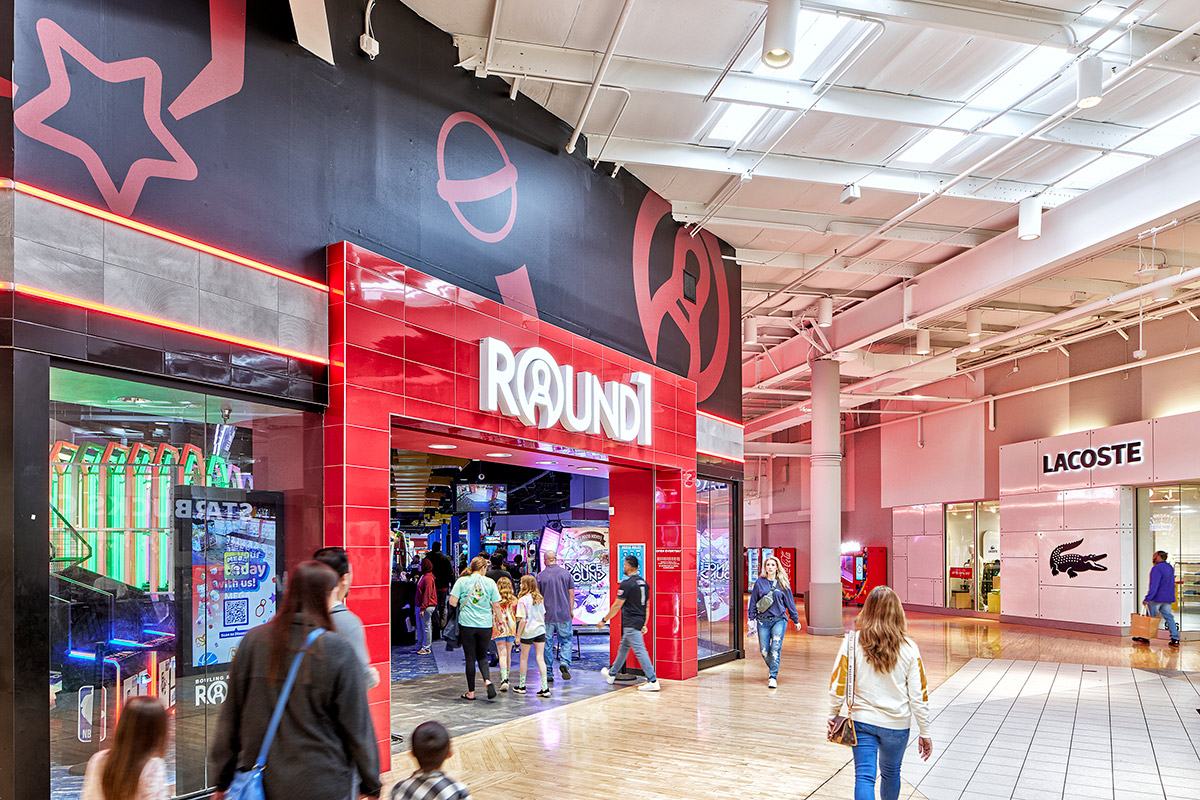
Virginia’s largest outlet mall has gone through substantial growth since opening in 1985. A year after opening, it added 550,000 square feet of retail space and an AMC movie theater. In 1993, another 400,000 square feet opened for retailers, anchored by Marshalls, JCPenney, and Burlington, then known as Burlington Coat Factory. In recent years, Potomac Mills has introduced entertainment venues, including Round1 Bowling and Arcade, which opened in 2019, and Off Limitz Adventure Park (formerly ZavaZone) in 2020. Coming this year is Slick City Action Park, an indoor slide park.
“The mall, initially known for its extensive retail options, has increasingly incorporated experiential offerings and pop-up entertainment-based attractions,” says Bethany Webb, director of marketing and business development at Simon Property Group, which owns the mall. “Today’s shoppers seek more than just retail therapy; they are looking for a comprehensive experience that combines value-driven shopping, engaging entertainment, and diverse food options.”
Tysons Galleria
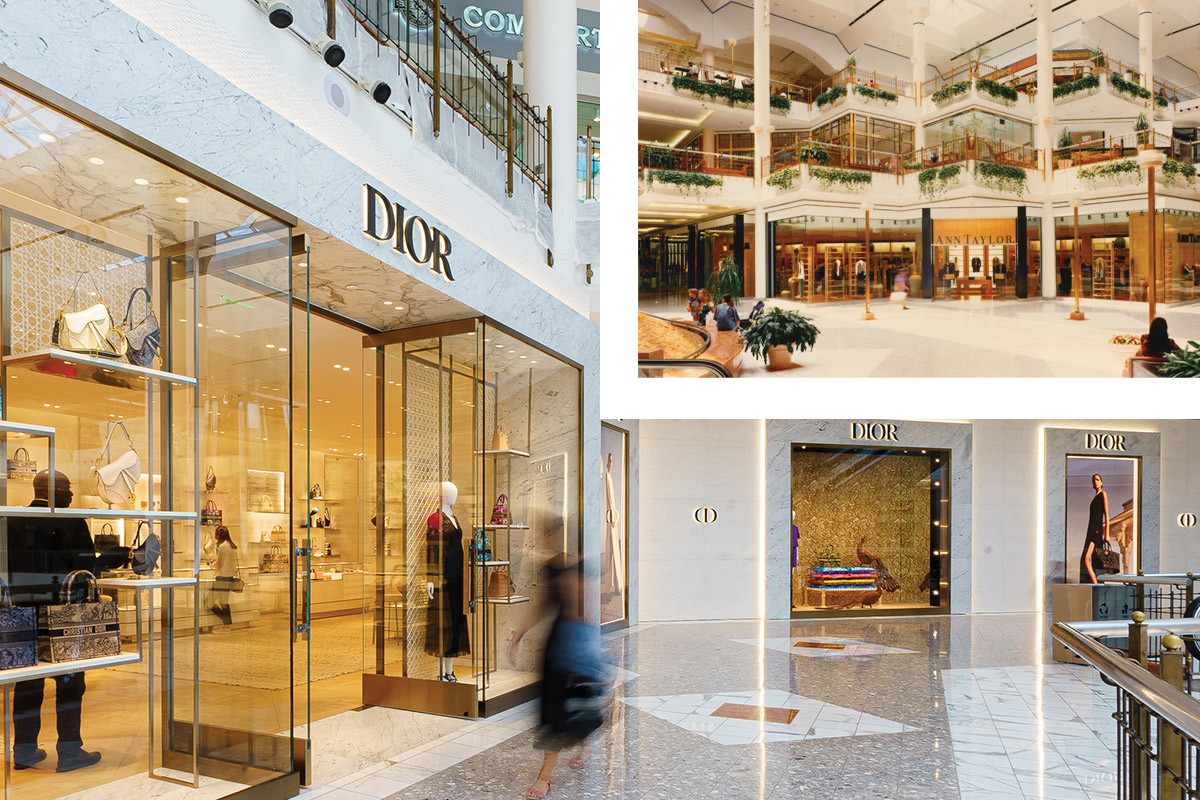
Since 1988, Tysons Galleria has been a destination for luxury-seeking shoppers. It began with 120 stores anchored by Macy’s and Saks Fifth Avenue, with Nieman Marcus joining in 1989. Macy’s closed in 2019, and owner Brookfield Properties transformed the 260,000-square-foot space into Crate & Barrel and CB2, a Bowlero, and a Lucid Motors dealership. “Sales have increased over 76 percent since we re-tenanted that box,” says Elizabeth Ryan, vice president of leasing at Brookfield.
That’s representative of customers’ post-COVID desire to gather again. Ryan adds: “The whole paradigm was shifting in terms of what the consumer was expecting from these enclosed shopping malls. And eat, work, and play are the three phrases we use to talk about how that pattern has changed.”
Additionally, the mall, now home to about 90 stores, including Cartier, Dior, and Gucci, has emphasized differentiating its offerings from those at Tysons Corner Center across the street, says Joe Hope, Brookfield’s senior vice president of leasing. “We’ve become the premier luxury destination in in the mid-Atlantic,” he says.
Fashion Centre at Pentagon City
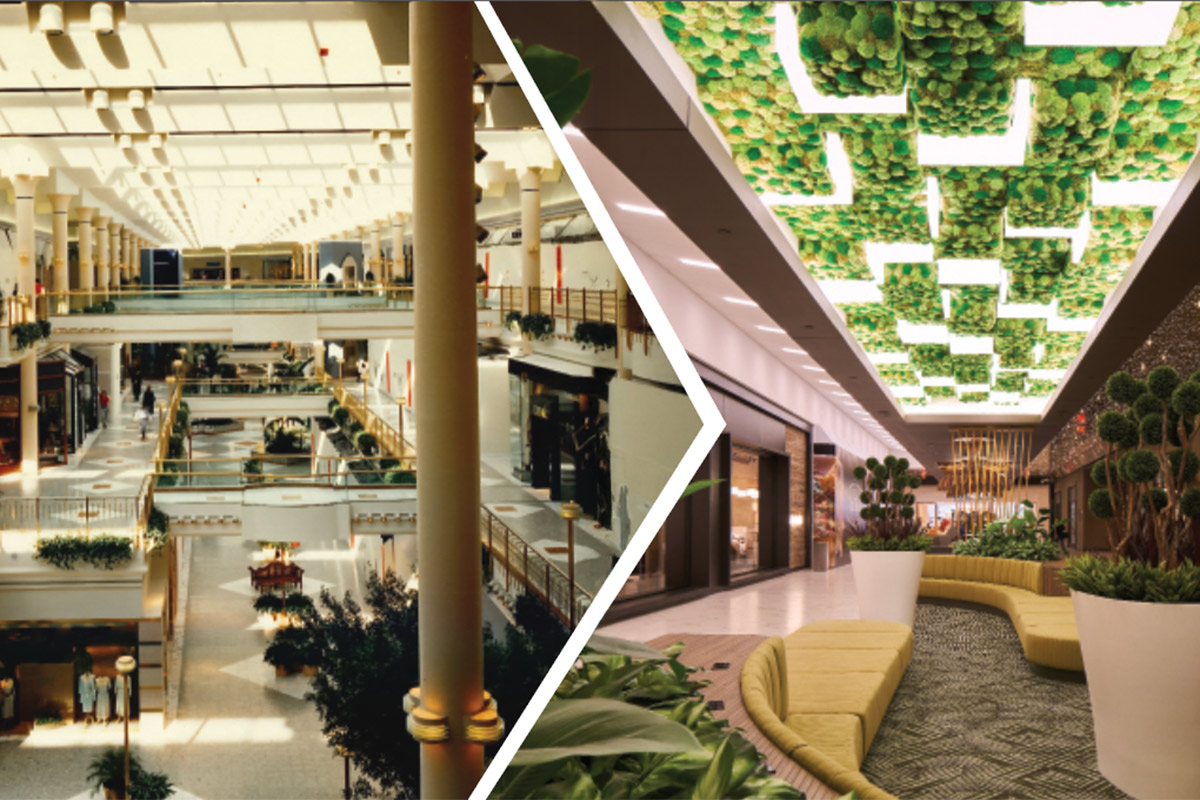
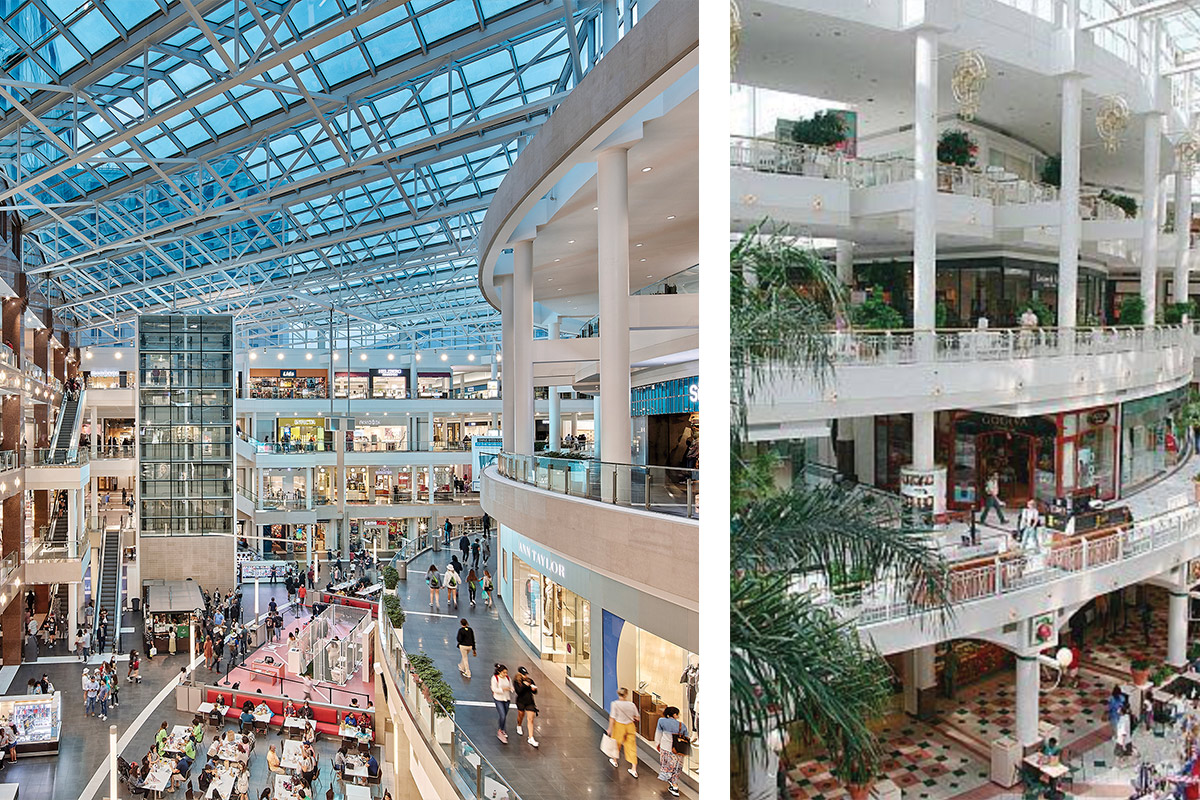
Fashion Centre at Pentagon City got its start in 1989 with about 160 stores including a Macy’s and Nordstrom, which are still the anchors. The mall underwent a full-scale renovation in 2015 and 2016, when it got new floors and fixtures — and another 50,000 square feet.
But some changes are less obvious. “I think one of the biggest changes is the digital age and how we really communicate to our shoppers,” says Todd Jerscheid, director of marketing and business development at Simon Property Group, the mall’s owner.
In 2022, it launched Simon Search, a platform that lets shoppers search what’s available at participating mall retailers. “You can go up to this digital directory [or the mall website], and you can just simply type on its touch screen, ‘backpack’ or ‘black shoes,’ and before you leave the shopping center, it will tell you which stores actually carry something that you’re looking for,” he says.
Dulles Town Center
The only enclosed regional shopping mall in Loudoun County, the 27-year-old, two-level Dulles Town Center is filling the space Sears vacated in 2021 with 810 Billiards & Bowling on the lower level and Sky Zone Trampoline Park on the upper. They’ll join Always in Motion ninja gym and parkour center, which opened in February.
“Because there are so many different brands that are available online and nationwide, we … have made more of an effort to offer entertainment retailers,” says Kimberly Mazhari, the mall’s general manager.
She says the mall is also working to make vacant spots turnkey so that newcomers “would just have to maybe paint, put up artwork or their merchandise hanging on the walls and they are really able to make it their own,” adding that the mall also changed its space commitment requirements. “You can lease a space for even a day here, or maybe a weekend” to allow for pop-ups.
Manassas Mall
Built in 1972, Manassas Mall houses 80-plus retail shops, restaurants, and entertainment options. Visitors can zoom around an indoor racetrack in an electric go-kart at K1 Speed (formerly Autobahn Indoor Speedway). Littles can buzz through Billy Beez, an indoor play park packed with slides, ball pits, and sports courts. Shoppers can interact with scaly friends at Raging Reptiles or take pickleball lessons at Dill Dinkers, which opened last year. And Time Mission, a social gaming center, opened in late March.
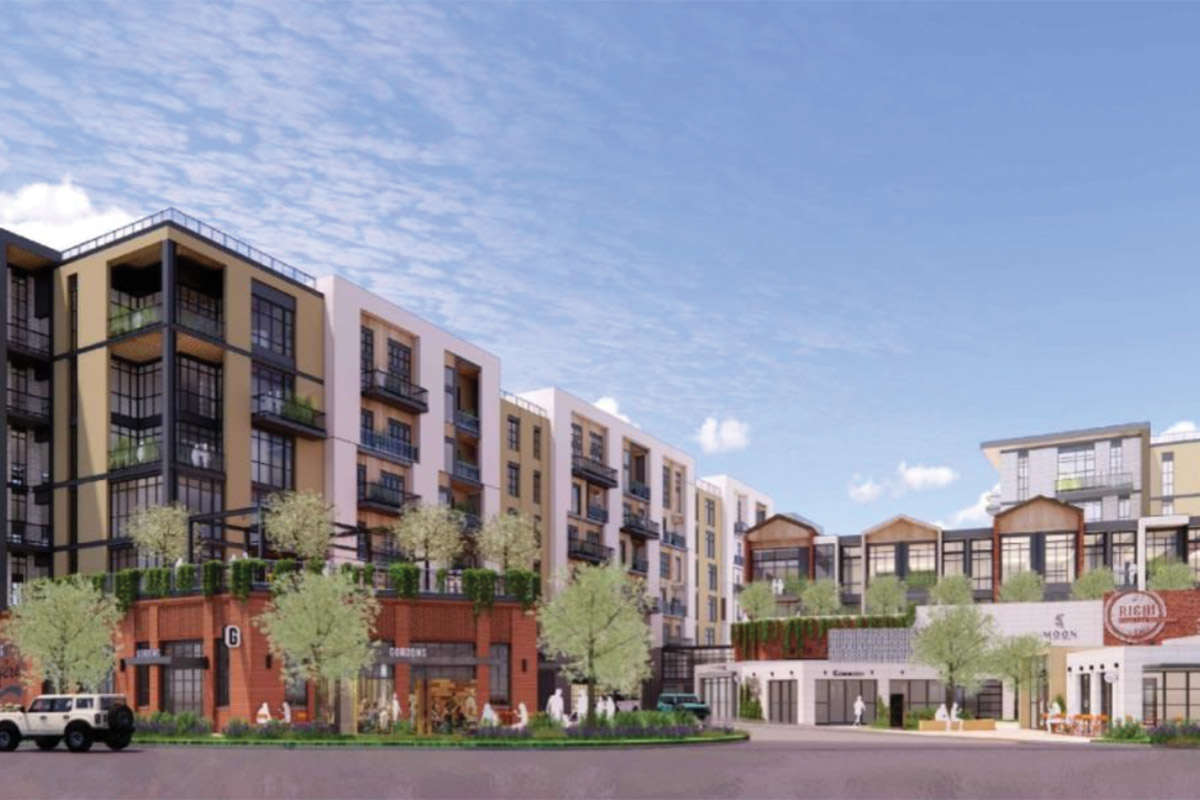
The mall’s metamorphosis continues. Manassas Real Estate Ventures, a subsidiary of mall owner Lionheart Capital, is planning to redevelop the property into a mixed-use project with more than 1,000 apartments and “Verdant Village,” an area of freestanding retail buildings.
“We have been working closely with Prince William County staff for the last year to develop a project that will create a pedestrian-friendly, mixed-use environment,” says Allison Greenfield, chief development officer at Lionheart.
Feature image of Tysons Galleria courtesy Brookfield Properties
This story originally ran in our May Issue. For more stories like this, subscribe to Northern Virginia Magazine.