
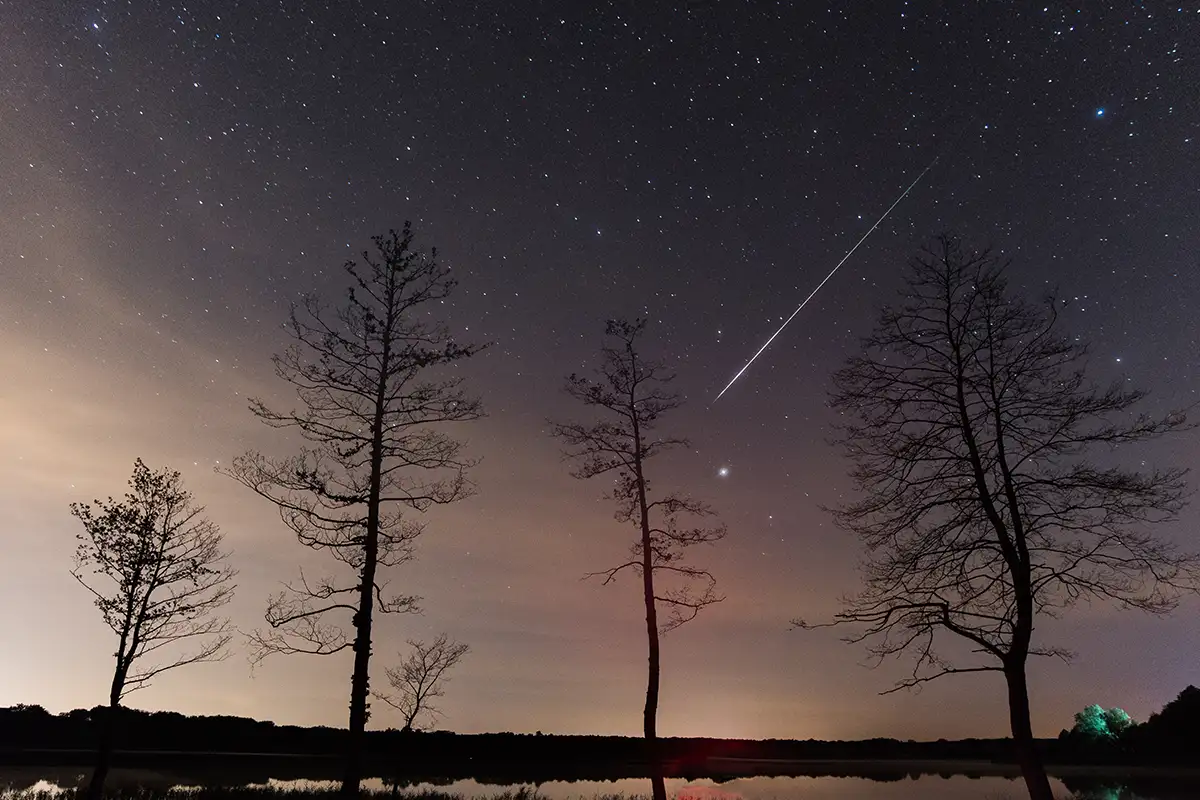
Keep your eyes to the sky tonight and you may be in for a treat. The Orionid meteor shower is predicted to be at its peak, and the new moon means dark skies to help you see it.
“With a moonless sky, you’re much more likely to catch a fireball careening through the night,” NASA says.
Each October, Earth passes through the inbound debris stream of Halley’s Comet, producing the annual Orionid meteor shower, according to the American Meteor Society (AMS). Orionid activity begins in early October, but Earth encounters the densest part of the action mid-month.
At its maximum, the shower typically produces 15 to 20 meteors per hour. NASA says the best viewing window is from before midnight to around 2 a.m., ideally at a rural location away from city lights. Try to face southeast to take in a wide portion of the sky. Look about halfway up from the horizon for the best view — more meteors are seen in that part of the sky than directly overhead.
You may also be treated to some bonus cosmic activity. Besides the Orionids, AMS says you might see “a few slower Taurid meteors, or swift ones from Gemini and Leo Minor — each contributing only a couple of meteors per hour. Random ‘sporadic’ meteors, unrelated to any specific shower, typically number around 10 per hour at this time of year.”
Feature image, roobcio/stock.adobe.com