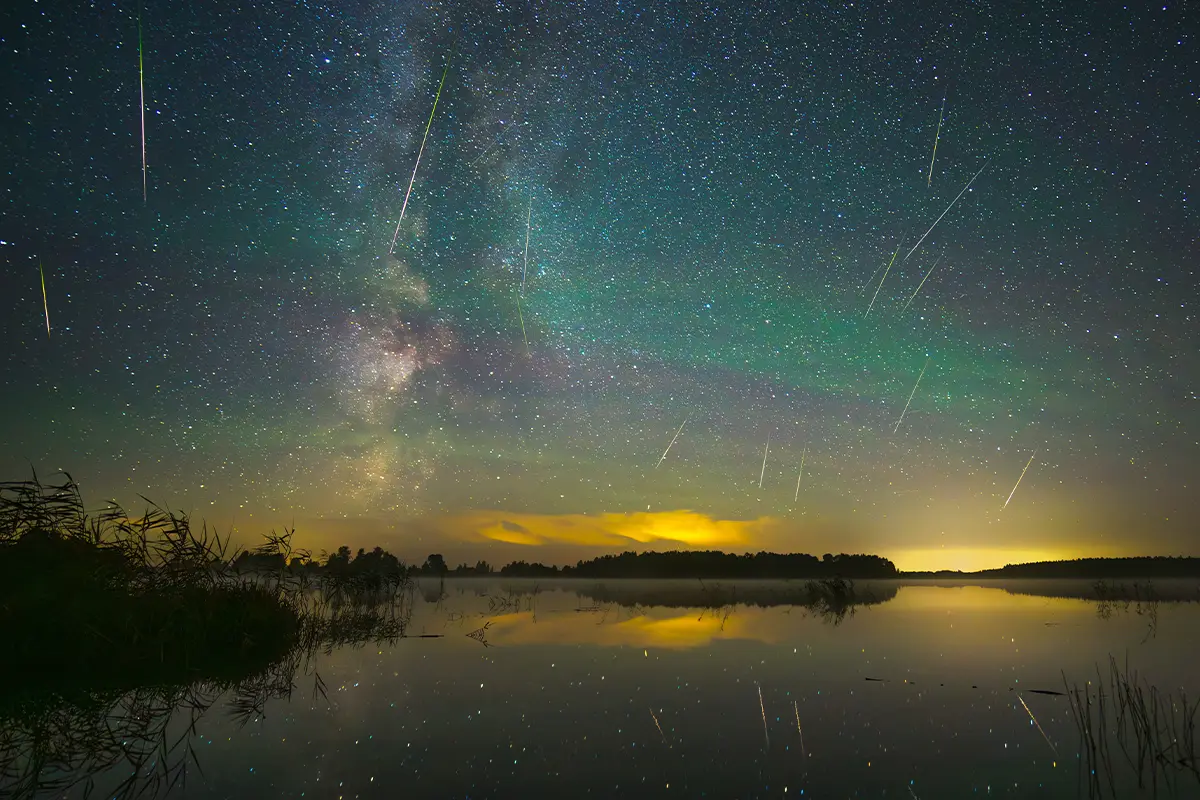
The height of what NASA says is “the best meteor shower of the year” happens this week. The Perseids are active July 17 to August 23, and peak mid-August.
The meteor shower should be at its most active around Tuesday, August 12, and Wednesday, August 13. However, NASA says the waning gibbous moon — the phase between a full and a half-moon — could make viewing less dramatic.
“The average person under dark skies could see somewhere between 40 and 50 Perseids per hour,” said Bill Cooke, lead for NASA’s Meteoroid Environments Office. “Instead, you’re probably going to see 10 to 20 per hour or fewer, and that’s because we have a bright moon in the sky washing out the fainter meteors.”
The meteors are at their most numerous during the predawn hours in the Northern Hemisphere, NASA says.
The Perseids are particles released from a comet during its numerous returns to the inner solar system. They are called Perseids because the area of the sky where they seem to originate is near the Constellation Perseus.
Perseid meteors frequently leave long “wakes” of light and color behind them as they streak through Earth’s atmosphere, according to NASA. They are also known for their fireballs — larger explosions of light and color that last longer than an average meteor streak.
Feature image courtesy lukjonis/stock/adobe.com