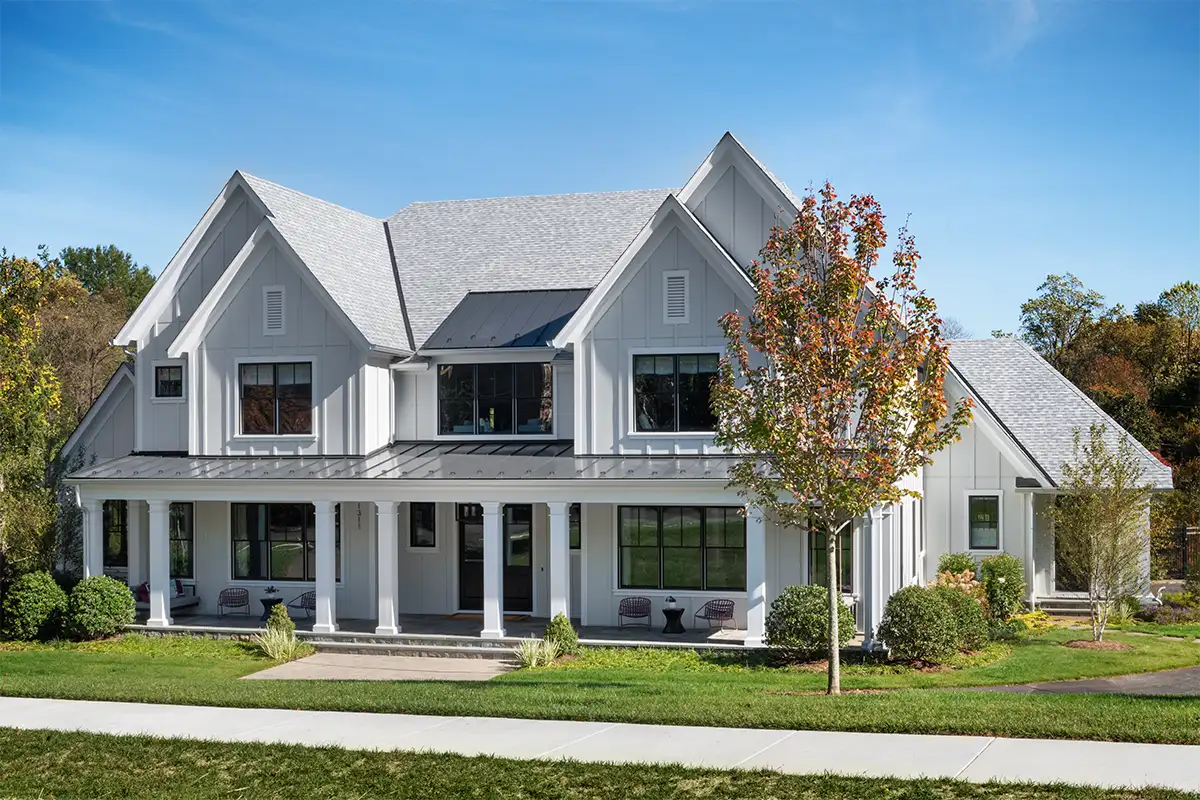
Many times, the outside of your home is just as important as the inside. Whether you’re looking to sell or want a fresh look, boosting your home’s curb appeal can make your property feel more inviting and polished. From updating landscaping to adding a new coat of paint and colorful accents, there are plenty of ways to help your house stand out. Here are a few tips from local design experts on how to increase curb appeal.
Refreshing the Exterior
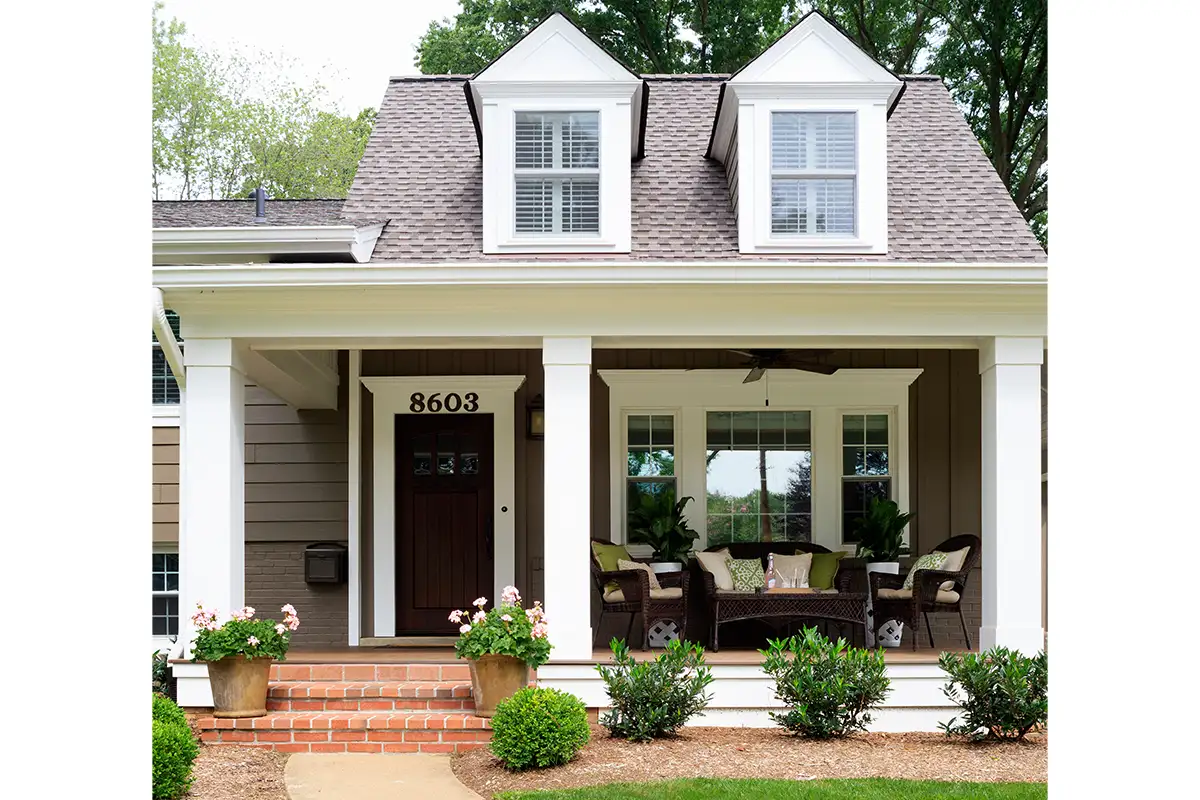
When architect Christine Kelly of Crafted Architecture took on renovating a 1950s rambler in Alexandria for a family of four, she had curb appeal at the forefront of her mind.
“I wanted to nestle the house firmly into the site and give it an approachable feel. I also wanted the home to make a statement along the street frontage,” she says. “The existing house was drab, with a very flat front and small, nondescript stoop.”
Kelly defined the home’s street-facing entry by designing a large, multi-columned front porch. The home’s new mansard roofline contains a pair of dormers, adding another layer of visual interest. A warm taupe paint creates continuity on the exterior finishes, along with contrasting white trim for the columns and the door and window moldings.
“I designed the porch ceiling to be cathedral in style, making it airier. We also wrapped the porch around the side of the house to connect it to the mudroom,” she continues.
Overhead lighting on dimmers creates a lovely glow after sunset. A walkway travels from the street to the front door via a set of brick steps and a pair of potted plants.
“You want your home to embrace you when you arrive with its beautiful colors and architectural details, sturdy entry steps, and a protective covering at the front door,” says Kelly.
Hospitality Outside
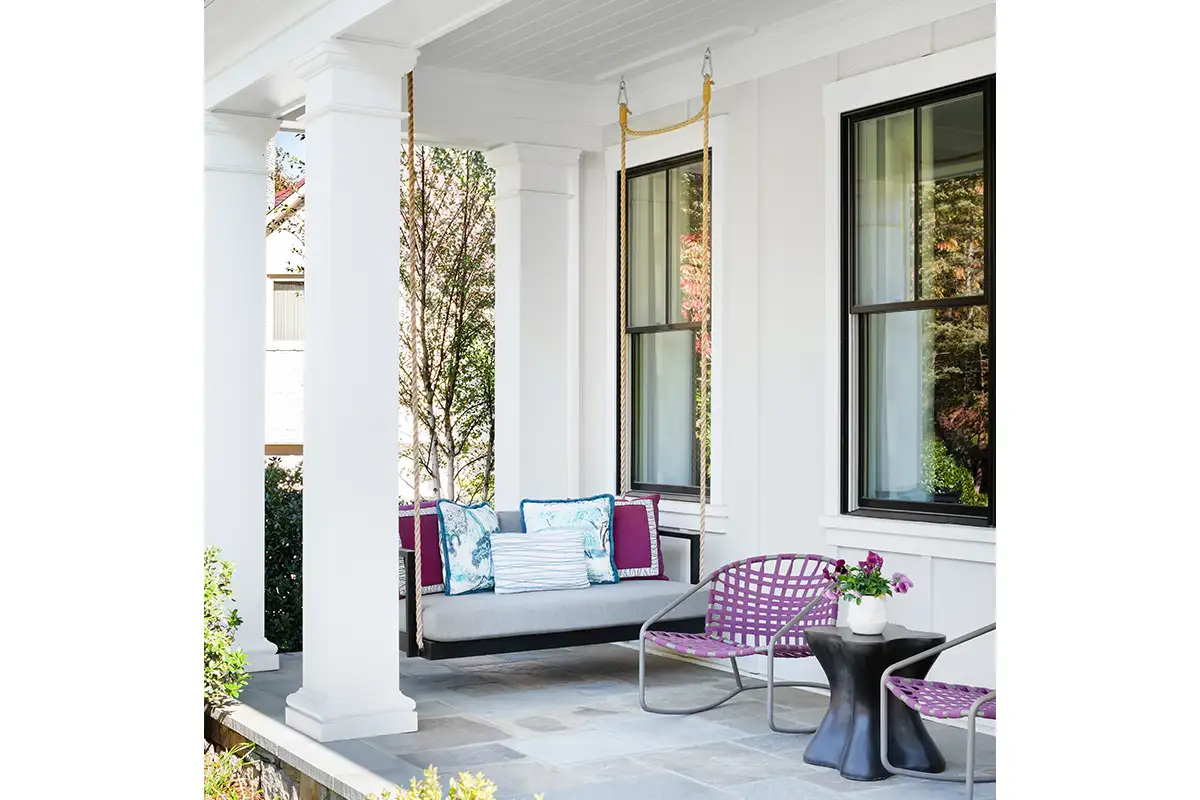
“I love the idea that curb appeal is really about hospitality. It’s about welcoming people to your home before they’ve even walked through the front door,” says Casa Millie owner/designer Andrea Maaseide of a five-bedroom, 7,900-square-foot modern farmhouse new-build in McLean. The homeowners, a family of four, loved the concept of a well-used front porch in their walkable neighborhood. Maaseide set about furnishing it in keeping with the interior décor in terms of color palette (jewel tones juxtaposed against neutrals) and contemporary style.
“We brought in a pair of linear upholstered porch swings, which speak to the home’s farmhouse style, but played up its modern vibe with woven-strap lounge rockers in a vibrant jewel tone,” Maaseide says.
The swings are hung in pleasing symmetry on either side of the front door. Meanwhile, the amethyst and turquoise palette contrasts nicely with the neutral board-and-batten siding and black-framed windows of the house’s architecture. Equally important is that the aluminum-framed lounge rockers are lightweight.
“The chairs can be moved around easily and pulled up to either of the porch swings for gathering and having intimate conversations,” she adds.
A medley of swing throw pillows in different patterns and log-inspired side tables complete the look.
Seasonal Tweaks
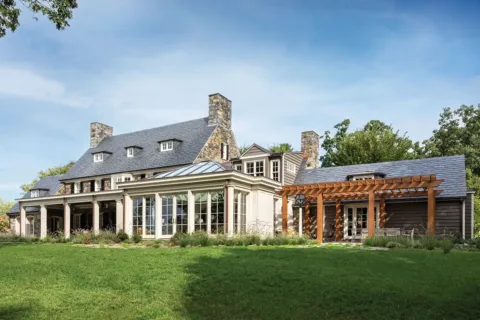
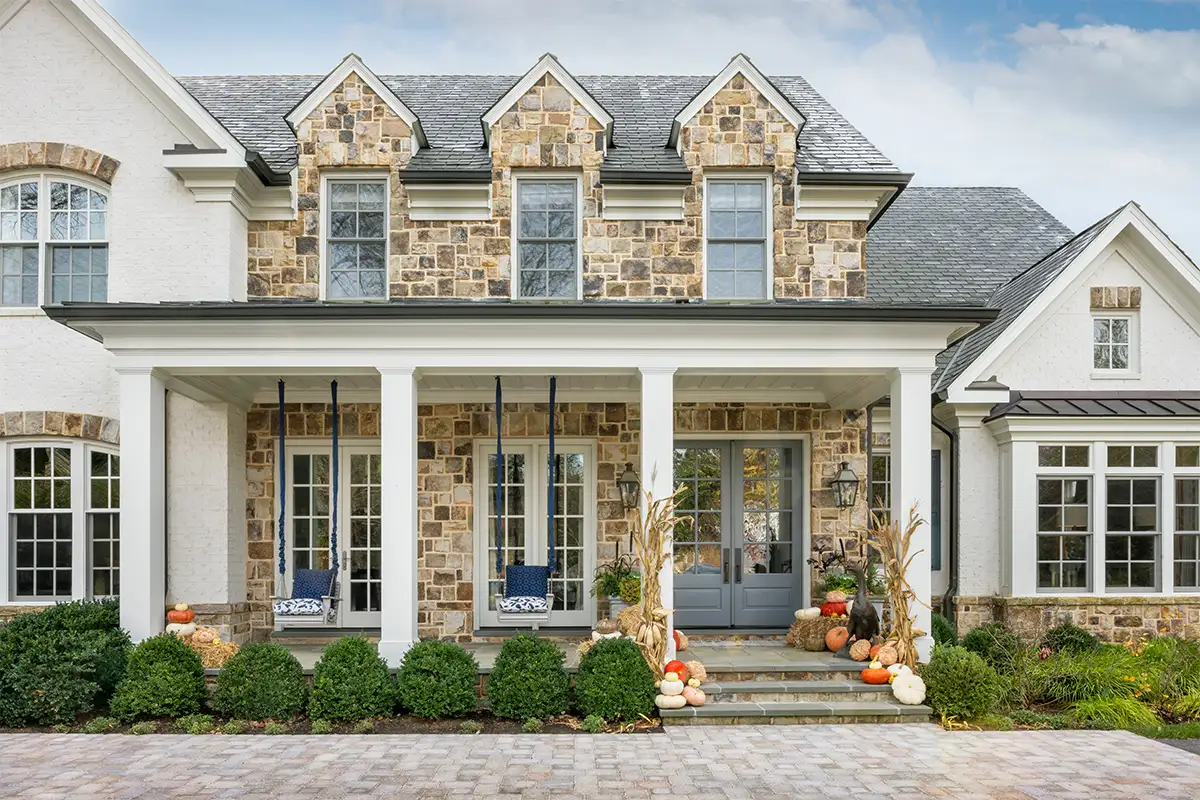
“For the exterior, we chose neutral paint colors to complement the façade’s stone, using a soft creamy white on the body of the house and a clearer white on the trim. This subtle but significant difference added depth and layers to the exterior,” Alex Deringer of Deringer Design says of this McLean house.
The front door was finished in a tonal gray paint, pulling from the slate-gray roofing. A big part of the appeal of the neutral exterior palette was allowing the homeowners — a family with two kids — the option to go all out for seasonal decorating. It’s something the wife loves to do.
“We also suggested planters at the front door to softly and naturally frame the entrance. Seasonal plants help us appreciate the colors of any season we are in,” continues Deringer.
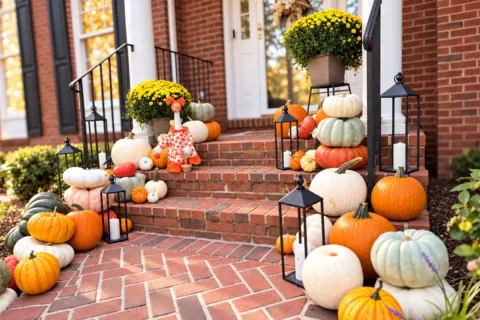
The planters are potted with annuals in a variety of colorful florals to suit the season; the homeowner also likes to hang wreaths. The setup here is autumnal where the wife has adorned the stoop with a variety of fall pumpkins and gourds.
“Paying attention to curb appeal is very important. It is the first impression given to any visitor or passerby. Decorating for the season also sets the tone,” she adds.
Lovely Landscape
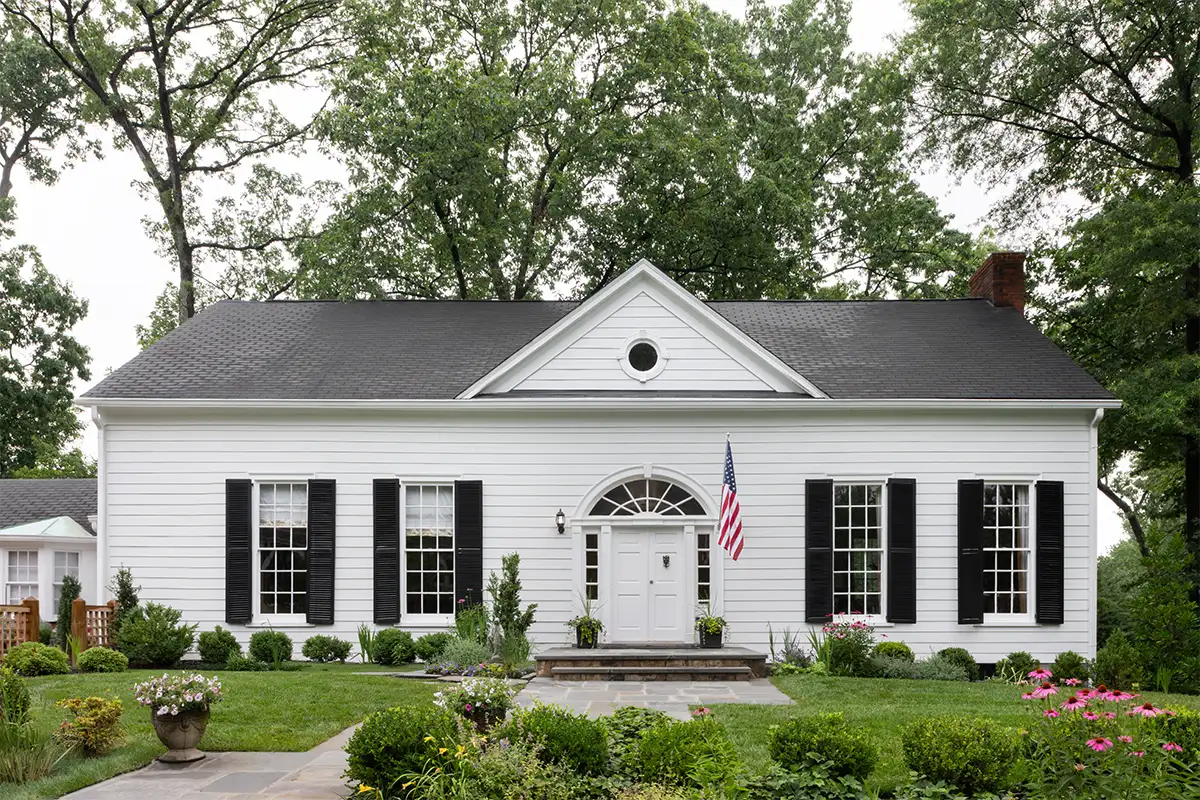
It’s hard to imagine when looking at it now, but this beautifully landscaped 1942 Classic Revival home in Arlington Ridge was once hidden from the street by a tall hedge that overhung the sidewalk.
“The homeowner wanted a landscape that felt welcoming, polished, and appropriate to the home’s architectural character. She hoped for structure near the house, softness and color in the beds, and a palette that would come alive across multiple seasons,” says landscape architect Susanne Fyffe of Fyffe Landscape Architecture.
To that end, the unruly hedge was removed, and rows of boxwoods were planted to run parallel to the façade. The front beds host a perennial mix of salvia, coral bells, anemones, and geranium. Potted plants add pops of color and texture.
“Curb appeal begins with clarity — clean lines, intentional plant structure, and a landscape that feels in conversation with the architecture,” says Fyffe.
There is always something to admire with every passing season, while the planting palette of greens, pinks, whites, and purples provides an element of continuity.
“The first impression of a home happens long before someone reaches the front door. It communicates care, hospitality, and a sense of belonging in the neighborhood,” says Fyffe. “With a historic home, thoughtful landscaping becomes a bridge between the past and present, honoring architecture, while making it feel alive.”
Feature image by Stylish Productions
This story originally ran in our July issue. For more stories like this, subscribe to Northern Virginia Magazine.