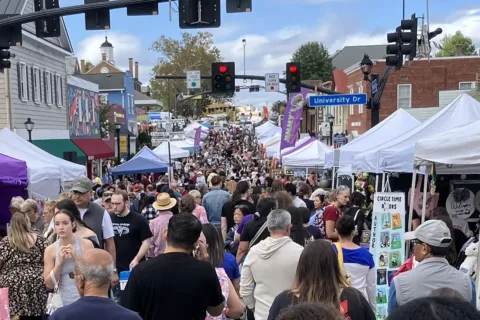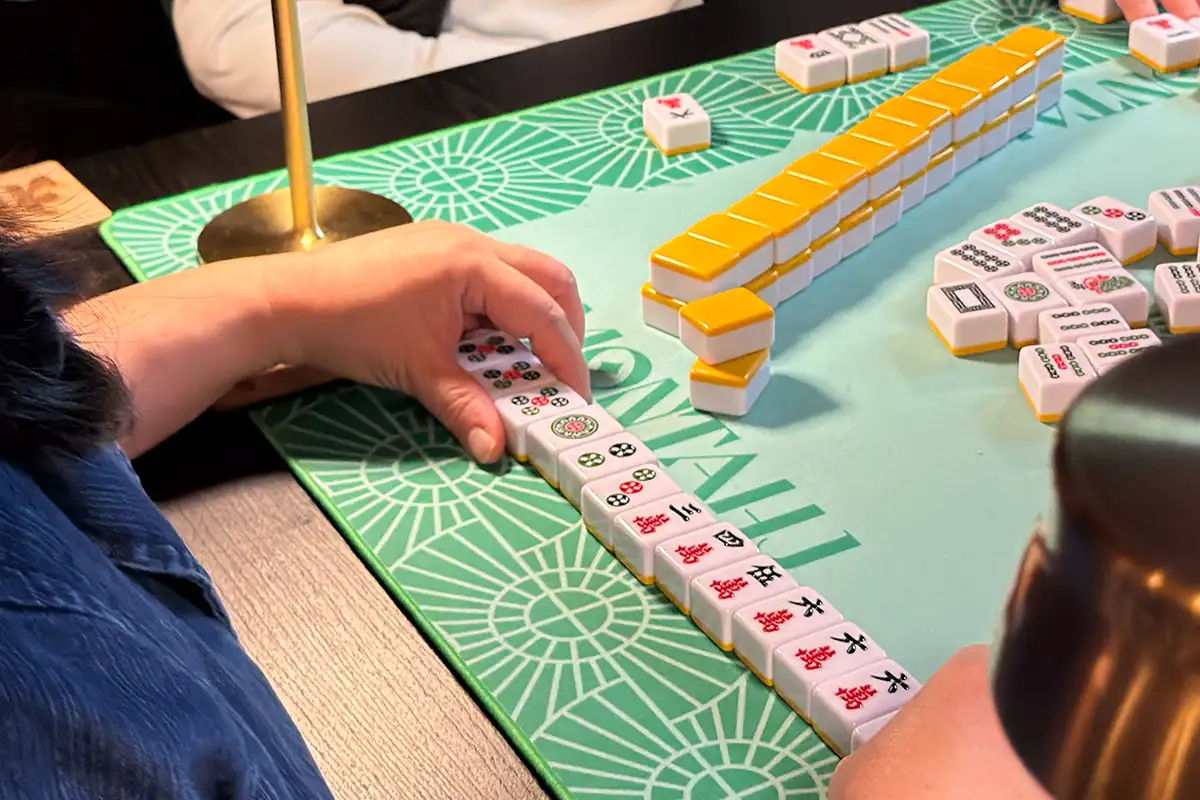
Have you noticed that everyone seems to be playing mahjong these days? Or at least they’re trying to get the hang of it. The tile game has surged in popularity in Northern Virginia, and its enthusiasm shows no signs of cooling.
Tiles and Tables Everywhere
Maybe you’ve already stumbled upon a mahjong group at a local library, coffee house, or café. That’s how Sterling resident Shelly Slebrch started playing three years ago. She discovered the game through the Loudoun Mah Jongg League at Ridgetop Coffee and Tea.
“I was recovering from surgery, and my friend was getting me out of the house,” says Slebrch. “There was a lady at Ridgetop who taught newbies, and she was amazing. It cost nothing, and I just fell in love with mahjong that day. There’s something so addicting about it, and I’ve been going on Mondays ever since.”
Slebrch actually grew up around mahjong. “My mom played through a Jewish women’s league in Maryland called Pioneer Women,” she says. “I wasn’t interested as a child, and no one taught me. Mom still has her original set from the 1960s.”
Many mahjong variations evolved after the original 19th-century game spread from China to America in the early 1920s. Today, mahjong embraces all demographics and is gaining younger fans.
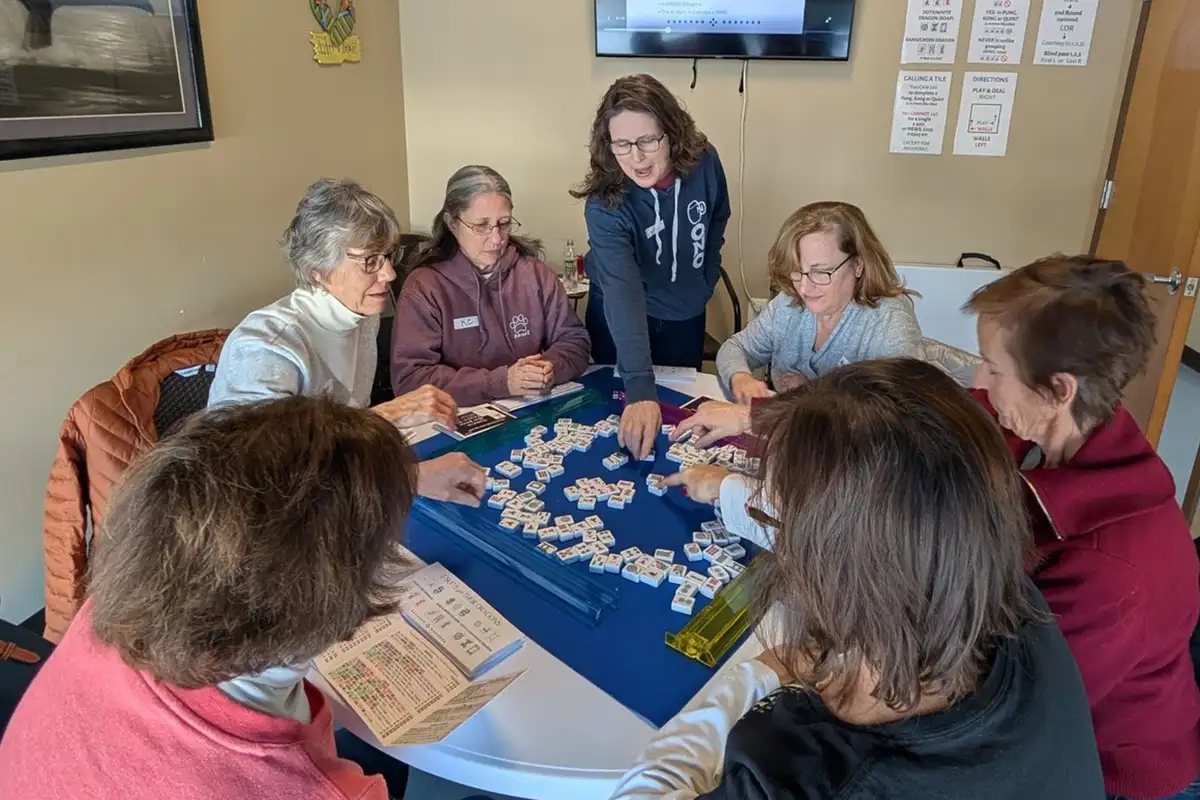
Demand for lessons and playing space is so high that area businesses like Ono Brewing Company in Chantilly are offering fee-based classes, leagues, and private events as a side hustle. “We started doing this in January, and we’ve already welcomed hundreds of players,” says Cyndi Hoffman, who owns Ono Brewing with husband Scott. “I’ve hired two additional teachers, and the classes fill up almost as soon as they are posted online.”
Some companies are hiring mahjong instructors for corporate team building events. Melissa Flavell, founder of Alexandria-based NOVA Mah Jongg, recently hosted an event for Capital One in Tysons. “Bringing mahjong to the workplace makes team building more exciting,” says Flavell.
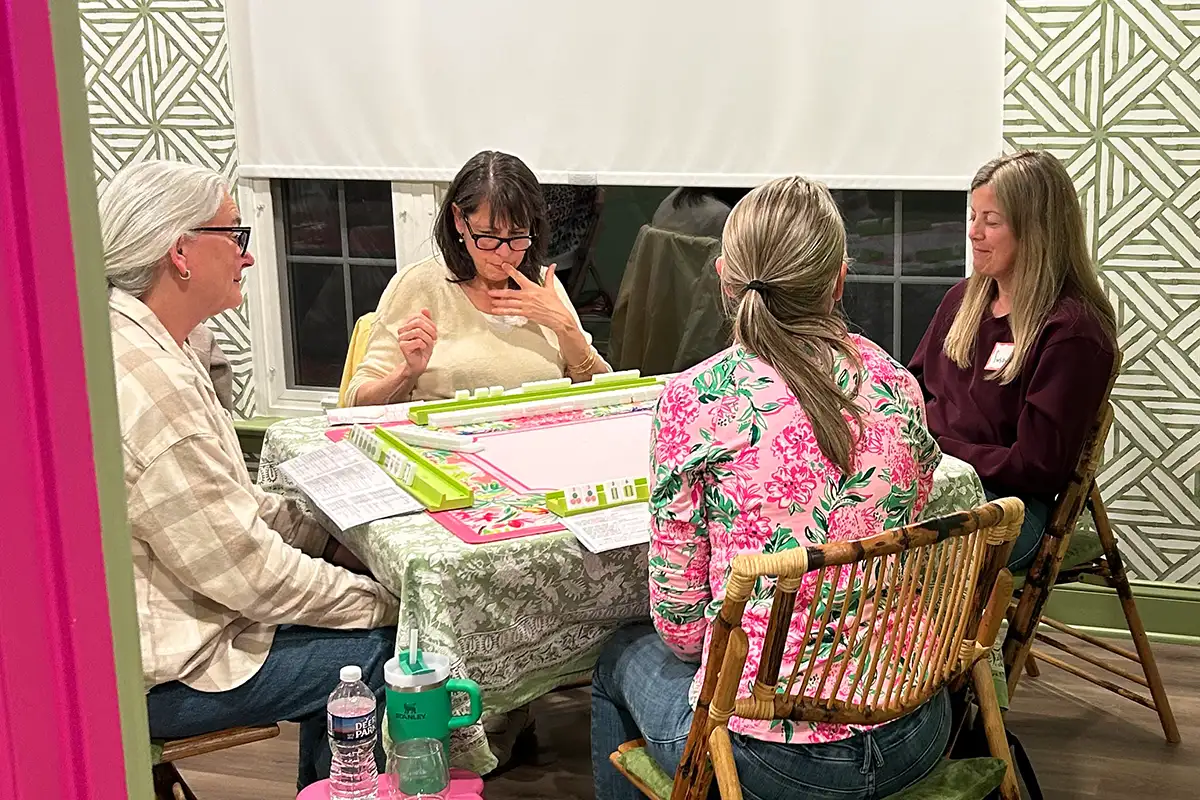
Last year, mahjong instructor Tori Rittinger decided NoVA was ready for a dedicated mahjong establishment. She opened Talk Tiles to Me, a Falls Church studio that hosts on- and offsite lessons, sells mahjong merchandise, and offers mahjong-themed rooms for private events. “We continuously grow,” says Rittinger. “We already have seven instructors, and I’m about to hire three more.”
Merch Mania
Mahjong-themed merchandise — from hair accessories and clothing to coffee tumblers and tote bags — is showing up online and at local retailers such as Mon Amie Amy in Ashburn and Boxwood in Alexandria.
Some residents are even dedicating permanent spaces in their homes for mahjong, complete with themed gear, room décor, and table lighting. Flavell says she turned her home den into a mahjong parlor for personal use and league tournaments. “The room has an unusual space that wasn’t being used, so it was fun converting it into something that is now dedicated to mahjong.”
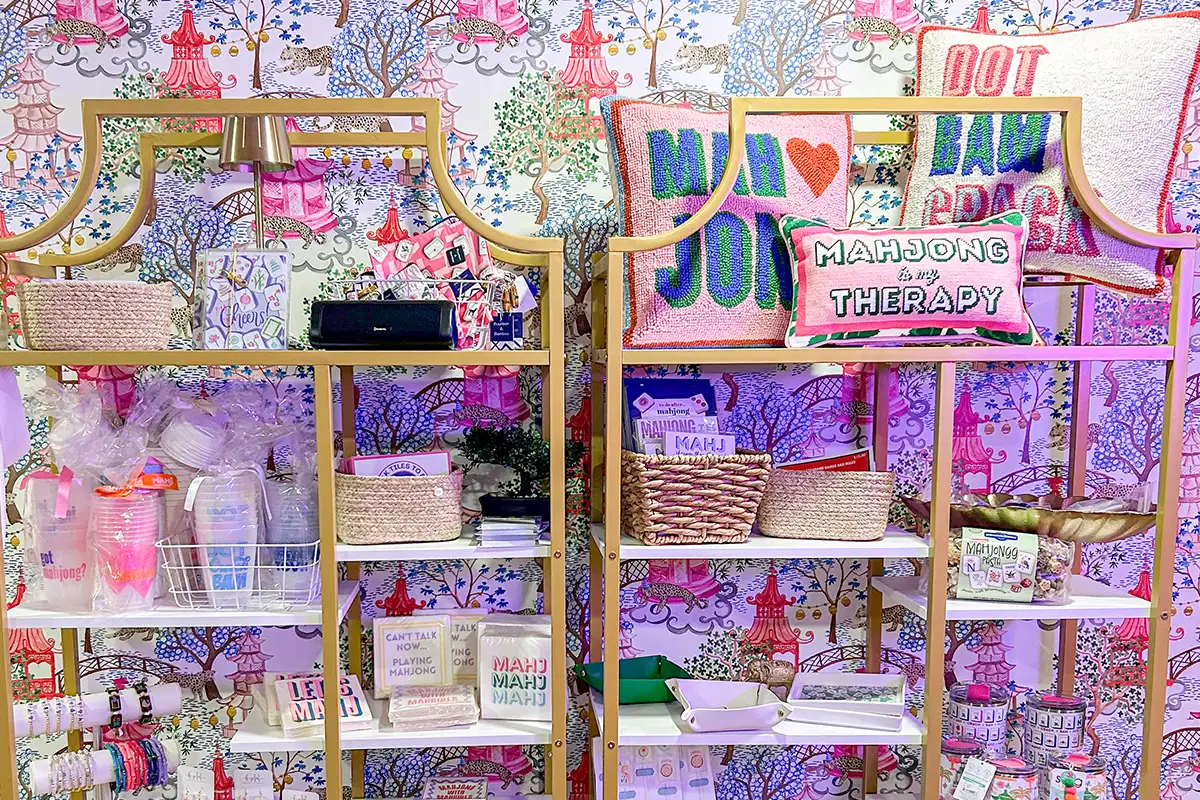
Many players collect multiple sets of premium tiles, which they carefully pair with color-coordinated table mats and racks. In May, thanks to heavy social media buzz, stock sold out in less than one minute after Hallmark posted a highly anticipated $350 mahjong bundle called Miss Heirloom on its website. The colorful, flower-themed tiles appear in the recently released Hallmark Channel movie All’s Fair in Love and Mahjong.
Mahjong even stole the show at the 2026 Masters golf tournament at Augusta National. The hottest commodity at the course’s Berckman’s Place hospitality shop was a souvenir mahjong set featuring Masters-specific images like azalea shrubs, pimento cheese sandwiches, and gnomes. The limited bundle, which included a mat and storage bag, sold out instantly for $575. A few days later, those sets were showing up on the resale market for as much as $10,000.
Respect for Cultural Heritage
At its heart, mahjong began as, and remains, a Chinese game. There are more than 45 mahjong variations around the world, all with different rules. In the United States, American mahjong is the most common.
“Traditional Chinese mahjong is more fluid and conceptual — you can adjust your strategy until the final tile. American mahjong uses a standardized annual card and includes joker tiles, making it more structured and predetermined in terms of hands,” explains Jennie Mak, founder of DC-based Mahjong United. Mak teaches Chinese mahjong at various area locations, including Montahj Social in Ballston and Lyon Park Community Center in Arlington.
Born and raised in Hong Kong, Mak says mahjong holds a special place in her heart. “I grew up in a mahjong household and saw how the game brings family and community together,” she says. “The sound of the tiles, the shuffling, and the tactile experience make it very immersive. Mahjong is something people gather around at weddings, birthdays, and New Year celebrations, with snacks, drinks, and everyone engaged and cheering in their own way. It is truly cross-generational, passed down from older to younger generations, preserving language, ritual, and culture.”
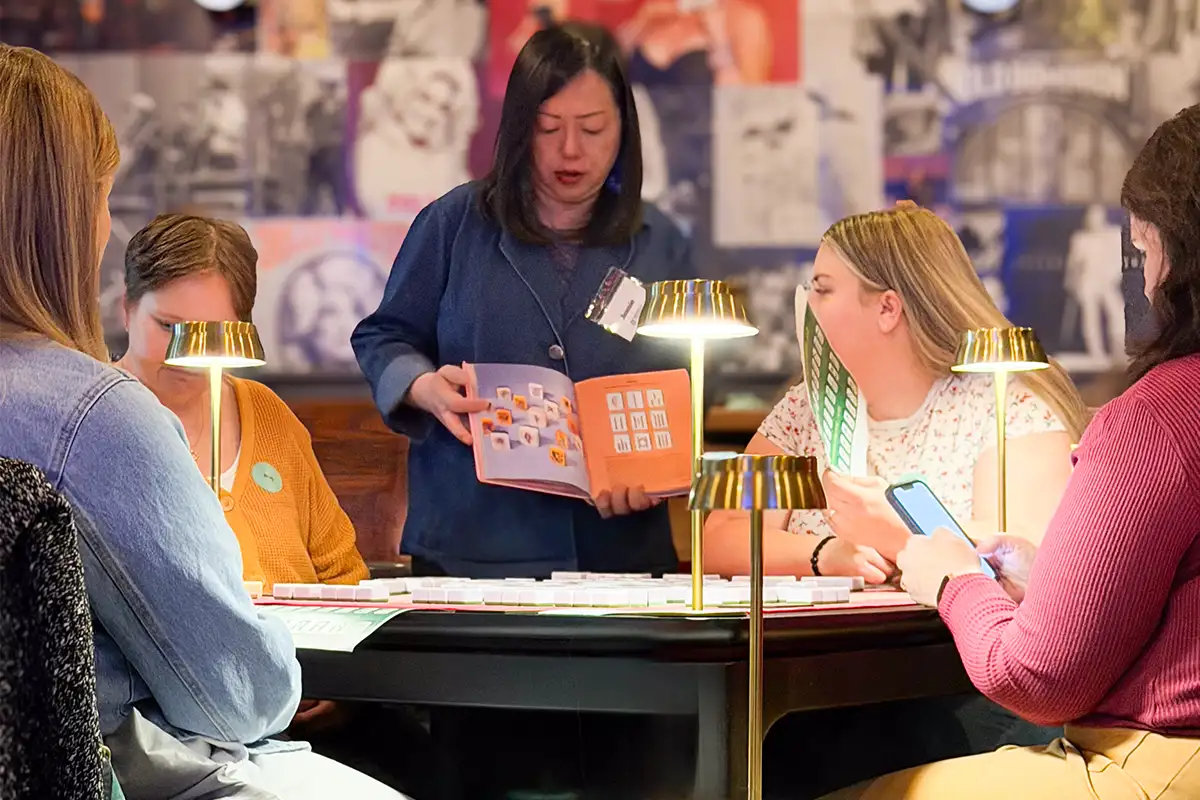
Mak notes strong interest from non-Asian players. “The majority of my students are non-Asian, along with second- to multigeneration Chinese Americans reconnecting with a game they may have seen growing up but never learned. There is a real hunger for traditional instruction.”
She says she’s excited to collaborate with Dana Moss, founder of Montahj Social. “Together we’re building a space where both traditional and American styles can be understood, respected, and explored side by side,” says Mak.
Moss, who lives in Arlington, says public response has been strong. “Hosting both American and Hong Kong styles of play under one roof unites a community of diverse backgrounds while honoring the traditional roots and history of the game.”
Cognitive Health
Slebrch says playing mahjong every Monday at Ridgetop Coffee has improved her post-surgery health. “It keeps my brain working. Some people like to figure out crossword puzzles; I like to figure out a mahjong hand. You have to be alert. These are quick games — sometimes lasting just 15 minutes.”
A 2020 study published in Frontiers in Neurology indicates regularly playing mahjong for as little as 12 weeks improves memory and attention. Those benefits can carry over to completing everyday tasks like paying the bills or driving a car.
At Ono Brewing, Hoffman has noticed many players making a jump from neighborhood Bunco, another popular social game. “Bunco is simple and doesn’t require much brain power. If you can roll dice and count, you can play Bunco,” says Hoffman. “Mahjong is tapping into people’s desire to really exercise their brain, be challenged, and grow within the game.”
Flavell agrees. “I think some are afraid of developing early onset dementia. A lot of us are seeing that in our parents, and we don’t want to go that way ourselves.”
Social Connection
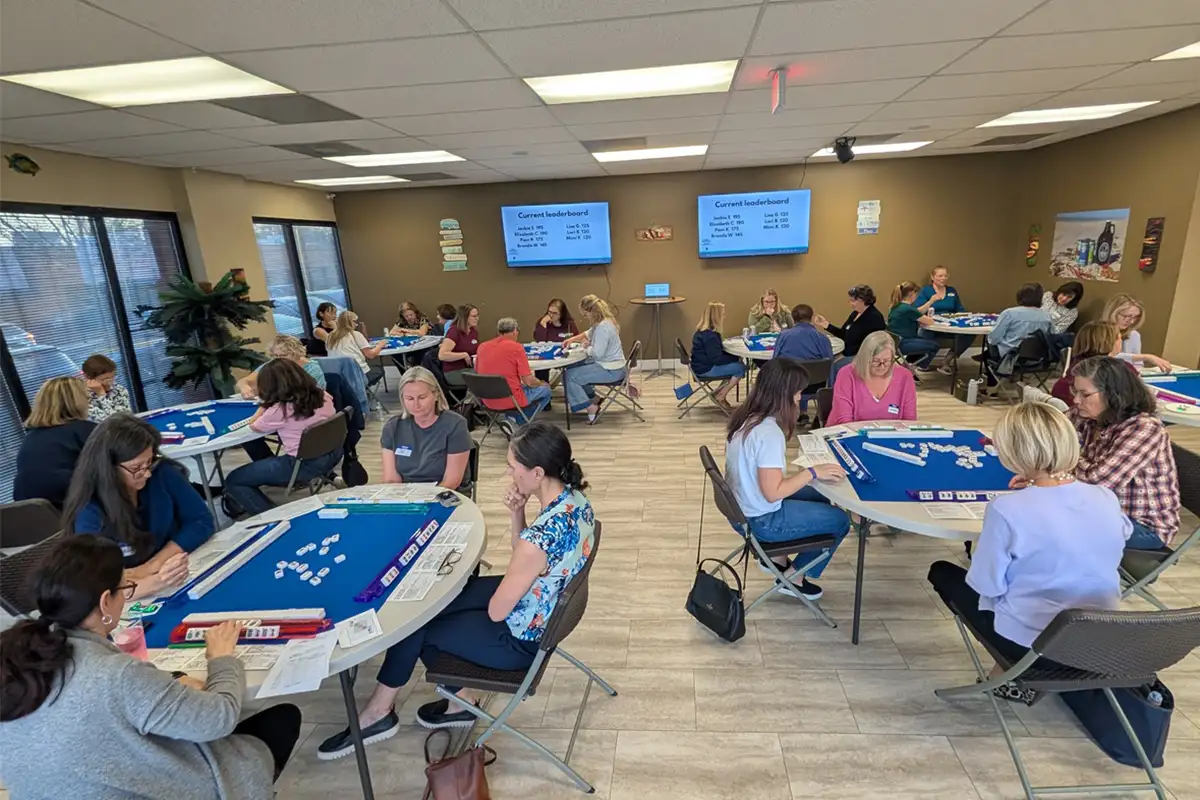
“COVID had a lot to do with mahjong’s resurgence,” says Hoffman. “More people are working alone at home, so they seek human connection. It’s not enough to just go to the movies or meet for coffee. Mahjong fills a niche, providing an opportunity to do something challenging and fun while meeting new friends and disconnecting from technology.”
Rittinger says community is mahjong’s biggest draw. “You can sit down at a table with three people you don’t know, but you end up swapping phone numbers to get together and have your own games later. That’s really beautiful.”
Fairfax resident Ed Whang came to mahjong through his wife, Jacque. “We took a class with another couple at Ono Brewing,” says Whang. “Then my wife kind of took it to the grassroots level and started teaching some of our neighbors. Now we are hosting our own Thursday night get-togethers at our home for anyone within our neighborhood circle who wants to play. It’s a nurturing environment for those who are just learning.”
Whang’s 92-year-old mother lives with him and learned to play by watching him practice. “Now she is actually one of our Thursday night players.” Whang admits the game is a bit addictive. “The more you play, the more ads and reels start popping up on your social media — those collector tile sets selling out online for outrageous amounts of money, or the game tables that automatically shuffle the tiles. That level of mania hasn’t invaded our house yet — but I think it just might.”
Feature image by DesignChef, courtesy Montahj Social
This story originally ran in our July issue. For more stories like this, subscribe to Northern Virginia Magazine.