It is a universally acknowledged truth that to love Jane Austen is to love the clothing depicted in her novels. It is also a truth universally less acknowledged that her novel’s subsequent screen adaptations have taken some liberties with the wardrobes of Austen’s characters.
A new exhibit at DC’s DAR Museum shines a light on the clothing and fashions of the beloved writer’s world and characters. It also dispels some commonly held misconceptions about the sartorial customs of her age.
‘Undressing Jane Austen’s World’
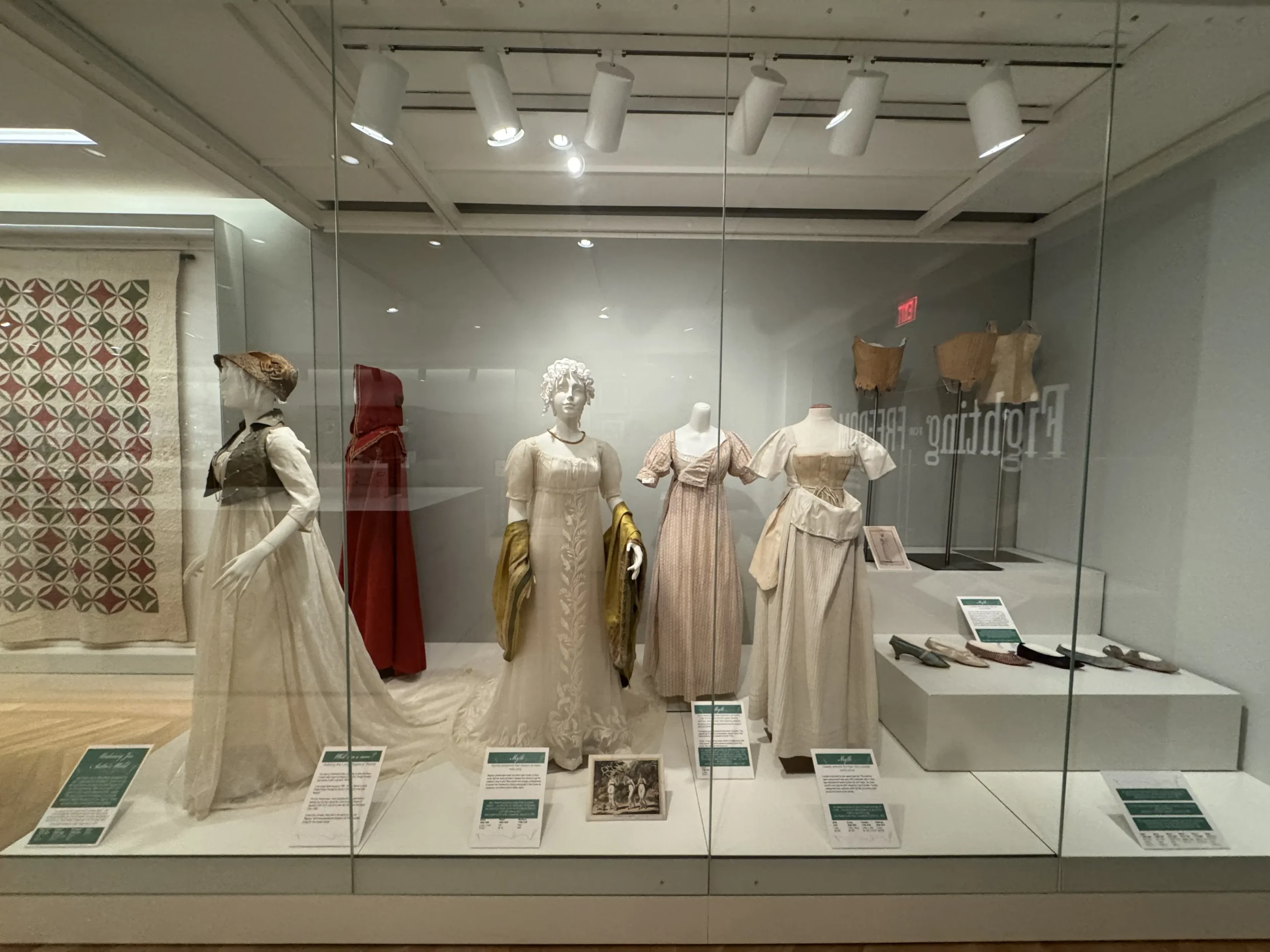
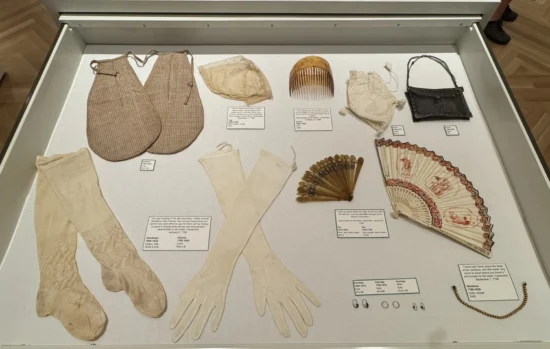
Undressing Jane Austen’s World is the curatorial work of DAR Museum educator Isabella Moritz. Drawing from the museum’s extensive private textile and clothing collection, Moritz expertly has assembled undergarments, dresses, shoes, accessories, and a very rare Spencer vest.
Inspired after being struck by the inaccuracies she saw in the popular Netflix show, Bridgerton, Moritz wanted to dispel some tightly held fashion myths about the Regency era. For example, the myth that all corsets were horrendously uncomfortable and worn against the skin. “I wanted to show all layers of underwear,” says Mortiz. She points out the three examples of corsetry in the exhibit, all worn over a base layer of clothing, and drawn from three different years in the Regency era.
The garments and accessories in the exhibit are paired with excerpts from Austen’s own letters that reference clothing and fashion, further establishing the individual pieces in context.
Jane Austen Celebrations
This is a big year for Jane Austen. The beloved British writer would have been 250 years old. Celebrations around the world include a 10-day festival in Bath, England, this September. A new PBS show, Miss Austen, revolves largely around her correspondence (some of which the DAR Museum exhibit draws on).
Closer to home, local theaters are broadcasting some film adaptations of her novels. For example, The Miracle Theatre is reshowing the 2020 adaptation of Emma this month.
Undressing Jane Austen’s World will be on view at the DAR Museum through August 30. The museum is free to visit and open Monday through Saturday. You can tour their 30 period rooms which depict different eras of American homes from the 1690s to 1930s. Other exhibits include Fighting For Freedom, which highlights the creations, contributions, and legacies of Black Americans.
Feature image courtesy DAR Museum