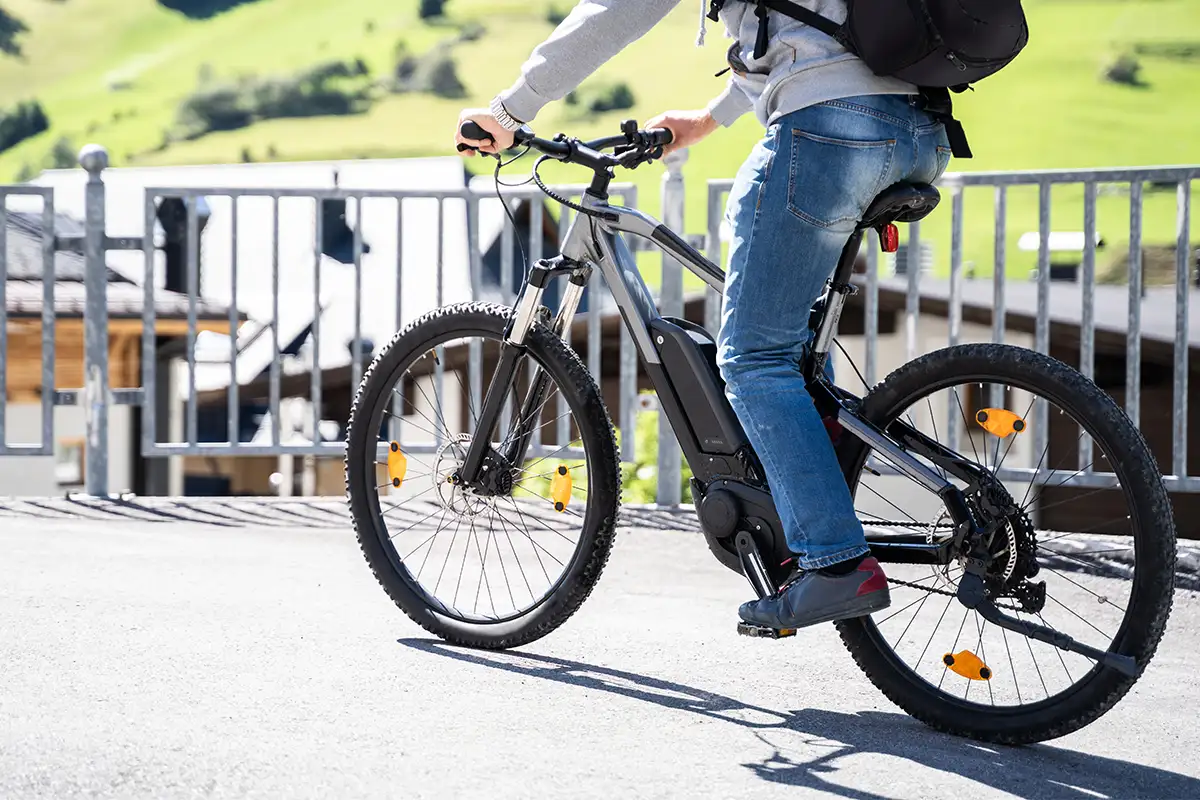
As e-bikes surge in popularity, e-bike injuries have also increased in the area. Loudoun County has seen 122 e-bike-related emergency room visits through the end of September, according to Sheriff Mike Chapman. In 2021, there were only six.
Last month, two 14-year-olds were seriously injured when the e-bike they were riding struck the side of an SUV in Ashburn. And in Fairfax, a 13-year-old riding an e-bike was struck and killed by a garbage truck.
Understand the Types of E-Bikes
E-bikes come in three categories:
On a Class 1 bike, the motor only assists the rider when they’re pedaling and stops assisting when a speed of 20 mph is reached. On a Class 2 bike, the motor can propel the bike without pedaling, but it also reaches a top speed of 20 mph. Class 3 bikes have a top speed of 28 mph.
These distinctions are especially important if you rent e-bikes from one of the commercial providers. Capital Bikeshare bikes are Class 1, while VEO and Lime bikes are Class 2, “and so it’s just a very different experience riding them,” says Sydney Sotelo, education director of the Washington Area Bicyclist Association.
There are bikes that go even faster than that. Sotelo calls them e-motos and describes them as “basically small motorcycles.” They’re not legal to ride on streets or trails. And “they’re certainly not safe for children to operate,” Sotelo says.
While e-bikes are allowed on most sidewalks, roads, and trails unless there are signs prohibiting them, they’re also considered vehicles. So drivers have to comply with all traffic regulations, including lights, signs, and crosswalks. Class 3 bikes are not allowed for those under age 14 without adult supervision. Anyone on a Class 3 bike has to wear a helmet.
What Riders Need to Know
A lot of people hop onto an e-bike for the first time without having ridden a bike since the traditional pedal bike of their childhood, Sotelo says. But there’s a lot more to it than that. “Most people learn how to ride a bike, and then they don’t learn much else, and we really try to fill that gap,” she says.
E-bikes are “not for beginner riders,” Sotelo says. “They are for people who have good control over a bicycle, for people who are able to maneuver their bicycle quickly and can get out of harm’s way if needed.”
She says a WABA class starts with riding the bike without the motor. “We’re just starting with our participants pedaling the bikes to get a feel for the weight, because they’re a lot heavier than a standard bike.”
From there, she says, they go over skills such as hazard avoidance and teach new riders that the two most important things a biker can be are visible and predictable.
“One thing that gives bicyclists a bad rap is when they make unpredictable or unexpected movements that freak the car drivers out and could potentially lead to crashes,” Sotelo says. “Predictability means using hand signals, verbal signals, and even eye contact to communicate with other road users.” It also means keeping an eye out for pedestrians, “the most vulnerable road users.”
What Drivers Need to Know
As the Fairfax County government points out, drivers need to yield to bicyclists in crosswalks just as they would pedestrians. They also need to check their blind spots with even more care — e-bikers can come up on drivers faster than cyclists on traditional bikes. Drivers need to give all bicyclists at least 3 feet of space when passing, as well.
“We’re still in the early decades of these types of vehicles being available to the general public, and we’re still pretty new to how to navigate them,” Sotelo says. “What is legal? What is not legal? Where should they be allowed to ride? Where should they not be allowed to ride? I do think that there’s still a lot of pain points that we’re trying to figure out.”