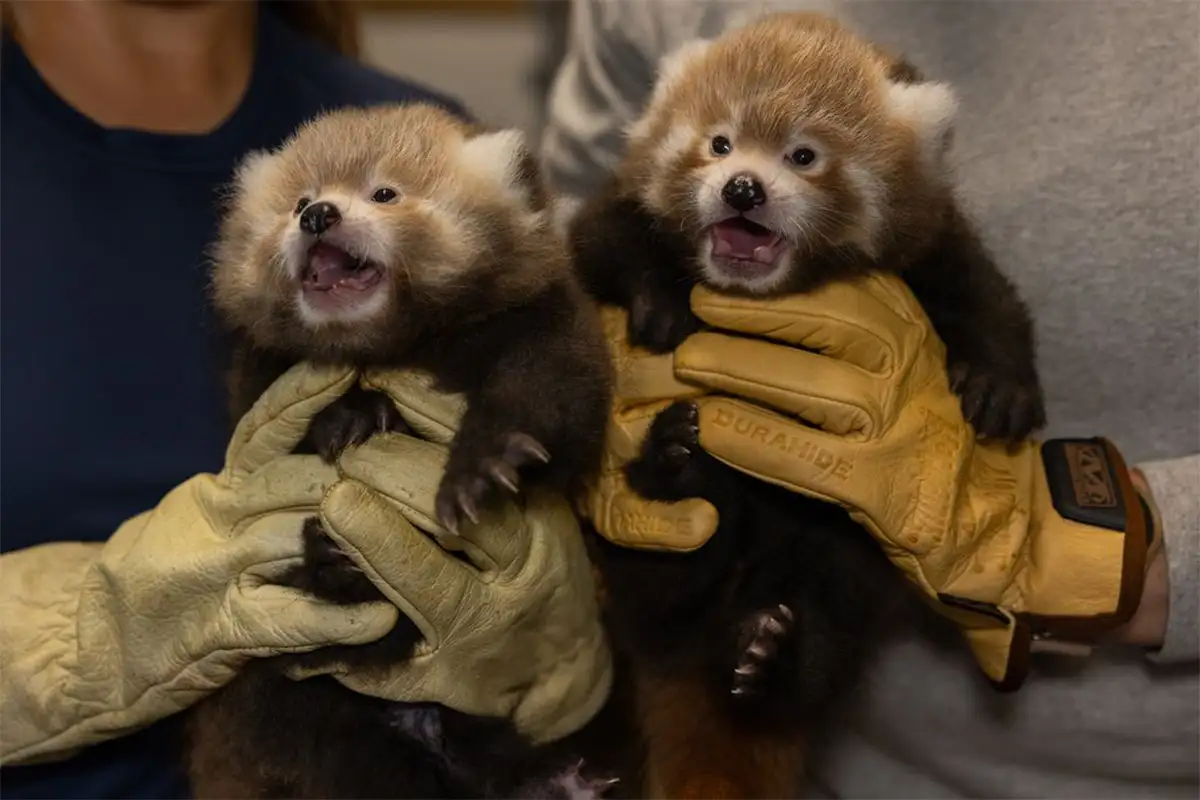
There are three adorable new faces at the Smithsonian’s National Zoo and Conservation Biology Institute. A trio of endangered red panda cubs was born on the Front Royal campus this summer.
Twin cubs, one male and one female, were born to Sequoia, age 3, on May 29. Their dad is 12-year-old male Mow Mow. Less than two weeks later, on June 11, 3-year-old Keahi gave birth to a female cub. Her sire is 7-year-old Rocket.
The cubs are being closely monitored through cameras placed inside nest boxes. The cameras allow staff to check on the animals while minimizing stress on the mothers, or dams. SCBI in Front Royal is closed to the public.
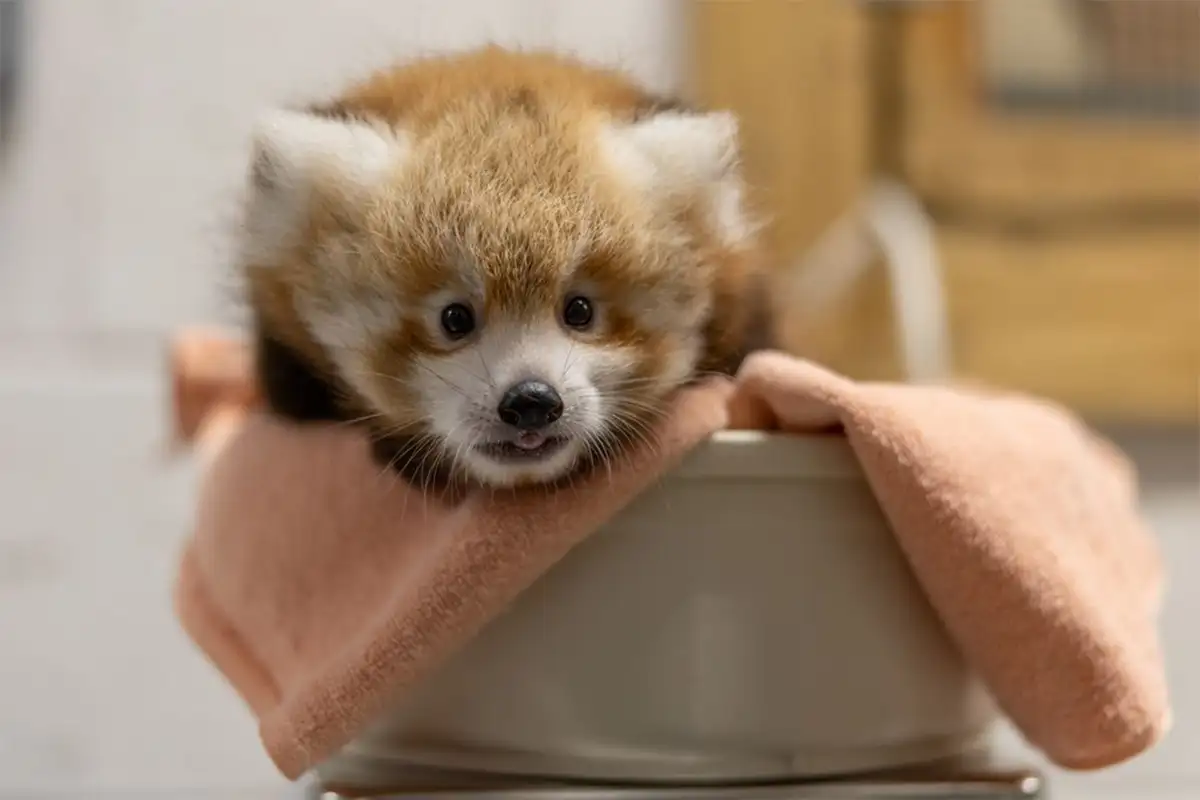
“The cubs are really just balls of fur that eat and sleep right now,” said Jessica Kordell, assistant curator of carnivores at the zoo, in a Facebook post.
Both pairs of parents have had cubs before. Sequoia and Mow Mow had two cubs last year, but sadly, neither survived. Keahi and Rocket also had a cub last year, a female named Kuna. Both males have also previously produced cubs with other females.
Reducing Stress on New Moms
This year, keepers moved the pandas into their air-conditioned indoor spaces due to warmer weather. The pandas’ nest boxes have also been moved off the ground, in hopes of reducing stress on the mothers.
Red pandas are endangered species and their wild populations continue to decline, mainly due to “habitat loss and degradation, poaching and disease transmission from domestic dogs,” SCBI said in a statement. SCBI is working to combat their extinction by growing and maintaining self-sustaining, genetically-diverse populations under human care.
The red panda families will remain at the Front Royal campus. But visitors can see Asa, an adult female, on the Asia trail at the National Zoo in DC.
Feature image of twin cubs by Roshan Patel/Smithsonian’s National Zoo and Conservation Biology Institute