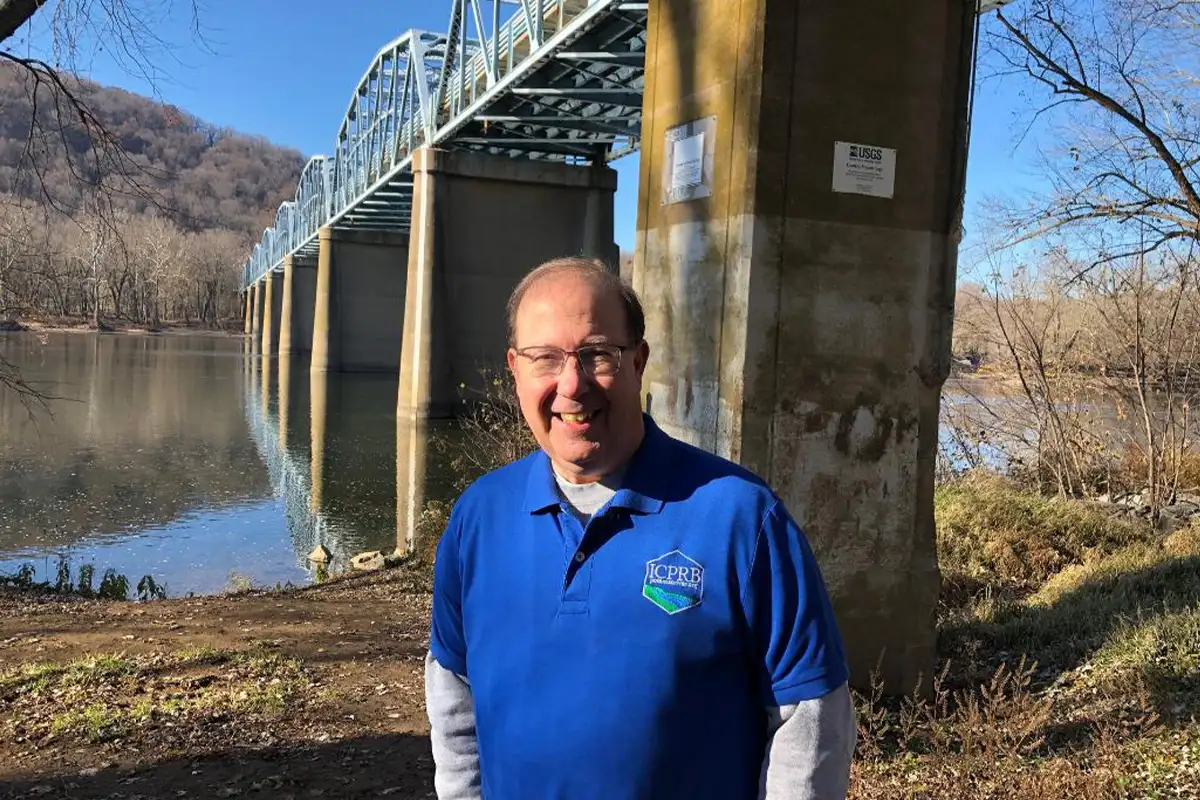
Imagine turning on your sink faucet, but no water flows. Toilets don’t flush, and the creeks run dry. It’s a scenario Arlington resident Michael Nardolilli plays out in his mind every day. In fact, it’s his full-time job to worry about the abundance and quality of water in the DMV.
Since 2019, Nardolilli has served as executive director for the Interstate Commission on the Potomac River Basin (ICPRB). Established by Congress in 1940, ICPRB’s stated mission is “to protect and enhance the waters and related resources of the Potomac River basin through science, regional cooperation, and education.”
More than six million residents live within the Potomac basin, which stretches across Maryland, Pennsylvania, Virginia, West Virginia, and Washington. Also called the Potomac watershed, the basin includes all land areas where water drains toward the junction of the Potomac River and the Chesapeake Bay.
In light of the recent major sewage spill, Nardolilli’s long-time concerns about the Potomac River have become particularly relevant. Built in the early 1960s, the 54-mile Potomac Interceptor sanitary sewer system transports about 60 million gallons of sewage daily from areas as far west as Dulles International Airport to a wastewater plant in Washington, where it is treated before being safely discharged into the Potomac.
Because the spill occurred downstream from the river’s intake pipes, our drinking water was spared — this time. Nardolilli says the event amplified the need to seriously prepare for predicted water emergencies or shortages in the future.
Northern Virginia Magazine spoke with Nardolilli about his work at ICPRB.
What was your first thought when you learned about the recent sewage spill?
The sewage spill occurred on January 19 at about 4 p.m. DC Water is supposed to notify us immediately if there’s a spill into the Potomac River, but I didn’t hear about it until a third party notified us later that evening, around 11 or midnight.
My first thought was whether it was above or below the drinking water intakes. I felt better once I learned the spill was below the intakes — except for the intake at Little Falls, which is the backup for the Washington Aqueduct but was not in use at the time. We really dodged a bullet by having the spill occur where and when it did, during winter and not during summer when a lot of people would be on the river recreating. At no point was the drinking water of the Washington area ever compromised by this spill.
What do you consider major threats to our water supply in the future?
First, we have focused on drought, because the Potomac River has had historic droughts in the past. The region has been extremely dry for the last three years. That’s why I’m focused in on trying to get additional backup water supply for Washington, DC, and [the] vicinity. Because there will be another major drought — it’s not a question of if, but when.
People have generally felt like we didn’t need to focus on sewers or drinking water, because it has all performed well over the years. The problem is that all that infrastructure was put in a long time ago, and we’ve had great growth in area. That growth puts a strain on the infrastructure.
Second, we have new users of water from the river, like data centers, especially in Loudoun County. We estimate there are about 290 data centers right now in the Potomac River basin. We used to estimate that by the time we get to 2050, there would be a 1% chance of us running out of water, but that possibility has increased to 5% because of climate change and things like data centers.
What can we all do to ensure the basin stays healthy and continues to provide clean drinking water?
Water is a precious resource; use it wisely. First, develop good habits of not wasting water now. Second, during winter, be judicious about use of salt on sidewalks and driveways, because it gets into waterways. If trends continue and the river gets saltier, we will actually be able to taste it in the future. Third, make sure that you are aware of things happening on the river. We rely on the eyes and ears of folks who recreate or work along the river. Let us know if you see a polluting situation or contact any of the regulatory agencies.
This interview has been edited for length and clarity.
Feature image courtesy Michael Nardolilli