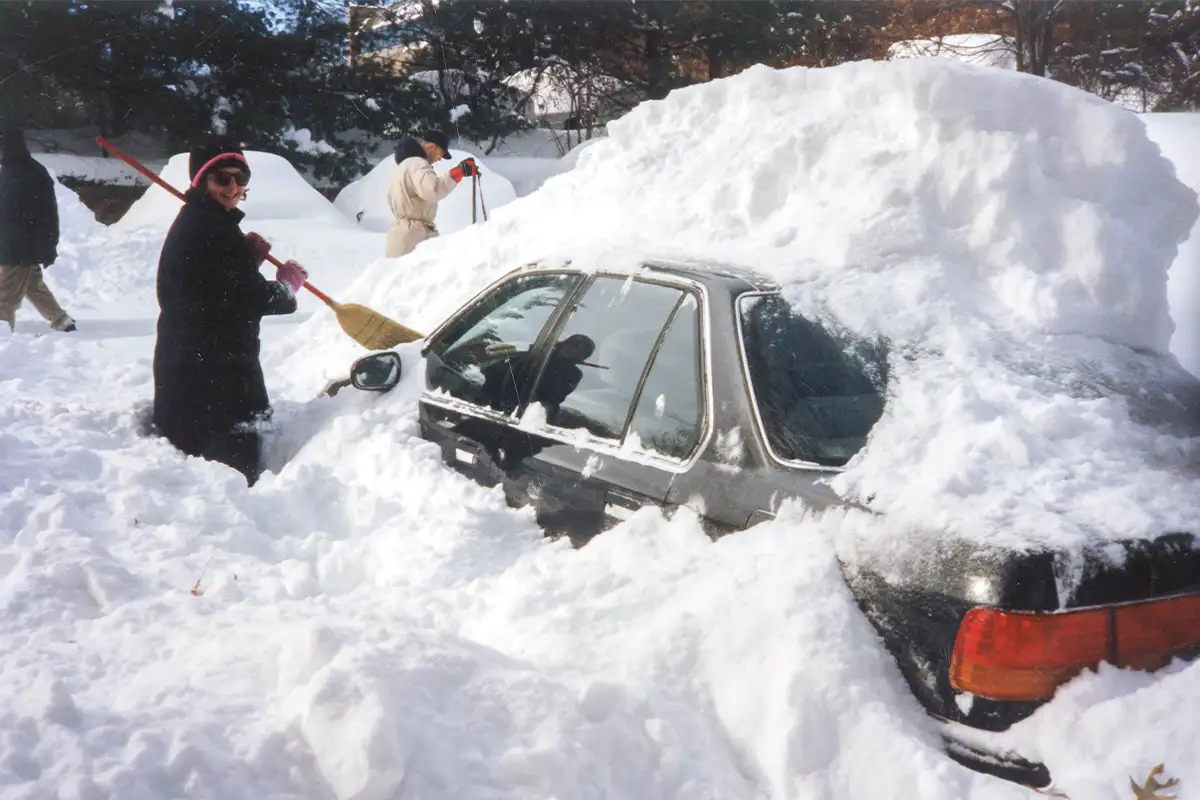
Anticipation was in the air on Saturday, January 6, 1996. So was moisture — lots and lots of it — drawn from the Gulf of Mexico and moving up the East Coast. Meanwhile, a brutally frigid air mass, dense and heavy and as wide as the Eastern Seaboard, was creeping south from the Arctic.
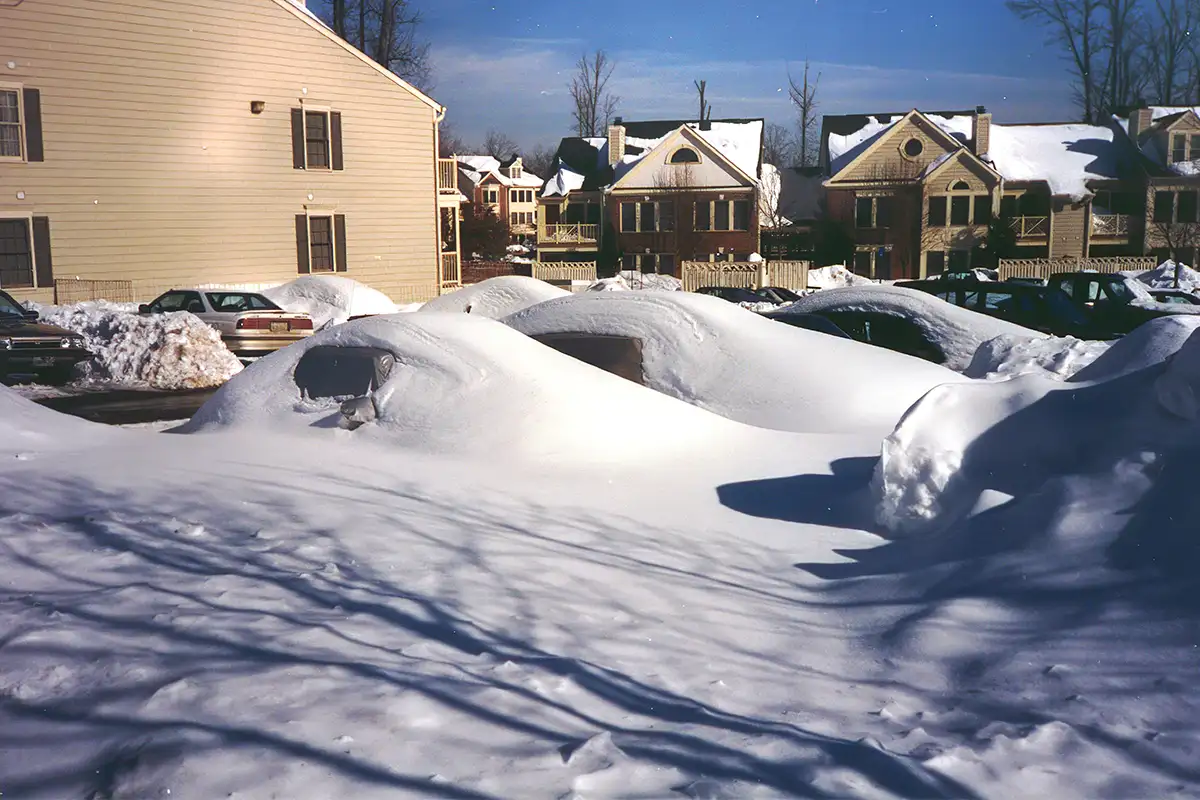
By dawn on Sunday, that unavoidable rendezvous of extreme weather systems would leave millions homebound with impassable roads and neighborhoods buried under countless tons of snow. Entire cities from North Carolina to New England were brought to a standstill — some for more than a week — in its blinding white wake.
Three decades later, the blizzard of ’96 endures as a vivid reminder of the power of Mother Nature. The big question is: Did we learn anything from it?
Forecasting the Storm
“The thing I remember was, it was actually a well-forecast storm,” says Bob Ryan, the WRC-TV (now NBC4) meteorologist from the heyday of local broadcast TV news. Ryan, who retired in 2013 after more than 30 years on the air, was on duty at NBC’s affiliate studios in DC. He remembers scanning satellite data from NASA and real-time updates from the station’s proprietary WeatherNet4 technology.
The numbers were adding up to be a big storm; there was no debate. “I always joke [that] when my neighbors see my Ford Bronco parked at the end of the driveway, they know there’s some big storm coming,” the McLean resident says.
The Bronco was at the end of the driveway for several days before the flakes fell.
“I was watching all the newscasts, and I remember Bob was really excited about this storm. The day before, he actually clasped his hands with a big smile like he was about to make this incredible announcement or something. He was hyped. He knew this was the real deal,” says Jason Samenow, chief meteorologist of The Washington Post’s weather team, the Capital Weather Gang. He was a 20-year-old student at the University of Virginia in 1996, home in Falls Church on winter break. A few years before, he’d interned for Ryan while he was a senior at The Potomac School in McLean.
“The forecasters were fairly confident that this was going to be a big event,” Samenow recalls.
They were right.
“It started on Saturday and went on for essentially three days, all the way from the Carolinas up to New England,” Ryan says. “It was a historic storm.”
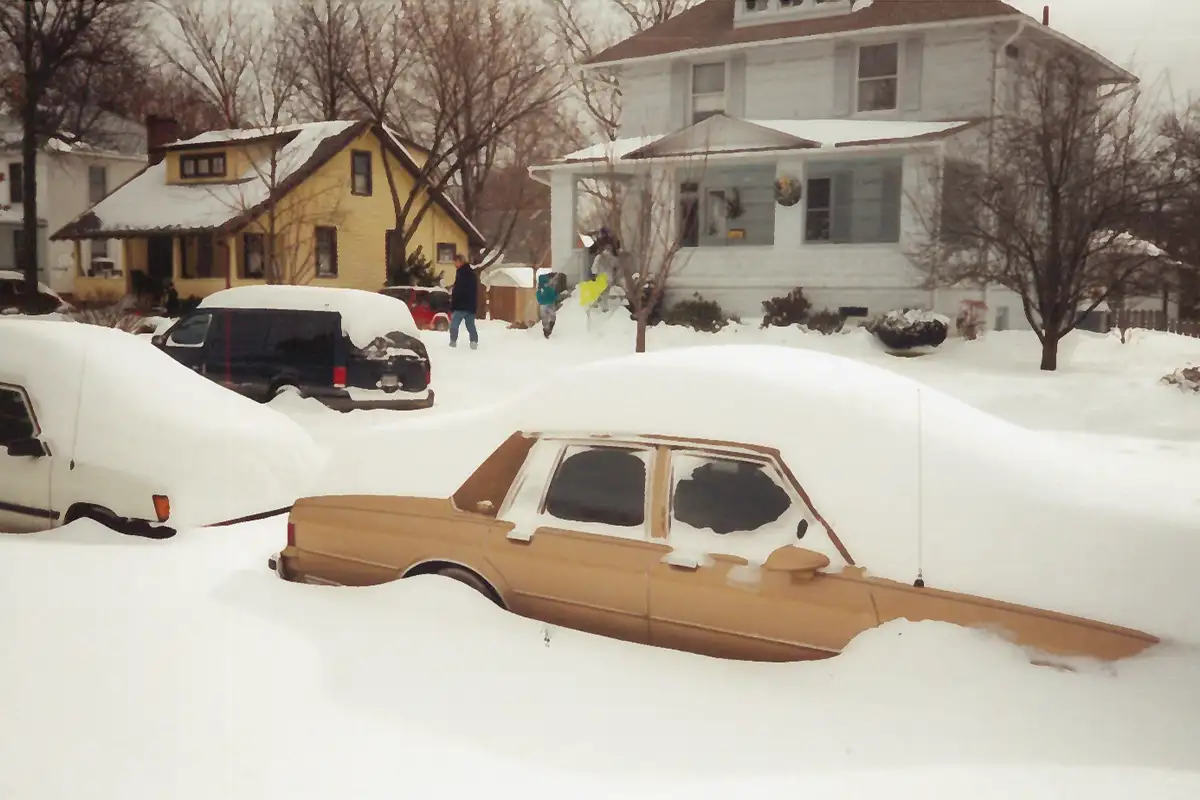
Leesburg got 36 inches overnight. Fairfax County ranged from 25 to 30 inches. For perspective, Dulles Airport has recorded about 28 inches of snow in total over the past three years.
Regional Impact
The blanket of white was magnificent to behold — but impossible to manage.
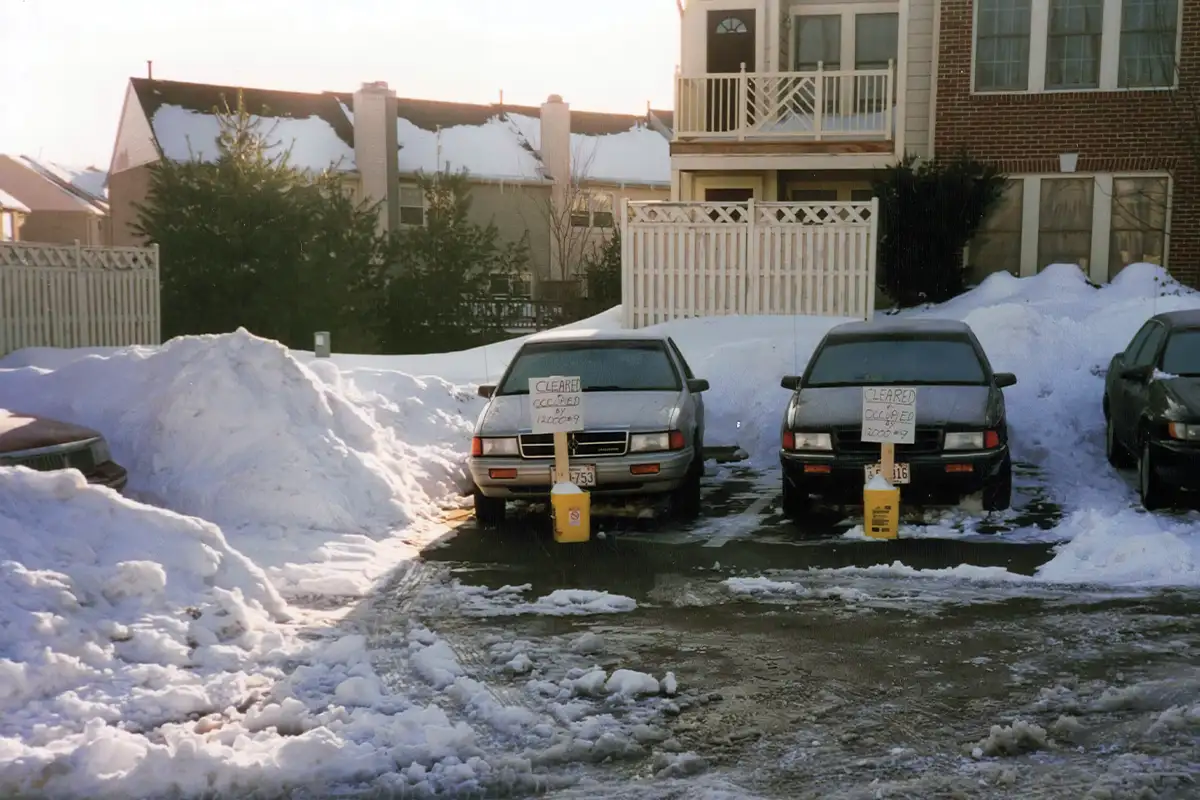
The regional response was magnified and prolonged. Airports closed, roofs collapsed, schools extended holiday breaks by weeks, food supplies were threatened.
The federal government — already stalled by a budget impasse (sound familiar?) — closed completely, giving the storm the nickname “The Great Furlough Storm.”
Sadly, people died. Nationally, between 154 and 187 deaths were attributed to the storm, according to the National Climatic Data Center. In the mid-Atlantic, at least 25 deaths were reported, primarily from heart attacks while shoveling snow, traffic accidents, house fires from generators and kerosene heaters, and roof collapses.
“One person was killed by a falling tree limb,” Ryan recalls. “And [people died from] carbon monoxide poisoning from being trapped in cars.”
It was smart to stay put — and local newscasters worked diligently to give viewers a reason to stay glued to their over-the-air or cable-tethered televisions.
“We had reporters prepositioned everywhere, from Tysons to Fairfax to southern Maryland, and when the storm really hit, it was snowing 1 to 2 inches an hour,” Ryan says. “Nobody could get anyplace, and we had it covered. People didn’t have anything to do but watch television. I think AOL was around, but there was no broadband internet like we have today.”
Back-to-Back Storms
“What made the storm unique,” Samenow says, “was that it was followed up by not one but two smaller snowstorms. So back-to-back-to-back storms.”
A second storm dropped “2 or 3 more inches. And then a few days after that, there was a moderate snowstorm that dropped 4 to 8 inches across the area,” he says.
That one, he adds, “changed to sleet and rain at the end, so it wasn’t a pure snowstorm. The amount of snow on the ground from the combination of those three storms was pretty amazing.”
With frozen snowpack covering every surface in the region, the air temperature then began rising — from freezing one day to the 50s and 60s the next. Heavy rain — up to 3 inches in some places — followed. The dense, ice-covered snowpack began to rapidly melt, and inevitably, the region’s rivers, creeks, and water tables began to rise.
A Melting Mess
“The rainstorm and the hot, humid air melted the snowpack overnight. It was the craziest thing I’d ever seen,” says Kevin Ambrose, an Adobe executive who lives in Oakton. He’s a longtime freelance “stormchaser” for The Washington Post who’s fascinated with the weather, and storms in particular. “I was even a ‘weather watcher’ for the National Weather Service when I was 12,” he says.
What he calls his “hobby job” has led to several books of stories and photography about local weather phenomena, including Blizzards and Snowstorms of Washington, D.C., which he recently republished.
“Two feet of snow disappeared, and it happened all the way across Virginia, up into the mountains, and the flooding was tremendous on the Potomac River,” he says. “I have photos of that.”
Ryan has photos of the water of the Potomac nearly reaching the bottom of Chain Bridge. The flooding took an additional 30 lives in the mid-Atlantic.
The only lesson from the Great Blizzard of 1996, Ryan says, “is that those things are going to happen again, although there is a lower probability that we’ll see anything of that magnitude again. What we’ve been getting lately is rainfall.” The major storms “will become less likely, but we’ll still have some big snowstorms in the future just to keep the snow lovers happy.”
He smiles at the thought, because he is a snow lover. As is Ambrose.
“If you want to play statistics, we’re due,” Ambrose says, and he’s not unhappy about it. “We’re due a big snowstorm. The DC area gets a big snowstorm every seven to eight years, and we’ve not had one since 2016. So, in fact, we’re overdue for a big snowstorm. Statistically speaking.”
You’ve been warned.
Feature image courtesy Fairfax County Library Photographic Archive
This story originally ran in our January issue. For more stories like this, subscribe to Northern Virginia Magazine.