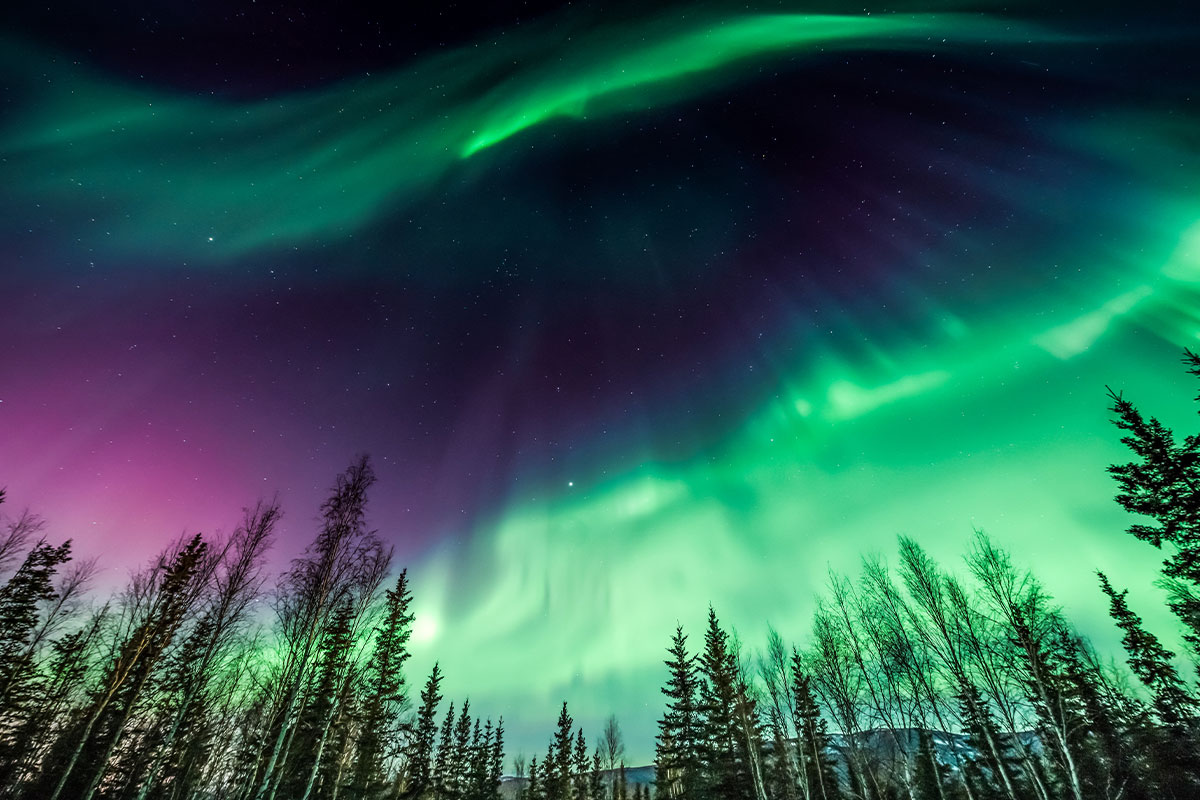
If your Facebook and Instagram feeds are full of photos of the northern lights, you’re not alone. A strong geometric storm has produced sightings as far south as Florida, Texas, and Alabama, spaceweather.com says.
What Causes Auroras
The northern lights — also known as aurora borealis — are caused “when energetic particles from space bombard gases in the atmosphere, they can give the atoms and molecules of the gases extra energy. That extra energy is then released as tiny specks of light,” according to NASA.
Tuesday night’s auroras were caused by a severe geomagnetic storm, or CME. “Earth’s magnetic field is still reverberating from a double-strike of CMEs” on November 11, spaceweather.com says. The website reports that another CME is expected to hit Earth on November 12, giving you another chance to catch the colorful show.
Viewing and Photographing Tips
For best viewing, NASA suggests heading to a dark location with little or no light pollution, if possible. Some aurora displays can last all night, but some can also be shorter lived and can wax and wane in brightness throughout the night. During large events, auroras may be seen as early as sunset and as late as sunrise. The usually maximize around midnight.
NASA offers resources for capturing auroras on your camera or smartphone. Most newer phones have a night mode “that can be great for photographing auroras. This mode may be automatically selected when the camera is opened in low lighting. If not, browse the settings in your camera app to find night or low-light setting adjustments,” NASA says.
If your camera doesn’t have a manual or night mode, NASA suggests downloading a third-party app that can give more control over the settings. Using a tripod or leaning your phone up against a fixed object can also help stabilize your shots.
Capture an amazing pic and want to share it beyond Facebook? You can help NASA track aurora activity by participating in the Aurorasaurus project. After you sign up, you’ll receive community alerts when auroras are sighted near you.
Feature image, Elizabeth/stock.adobe.com