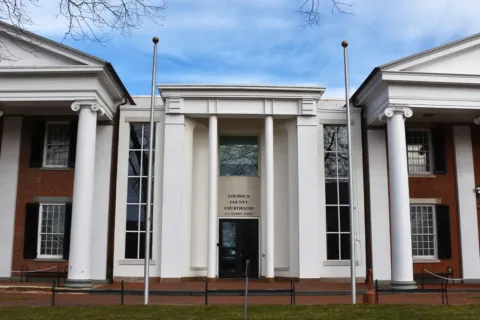
The Fairfax County Board of Supervisors approved several amendments to the county code in a meeting on Tuesday, June 24. The changes go into effect on July 1. Some of these amendments served to ensure that the county code is in line with new state-level laws.
Fireworks
One amendment that was approved on Tuesday gives Fairfax County police the authority to enforce provisions related to illegal fireworks. Currently, firework enforcement is limited to fire marshal staff.
“This ordinance change will give police the authority they need to enforce the fireworks calls for service they’re currently being called on today,” said supervisor Rodney Lusk. “This ordinance is timely as we approach the Fourth of July holiday, where illegal fireworks have caused injuries and fires across the county, and I hope this will be a positive step forward in preventing the use of these disruptive, illegal fireworks in our neighborhoods.”
Crosswalk Safety
Another approved amendment will increase the penalty for motorists who hit pedestrians in crosswalks. A recently passed state law, effective in July, makes it a Class 1 misdemeanor if failure to stop at a crosswalk results in injury or death of a pedestrian. That could result in up to 12 months of jail time and/or a fine of up to $2,500. Supervisors approved an update to the county code to be in line with that state-level law.
Traffic code changes also include higher penalties for stunt or exhibition driving.
Alcoholic Beverages
New revisions prohibit drinking alcohol in public on sidewalks adjoining a public street. It expands a code that prohibited drinking at parks, playgrounds, or on public streets. There are exceptions for events in public places that have obtained the necessary permits to serve alcohol.
It also expands the law about not drinking alcohol during school hours to fully prohibit drinking alcohol on school grounds.
These changes, like the crosswalk rules, served to update the county code to be in line with new state code.
‘Micromobility Devices’
The supervisors also approved changes to Chapter 62 of the county code, which deals with fire protection. Specifically, it placed restrictions on storage and charging of what it calls “micromobility devices.” These are things like e-bikes and scooters, not electric cars.
The new restrictions specify how businesses can store and charge such devices, including banning extension cords. It does not apply to residential storing or charging of an individual’s personal devices.
Feature image courtesy Africa Studio/stock.adobe.com