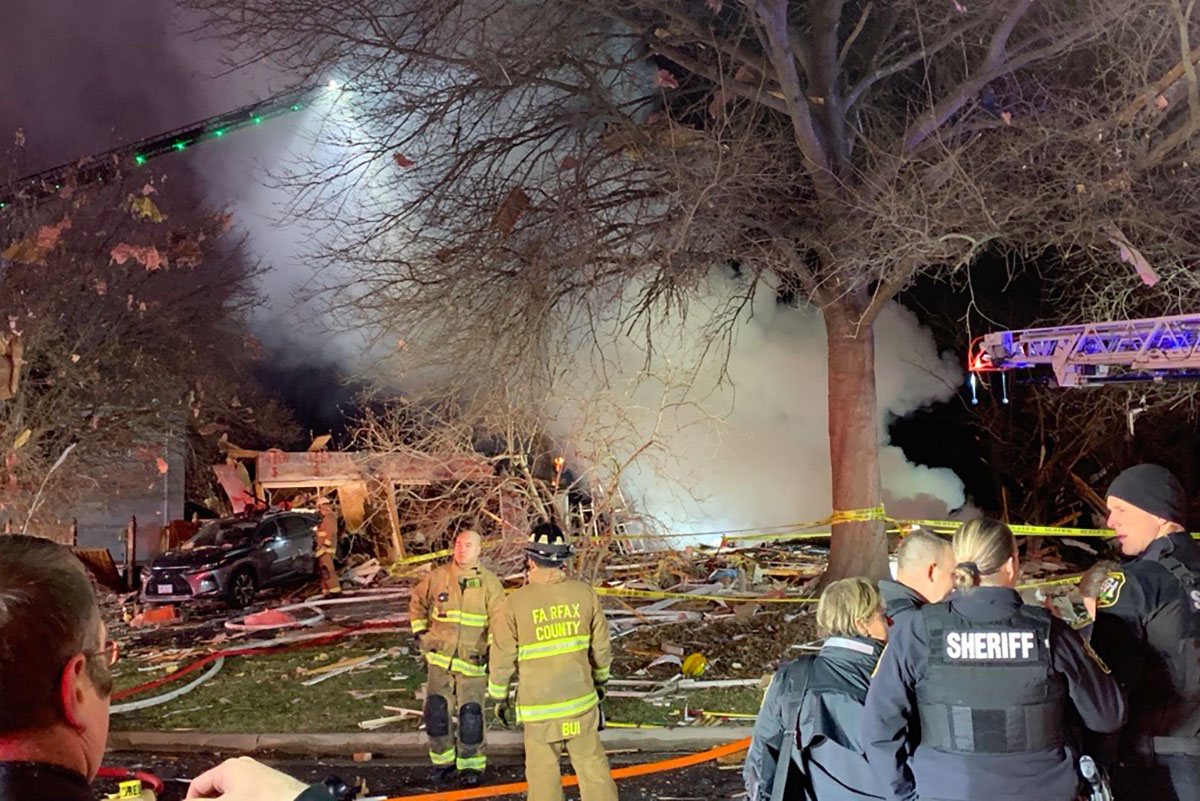
The Loudoun County Combined Fire and Rescue System (LCCFRS) has released its report on the 2024 explosion in Sterling that killed firefighter Trevor Brown and injured 13 others. The report identifies multiple flaws in how the situation was handled, and outlines issues with the first responders’ risk assessment and communication at the time of the fire.
The explosion occurred on February 16, 2024, at 347 Silver Ridge Dr. LCCFRS units were on the scene of a suspected gas leak when the investigation found that there was a large propane tank leaking underground.
Firefighters requested a Hazardous Materials Team and evacuated the residents shortly before the explosion occurred. The blast leveled the home and trapped several firefighters in the debris. Rapid Intervention Teams Two were able to rescue firefighters.
Ten first responders were injured, two civilians had minor injuries, and Brown died due to the explosion. A funeral with full fire and rescue honors was held for Brown on March 4.
The Report
Immediately after the incident, System Chief Keith Johnson established a Significant Incident Team (SIT) of 14 internal and external stakeholders, led by Thomas Coe, chief of Frederick County, Maryland’s Division of Fire and Rescue Services. The SIT aimed to gather and assess all information about the incident, including strengths and weaknesses of the response. The findings are outlined in a 211-page report.
“This report is not intended to place blame or identify any single action performed on the scene,” Johnson stated as part of the report. “The goal is to identify, learn, and improve our daily operations.”
Communication Challenges
The report identified “delays in relaying critical information and confusion regarding mayday calls, which impacted the effectiveness of response efforts.”
Over the course of the incident, there were 136 failed radio transmissions, 20 of which were from the first responders who were trapped in the debris. “These types of rejections can be contributed to a lack of radio discipline,” the report says.
Risk Assessment
The analysis also found that basic key indicators were ignored during the risk assessment process. Critical signs were missed, including the nature of the call, the scent of flammable gas, evidence of product in storm drains, active meter alarms indicating high levels of gas, and other details.
According to the report, first responders should have prioritized the rescue and evacuation of civilians before any other tasks. Instead, occupants were moving in and out of the structure without control by fire personnel soon before the explosion.
The report also recommended that, when arriving at a suspected gas leak, fire personnel should secure the external blast zone and establish a perimeter to prevent unauthorized personnel from entering.
Other Factors
The report also noted flaws such as resource allocation. Responders struggled to ensure an adequate water supply and manage the rescue of trapped personnel.
In addition, the Command structure faced challenges to manage the situation, “leading to difficulties in coordinating rescue efforts, patient treatment/transport, and ensuring scene accountability.”
The report also identified some factors that positively impacted incident outcomes. These include mayday training that firefighters underwent prior to the incident, management and coordination from the LCFR communications staff, and the expertise of two technical rescue units that arrived at the scene.
System Chief Johnson also acknowledged the system’s work to look after firefighters’ mental health after the incident. Beginning the night of the incident, LCCFR rolled out “one of the most complex behavioral health outreach efforts to take care of not only the physical health of our injured and affected firefighters but also one of the most critical aspects, their mental health,” Johnson said.
Full details are available in the incident report.
A criminal case against an employee of the gas company that filled the propane tank was filed on October 21, 2024, and remains open.
Feature image courtesy Loudoun County Combined Fire and Rescue Department