Even the most organized parent knows that summer can bring chaos. Sports equipment and toys take over, and getting out the door gets stressful if kids can’t find what they need.
“It would be a miracle to keep clutter away,” says Lisa Geraci Rigoni, founder of The Organizing Mentors in Ashburn and author of 17 Spatulas and the Man Who Fried an Egg: Reclaim Your Space Mentally and Physically. “Clutter is OK until it affects you or the kids.”
She and organizer Rachel Rosenthal of Rachel and Company in Washington, DC, recommend dedicated areas for the children’s things, such as sports equipment, swimming gear, Barbie dolls, and books.
“When there isn’t one, then things are just going to tend to be clustered around the door, so if you don’t have a system or a spot for everything, then it’s going to tend to become a mess,” Rosenthal says.
Involve children with organizing their playthings. “If your kids are old enough, ask them for their ideas,” Rigoni says. “If a kid has skin in the game, so to speak, then it makes sense to them where things are organized.”
Involve the kids when they are young in order for organization to become a way of life, Rosenthal says. Very young children may not know how to organize but will understand that items belong in specific spots. “You can show them that organization is not just Mom coming with a trash bag and decluttering and they’re having no part of it. They should be a part of all the organization systems,” she says.
Storing Athletic Equipment
Sports equipment is best stored in the garage, if you have one. Rosenthal recommends utilizing hooks to hang items like hockey sticks and beach chairs. Organizing bats and balls doesn’t have to be expensive. Rigoni’s suggestion: plastic trash cans of varying sizes.
She says to ask the kids simple questions. “‘Where do you think we should put your bats? Where do you think this works? Here’s the space we have allotted for this activity.’ And then they own it. They know where things go, and you’re teaching them they are big kids. They can do it themselves, and kids always want to be bigger than they are.”
Use pegboards to give items homes. If something is not on the pegboard, the children know they need to find it, she says.
Make a checklist kids can follow. They will then know to add a clean towel, goggles, and a swim cap to their swim bags.
Utilize mesh bags for bathing suits and pool items. “My daughter was a swimmer, so we used a lot of mesh bags and just hung all of her stuff, in the garage or in the shower. Drying racks are good for some sports equipment,” Rigoni says.
“You don’t want to invest in a ton of money if the kids are just playing the sport for the summer.”
Have a Go-Bag Area
Create an area in your home where kids can gather what they need for day camp, a day trip, or daily sports, such as bug spray, sunscreen, sunglasses, hats, and water bottles. “Make sure you have a station so that you can actually see and utilize those things that you’re using every day,” Rosenthal says. “Make it easy and accessible.”
It won’t hurt to have the kids pack their backpacks and bags the night before. “It’s going to save you that much more hassle in the morning,” she says, especially if someone oversleeps or has a morning meltdown (not that that ever happens).
Seeing What’s There
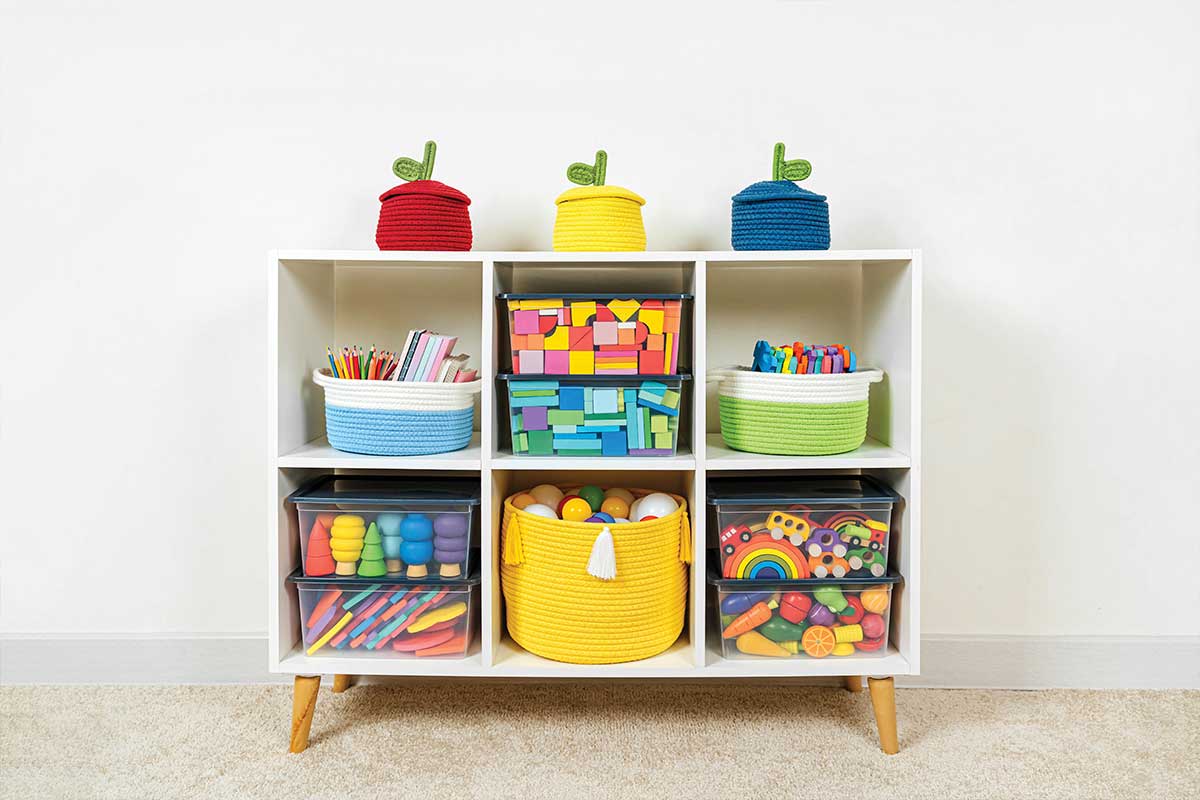
While parents may not want to see the toys, organizers say that open and clear bins, containers, and shelving are easiest for younger children. Think: wooden shelves with little baskets or cubbies with or without baskets.
“For many kids, having a top on something is a hindrance to actually putting it away and taking it out. If there is an open top, that’s great, and being able to see what’s actually inside of it. A lot of times, kids respond to things that are clear because you can actually see what’s inside of it. Or if they’re of reading age, putting a label on top of it and a picture maybe of what goes inside, that’s again a way to help and assist and enable your child to put things away and know where things are,” says Rosenthal.
Organizing Books
For summer readers, come up with a system that will make it easy to access and put away books. Rosenthal says young children respond to rainbow color order. For elementary and middle schoolers, grouping books by category, such as all graphic novels together, may work, or alphabetically by the author’s last name. “Think about what system is going to actually work for your reader, for your child at that age, and then the organization can come from that,” she says.
Bottom line: However you opt to contain the clutter, Rigoni says parents need to put less pressure on themselves. “Give yourself a little grace. Let the kids have a little fun in the summer.”
Feature image, stock.adobe.com
This story originally ran in our June issue. For more stories like this, subscribe to Northern Virginia Magazine.