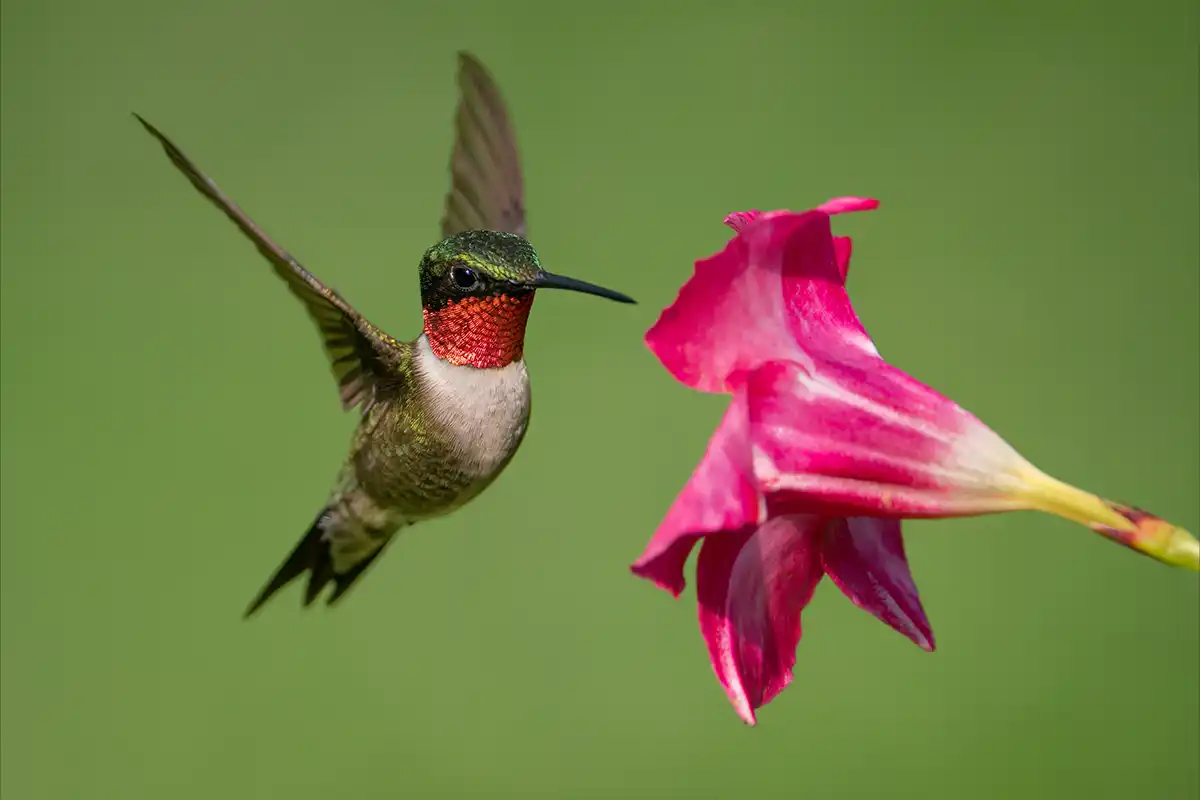
Hummingbird season in Virginia is almost here!
The tiny birds — with big personalities— start their migration from Mexico in early spring and should start popping up in the DMV area later this month.
“Because of this, it is important to have flowers blooming throughout their migration time. So think about succession planting from April through November,” says Pamela Krist, a master gardener at Alexandria’s Green Spring Gardens and a Fairfax County master naturalist.
Why Plant for Hummingbirds?
Hummingbirds are a species that a lot of folks are fond of, says Amanda Robinson, executive director with the Northern Virginia Bird Alliance.
“Providing that connection to nature helps us to see our place within the ecosystem and not as separate from the natural world,” Robinson says. “Anything that encourages our curiosity and care for the species around us is a good thing and can have excellent community building impacts — not to mention health impacts.”
Birdwatching can lower blood pressure and reduce stress hormones, which is something a lot of people can use some help with.
“They are really very entertaining to watch. We have people come every morning to see them,” says Judy Zatsick, site manager at Green Spring Gardens.
“They are less afraid of people than other birds tend to be, so you can really see them up close if you can get them to your yard,” she adds.
Hummingbirds often have personalities and are quite assertive about their territories, so you can sometimes catch comical visual displays where they chase other hummingbirds away from feeders.
“They are really just a fun little animal,” Zatsick says. “And children tend to like learning fun facts like how fast their hearts beat or how fast their wings flap in a minute.”
What Types of Plants to Have
Hummingbirds prefer tubular-shaped flowers with deep nectaries, notes Krist. They are also attracted to the color red, so any red plants are very popular, adds Zatsick.
“If you can plant native plants — those which have evolved in this ecoregion side by side with the insects, spiders, and birds — you will maximize the ecological benefits you are providing,” Krist adds.
One example is Wild Columbine. “There are many cultivars of the native Aquilegia canadensis; however, the red straight species will be most attractive to hummingbirds,” Krist says. “Virginia bluebells and Dicentra or bleeding heart, will also attract these colorful birds.”
Another native plant that you can plant to attract hummingbirds is Lobelia, says Zatsick.
“Encourage your neighbors to also plant for hummingbirds,” suggests Krist. “These will create highways the birds can feed from and nest in.”
If you have the space, Krist suggests these tips:
- Hummingbirds are territorial, so try to create several areas in your yard.
- Include understory trees, shrubs, perennial flowers, and vines.
- Hummingbird habitat includes sun and shade, and there are a wide range of plants to choose from.
If you only have a balcony or a pot, however, any plant will work, Krist says. “Even a shrub can be put in a pot. The container will restrict the size of the shrub naturally.”
Or swap out the plants so there is a spring bloomer, summer bloomer, and then a fall bloomer for the hummingbirds’ southern migration.
Environmental Factors
Like all birds, hummingbirds need a habitat that supplies food, shelter, and nesting spots. If you have a lot of trees in your yard, that can be beneficial for attracting hummingbirds, says Zatsick. “They tend to nest up a bit higher on the branch of a woody tree such as an oak tree. So if you have larger, older trees, they are going to be attracted to that for their nests.”
Gentle spraying water sources or shallow bird baths can also be an attractive feature to hummingbirds.
“Hummingbirds are meticulous about cleanliness and will often flit through sprinklers or rainwater on leaves to clean themselves,” Krist says.
Avoid Pesticides and Chemicals
Eliminating or reducing chemical pesticides will help bring in hummingbirds as the protein they need comes from small insects and spiders, Krist says.
This is why native plants and trees are so important, says Margaret Fisher, outreach coordinator with Plant NOVA Natives/Plant NOVA Trees. “The caterpillars themselves need shelter and places to reproduce,” Fisher says. “Since turf grass does not provide that, it is important to leave the leaves on the ground to provide overwintering spots for the egg, larval, and adult forms of the insects.”
Outdoor cats can also be a problem for hummingbirds. Domestic cats need to be kept indoors, Fisher says.
“Domestic cats are responsible for the vast majority of bird deaths,” Krist adds. “Well over the number of birds killed by window strikes, for example.”
Take Care of Feeders
If you don’t have space for planting a lot of flowers, you can always try a hummingbird feeder.
“You can make a big batch of the syrup and keep it in your fridge,” Zatsick says, noting that it should last for couple of weeks. The syrup can be made by mixing ¼ cup of sugar to one cup of water.
Keep in mind, however, that while hummingbird feeders can definitely help to attract the birds to your yard, it is important to ensure you are properly monitoring and cleaning them. “Be sure to keep an eye on it and change it out every couple days, especially in the summer,” Zatsick says. “It can get moldy quite quickly in the heat as well as attract ants — both of which will deter hummingbirds.”
If the hummingbirds aren’t coming around, there’s a good chance something is wrong with the feeder, she says.
Feature image, stock.adobe.com