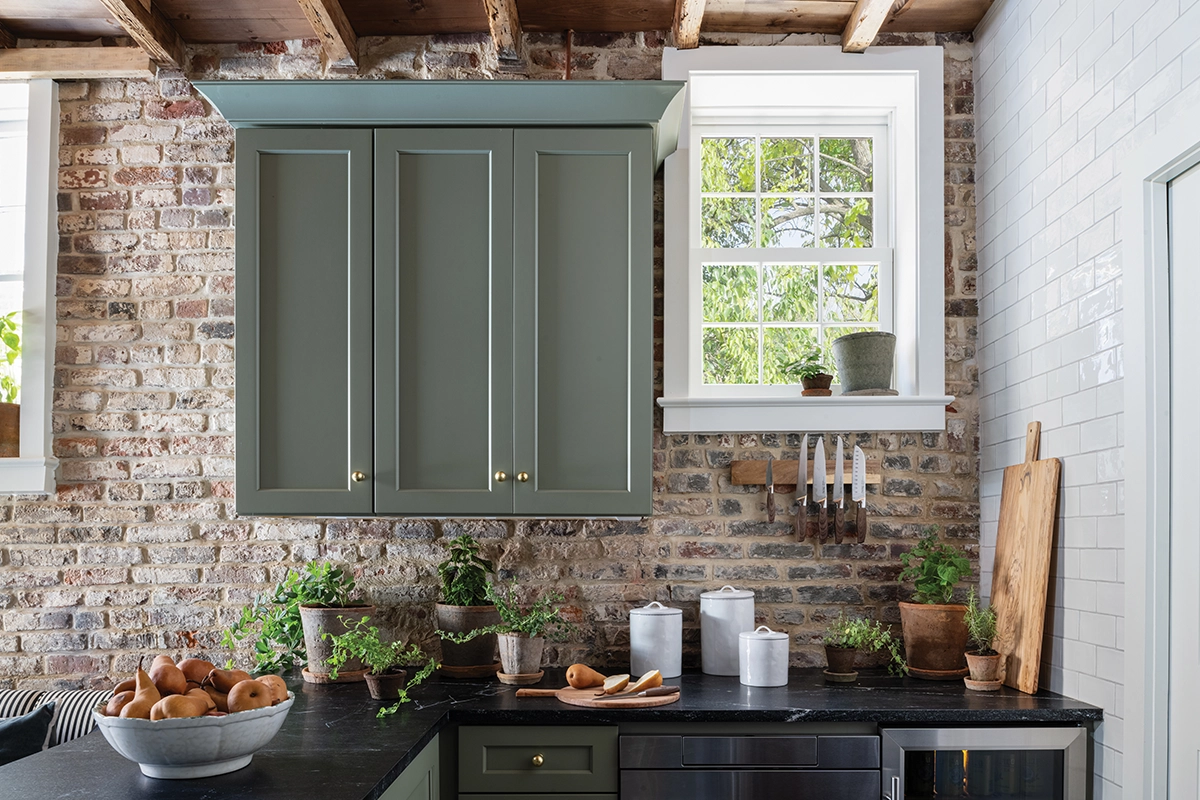
These kitchen renovations combine charm with modern functionality. From a reimagined Old Town rowhouse to a chic farmhouse and a scullery, each design balances style and practicality, reflecting the homeowners’ needs.
Old Town Gem
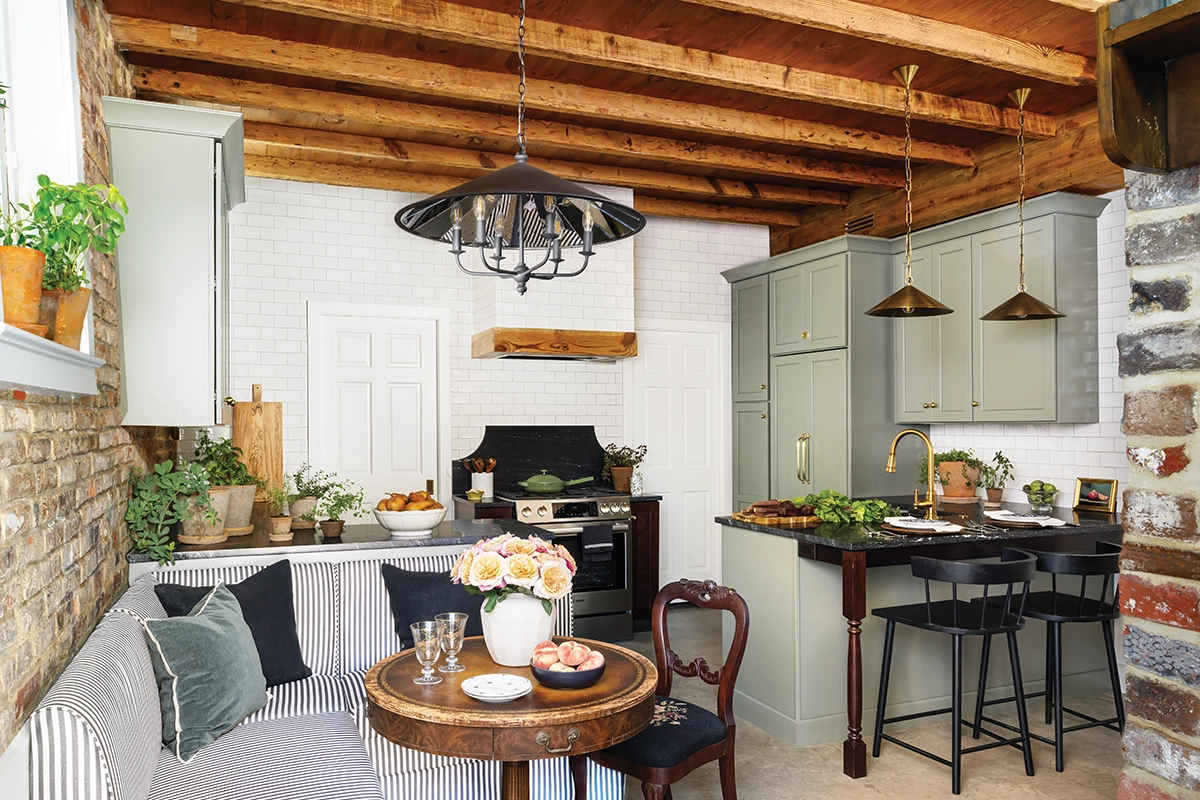
“My clients wanted to keep the historical integrity of their 1790s Old Town Alexandria rowhouse, but they also recognized their kitchen’s footprint needed reconfiguring to function for their daily lives,” says interior designer Corinne Back of Corinne Victoria Design.
Back attended Virginia Tech with the homeowners, a young couple and first-time homeowners. She modified the architectural blueprint (by Dimond Adams Design Architecture) for the basement-level galley kitchen and dining room by suggesting the two spaces be combined into one open layout in the 190-square-foot space.
“Our alternative layout included a custom L-shaped banquette, offering a conversational area, which also faced the television mounted on the fireplace wall for watching ballgames, as well as a larger island, with bar stools, serving as a central hub for gatherings,” she says.
Considering her clients’ lifestyle — less cooking, more entertaining — Back opted for a small dishwasher and range top, with a custom hood by Marvel Homes, to create room for a beverage fridge.
“The kitchen now feels cohesive in style with the home’s historical charm, but we added fresh hardware and light fixtures for a contemporary touch,” Back says. “This blend of old and new creates a timeless aesthetic that resonates with the couple’s appreciation for both history and modern convenience.”
Best in Blue
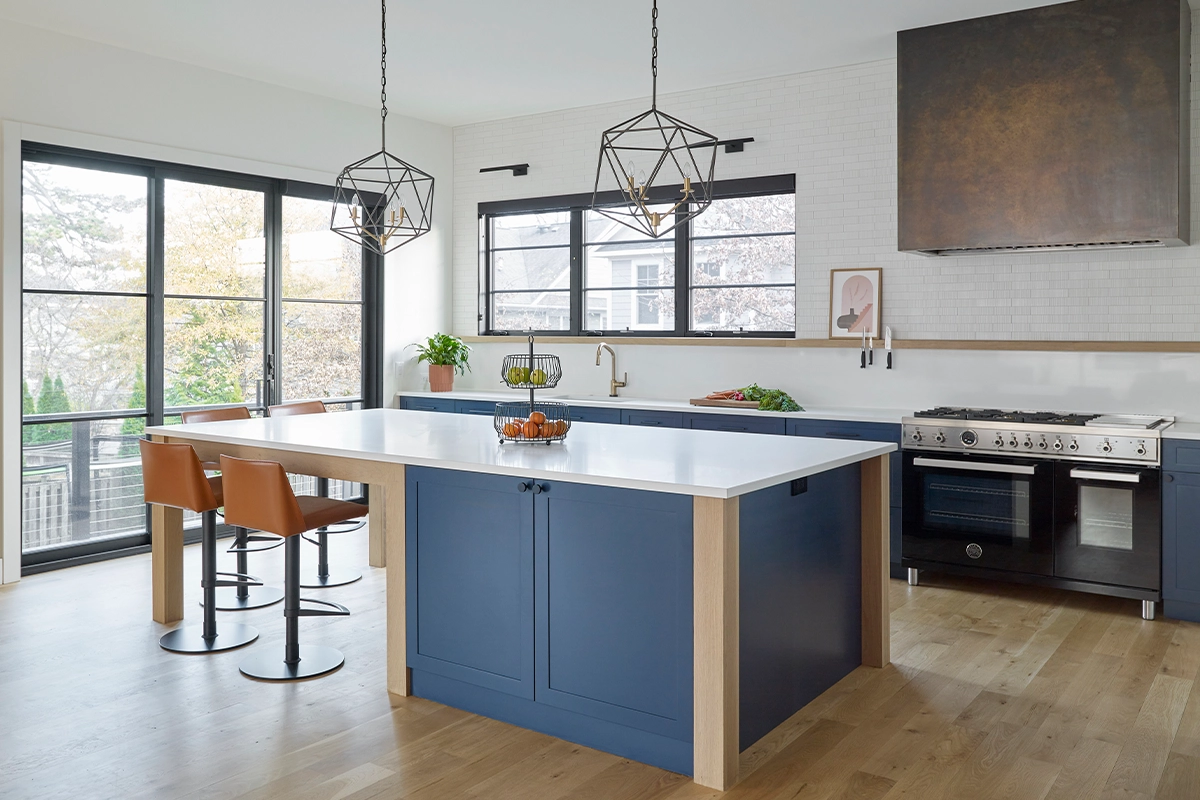
Contemporary, clean design is what this family of four (including twin 12-year-old boys) had in mind when retaining ODE Design to redesign this Arlington home, which features a kitchen with an open plan.
“The family brought a very specific functional desire to our plans. They wanted the island to be the center of their life at home,” says principal designer Yuri Sagatov. “They also wanted a very decluttered space, a minimalist design that was airy and light.”
The large island is a combination of open table seating — ideal for easy meals and homework — and closed cabinetry, which is finished in a medium blue. The cabinets also run along the base of the adjacent range wall, creating a ribbon of blue.
“The light feeling is created by eliminating the upper wall cabinets and floating the custom bronze hood,” says Sagatov.
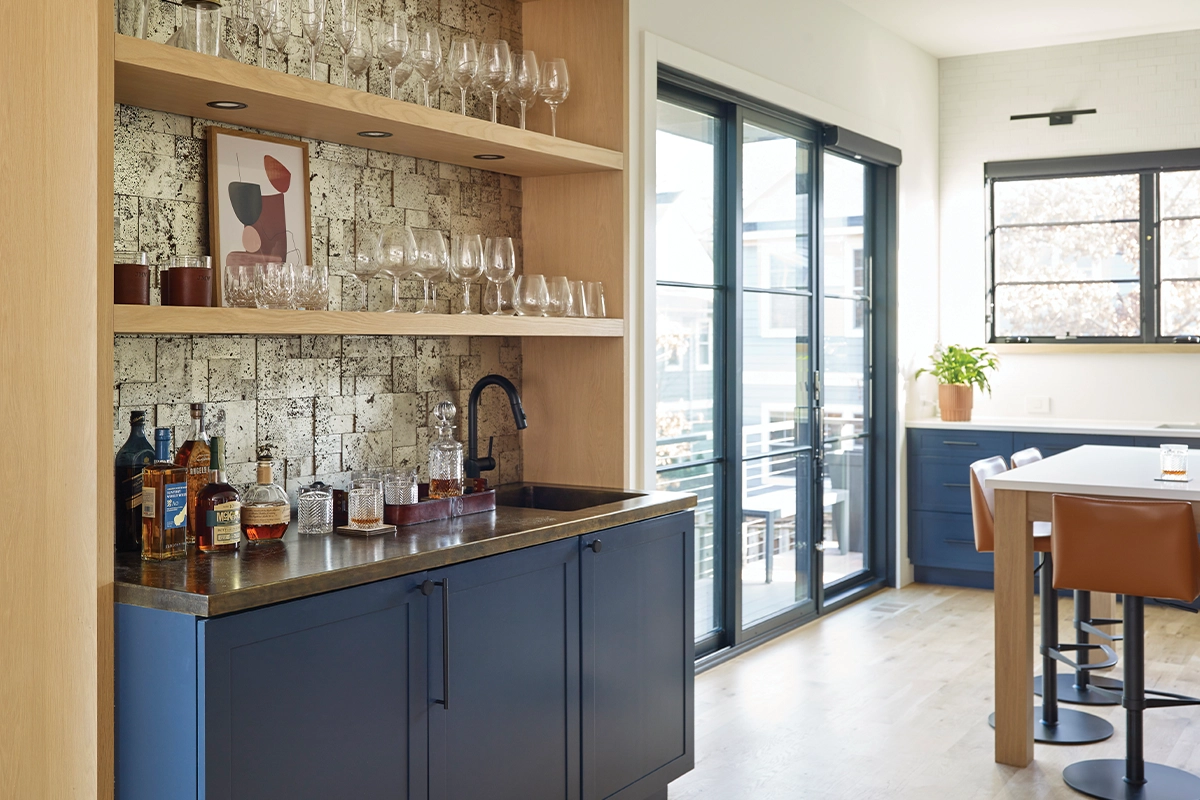
The range wall consists of a combination of white quartzite backsplash and ribbed tiles, separated by a linear, floating oak shelf that runs wall-to-wall.
“We added a back-up pantry that also serves as a working zone for the countertop appliances, freeing up the main kitchen,” says Sagatov.
The adjacent dry bar repeats the palette and materials but also serves as a standalone feature, bridging the kitchen and family room.
Farmhouse Chic
A structural kitchen renovation takes a team. Designer Christina Simon of CS Design Studio and builder George Kall of Metro Building & Remodeling Group took on the task.
“The biggest challenge was opening up the rear of the home to create a continuous line of cabinetry and appliances on the sink wall, with a new triple window onto the backyard,” says Kall. “Previously, there was a smaller kitchen footprint, a bay window, and a structural part-wall dividing the kitchen and eat-in.”
With the part-wall removed and a structural beam added, the new open-plan kitchen worked better for the homeowners, who have four children ranging from 8 to 17 years old.
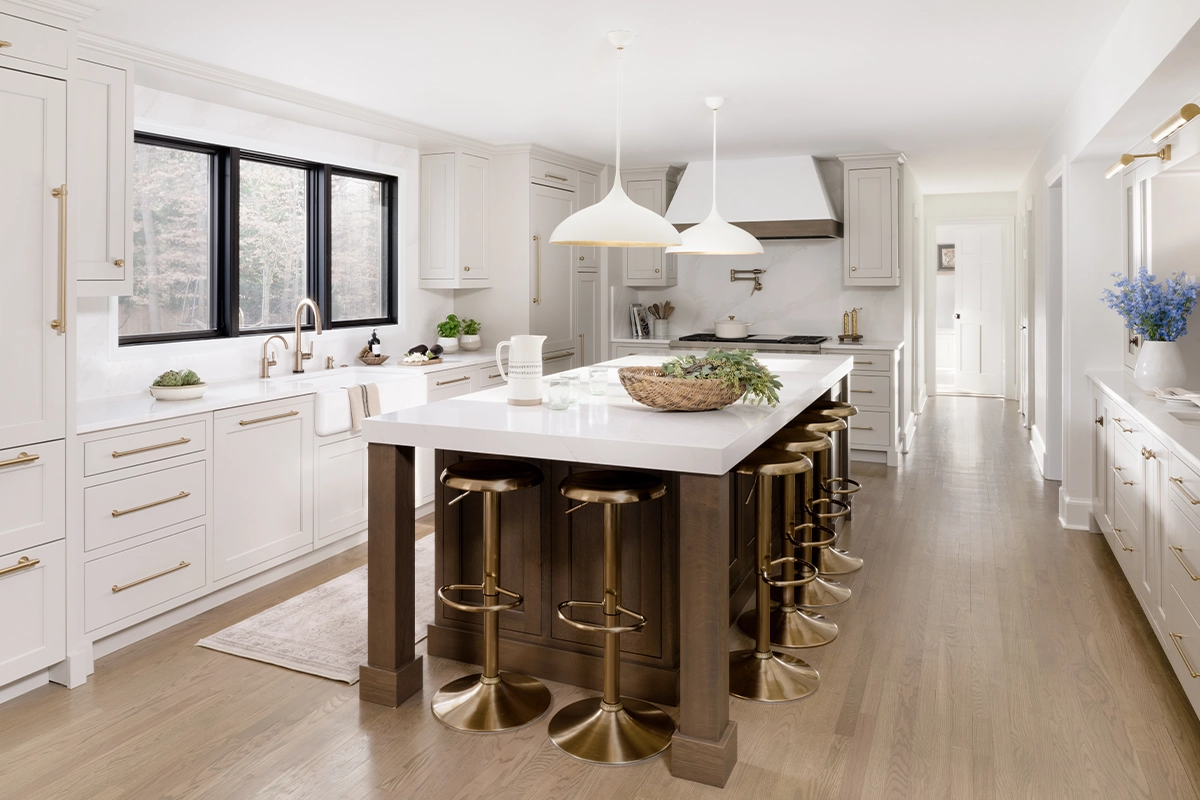
“We designed a large island in a transitional farmhouse style — with a thick quartz top and furniture-like wood base — that had enough room to pull everyone around it for informal family dinners,” says Simon.
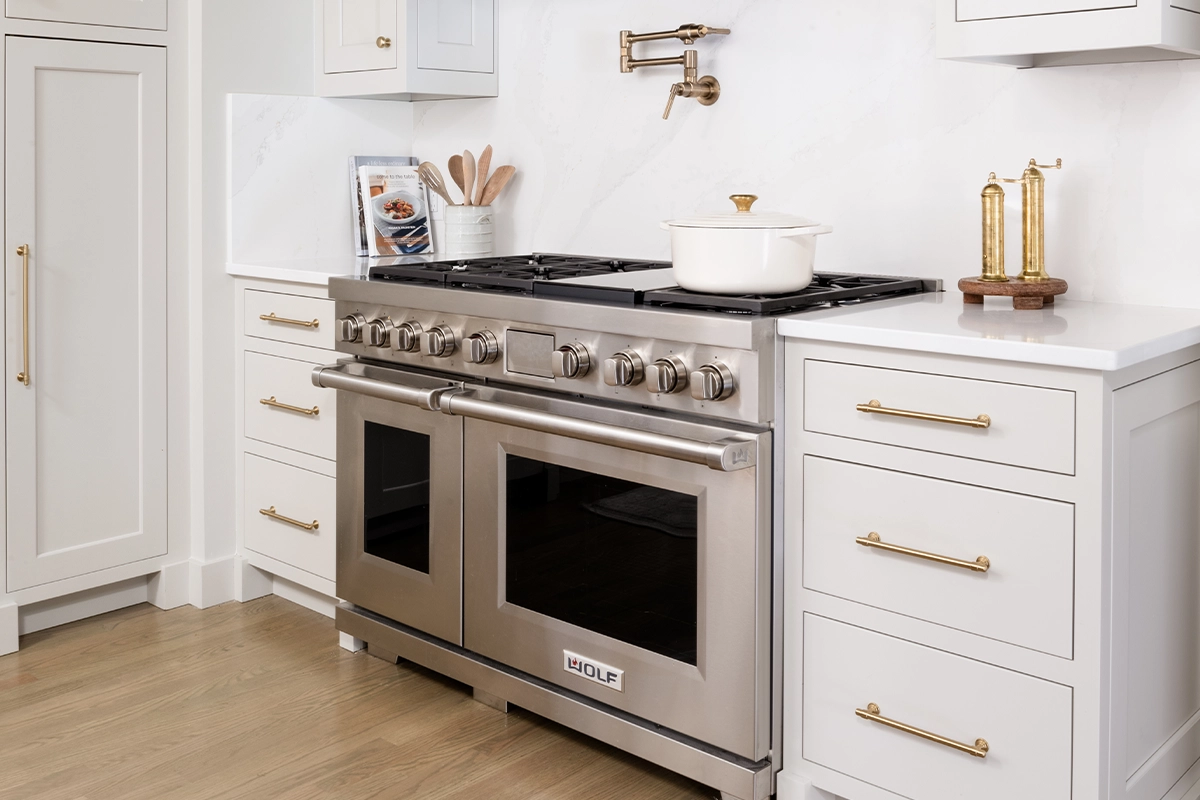
Other farmhouse kitchen features include a deep apron-front sink, clean inset cabinetry, and a plaster range hood with wood trim. The linear brass pulls and island pendants add a transitional touch.
“Opposite the sink wall, we also bumped out into the adjacent dining room to create an easy, circular flow around the island and to have a separate bar area for casual entertaining,” says Simon.
The bar features a secondary sink, beverage refrigerator, shiplap detailing, and glass cabinets for displaying dishware.
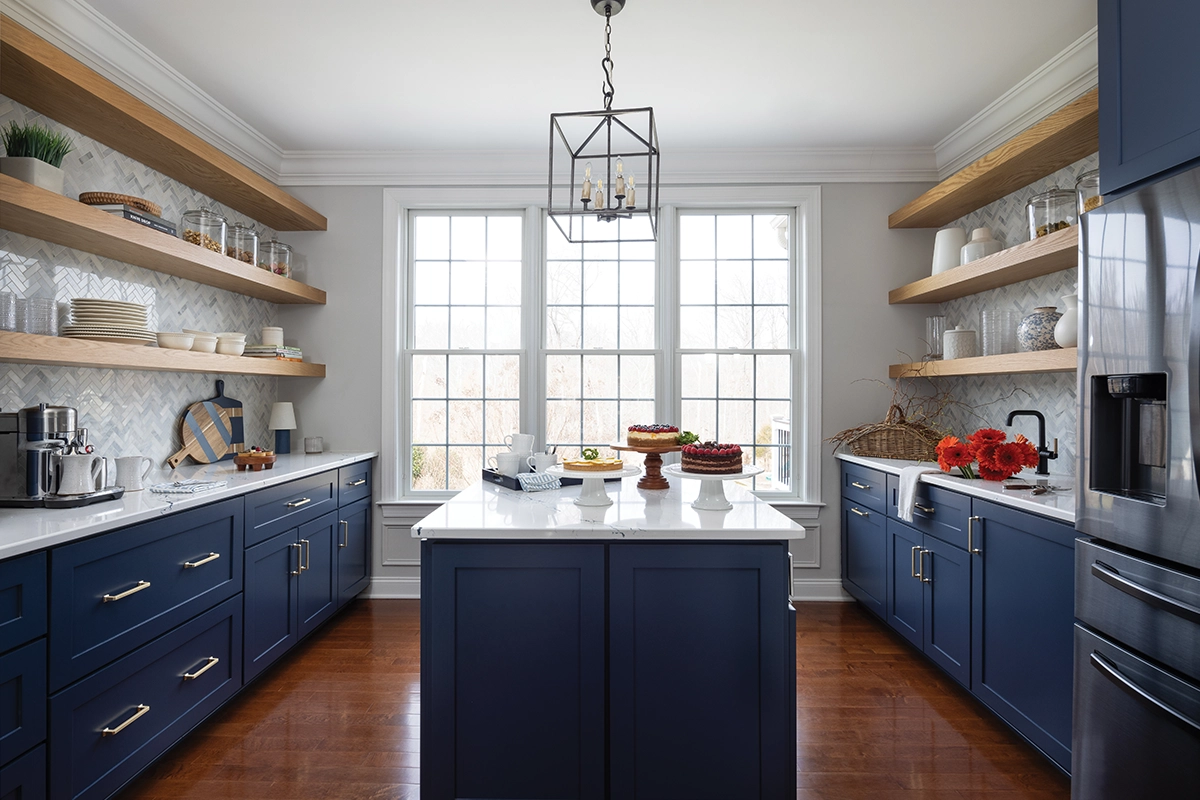
Bonus Kitchen
“Sculleries were something we saw in wealthy households back in Victorian times,” says Stacey Dobrovolny of Two Navy Lane, referencing the quaint secondary kitchens used for overflow cooking and cleaning.
Today, the concept has made a comeback.
“Of course, sculleries are less formal now: They are places to store holiday dishes, create extra room for fresh storage, enable prep for parties, or store smaller appliances,” she says.
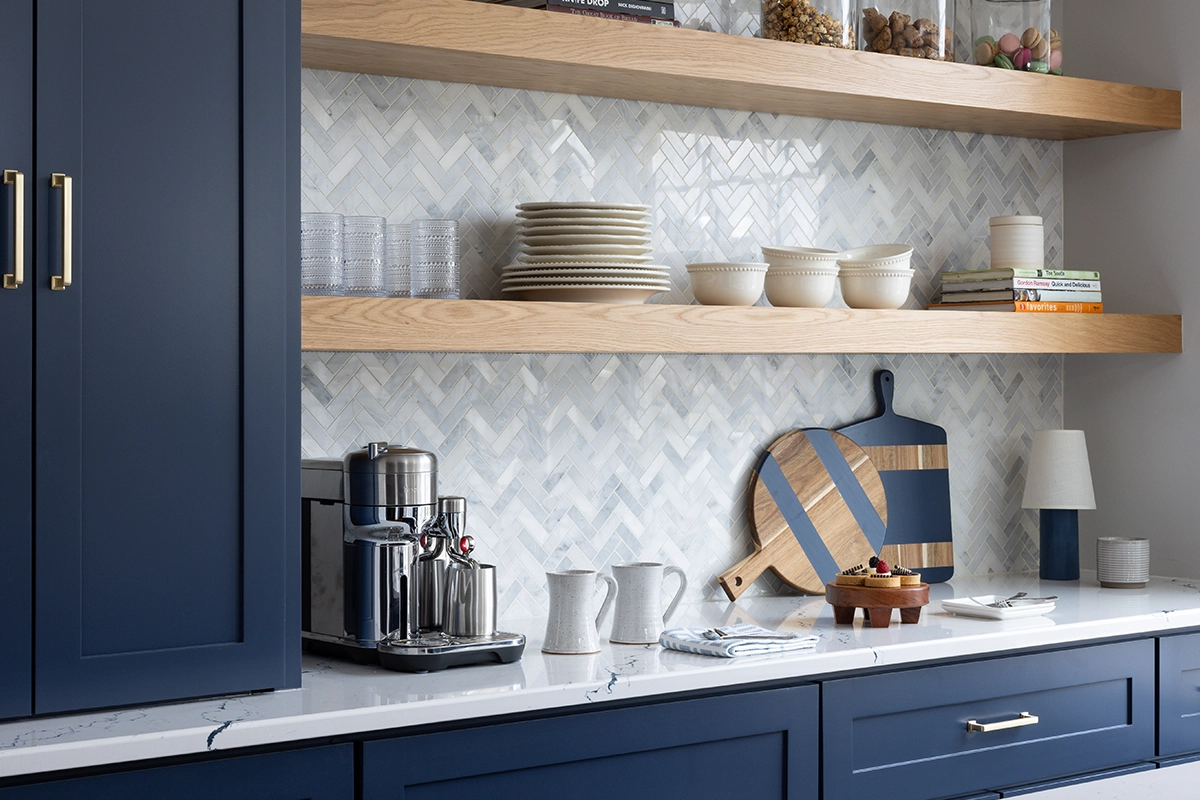
In this scullery, once a small dining room, the homeowners opted for a coffee bar/breakfast area on one side and a refrigerator and workspace on the other. The island contains storage and a pair of warming drawers for when the family hosts larger events.
“We used quartz counters, marble herringbone backlash walls, and floating oak shelves to give it a beautiful, polished look,” Dobrovolny says.
It’s no wonder this family uses the scullery almost as much as the kitchen next to it.
‘Satellite Kitchen Niche’
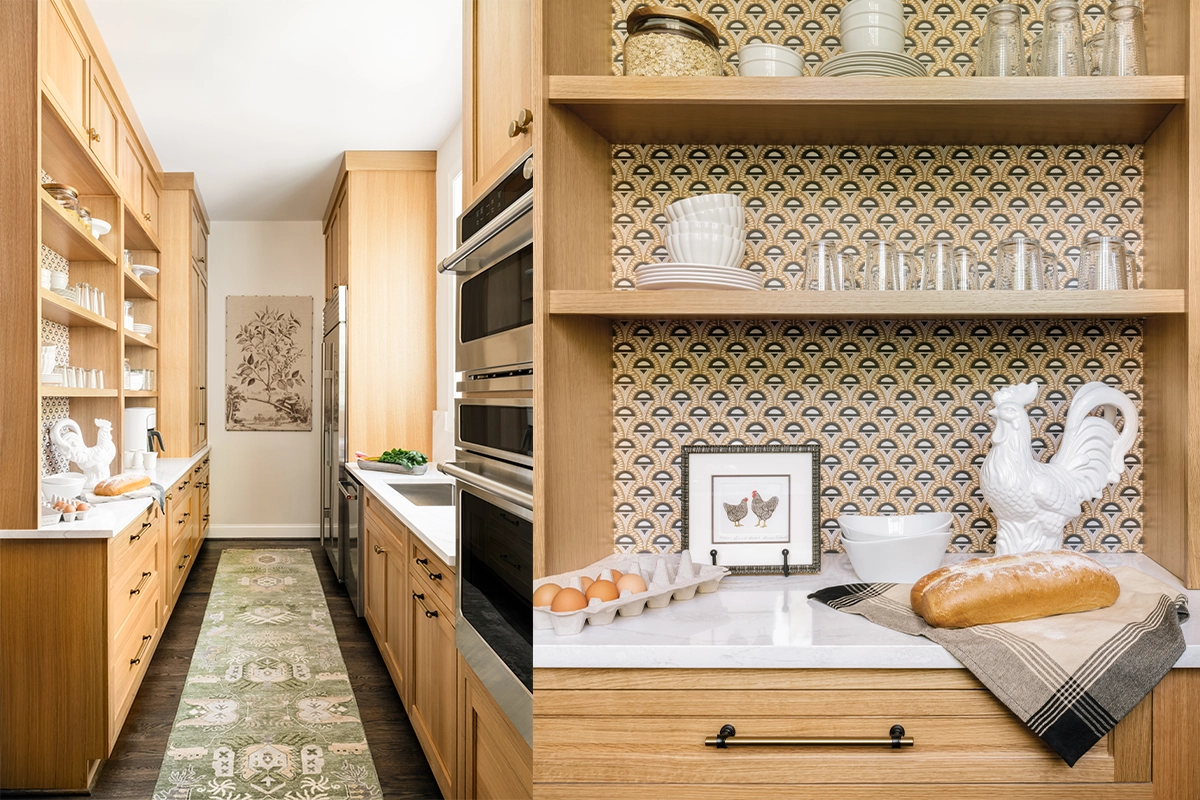
Interior designer Pamela Harvey works to accommodate her clients’ every need, and this stylish scullery is no exception. With its modern farmhouse vibe, it sits just off the main kitchen.
“We created it as a satellite kitchen niche,” says Harvey. “Our client loves to entertain and live clutter-free. That meant keeping the mess in the scullery, not in the primary kitchen, especially while entertaining.”
To accommodate this, plus a full pantry and storage for large appliances (her client also loves to bake), Harvey designed a galley scullery with a combination of open and closed storage on one side and an extra fridge, sink, dishwasher, and wall-mounted microwave and oven on the other.
“We even designed a cabinet for composting and another for dog food in here,” Harvey says.
Aesthetically, the scullery is in harmony with the main kitchen’s design, with white rift-sawn oak cabinets and quartzite counters. Harvey added an art deco–inspired geometric wallpaper to the open shelf wall for interest.
Feature image by Robert Radifera
This story originally ran in our October issue. For more stories like this, subscribe to Northern Virginia Magazine.