Updated October 28, 2022. Growing your own herbs means you can pick fragrant basil leaves for Caprese salad, muddle fresh mint for a batch of mojitos, and garnish Taco Tuesday’s handhelds with sprigs of cilantro. If you don’t have the space or the time for a full-sized garden, though, these seasonal pleasures can seem out of reach. But anyone with a small patio or balcony — or even a sunny nook in a living room — can plant a container garden of herbs that will reward you with culinary delights for months to come.
David Yost has been gardening for 40 years and has been a plant specialist at Merrifield Garden Center for 24 years. Here, he shares everything you need to know to successfully grow herbs in small spaces.
What do you need to plant a container herb garden?
One of the best reasons for growing herbs in containers is that it can be done by anyone at almost any scale. All you need to get started is a container with drainage holes, potting mix, and sunshine. Small pots dry out faster than large pots, so I would consider a 6-inch diameter pot to be a minimum size, and prefer to work with 12-inch or larger. When in doubt, go with a larger pot.
What herbs are easiest to grow in sunny areas?
Many of our favorite perennial herbs including rosemary, thyme, oregano, tarragon, and sage do best in very sunny areas with at least five hours of direct sunlight. Arp is my favorite variety of rosemary: it’s a big, robust plant and more reliably cold-hardy than some of the other varieties.
How about part-shade ones?
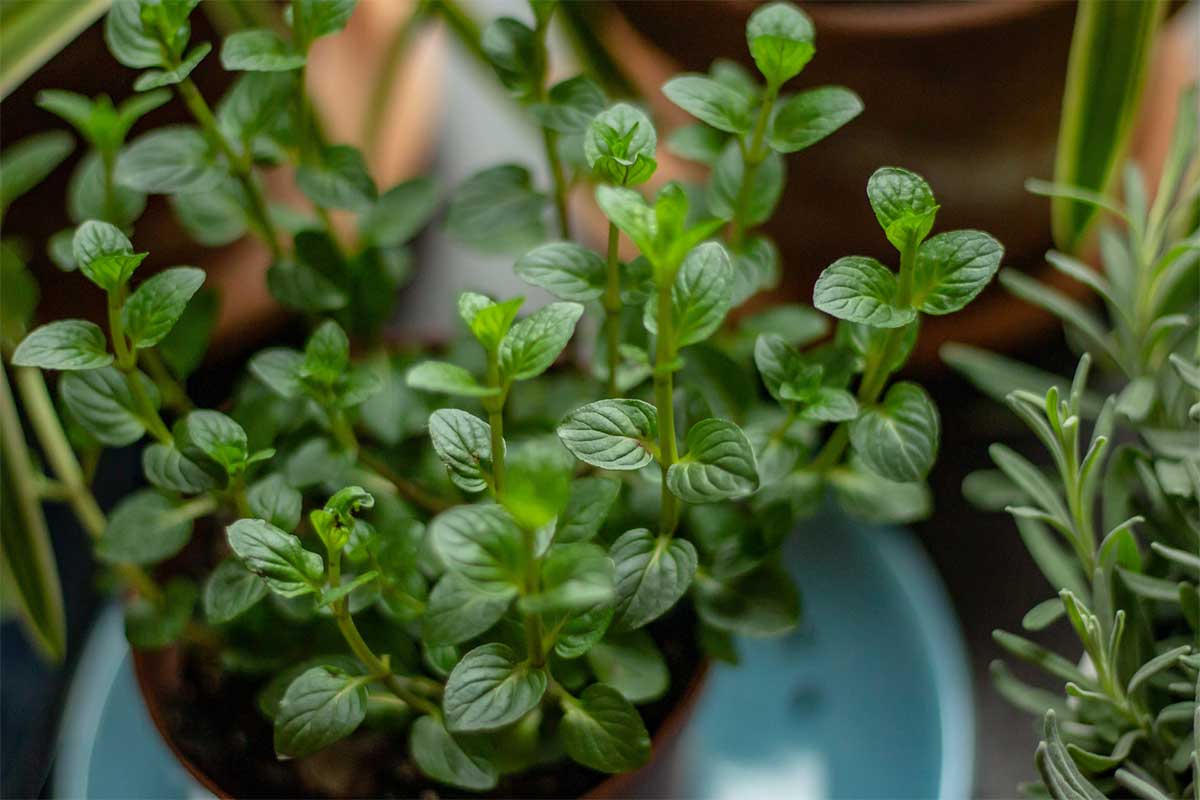
Mint, basil, parsley, and cilantro can be grown in partial shade and moist conditions with three to five hours of sunlight. Keep in mind that mint spreads aggressively, so it’s better planted in a pot by itself so it doesn’t crowd out the other herbs. Amazel is a new variety of basil just released a couple of years ago, so it may be difficult to find. But it’s a big, prolific plant resistant to basil downy mildew; the leaf is tougher and more pungent than the classic sweet basil, but in my opinion, the vigor and disease resistance makes it a winner.
What kind of dirt do you recommend? Do you need to fertilize a container herb garden?
Most herbs require very good drainage, so avoid very dense soil or ones labeled with “water saver” or “moisture control” additives. Most all-purpose potting mixtures will work well; personally, I have had good results with Fox Farm Ocean Forest and Espoma Organic potting mixtures.
How often do you need to water a container herb garden?
Because container gardens can dry quickly, they should be checked daily to see if they need to be watered, which is especially important during hot weather. You can easily check on them by poking your finger an inch or two into the soil or feeling the weight of the container. Water the pots only when they begin to feel slightly dry, watering them completely until the soil is saturated and excess water is draining from the bottom of the container. Container gardens have greater exposure to temperature and moisture extremes than plants growing in the ground. If they can be placed where they are protected from drying winds in both winter and summer, the plants will do better.
For more stories like this, subscribe to our Home newsletter.