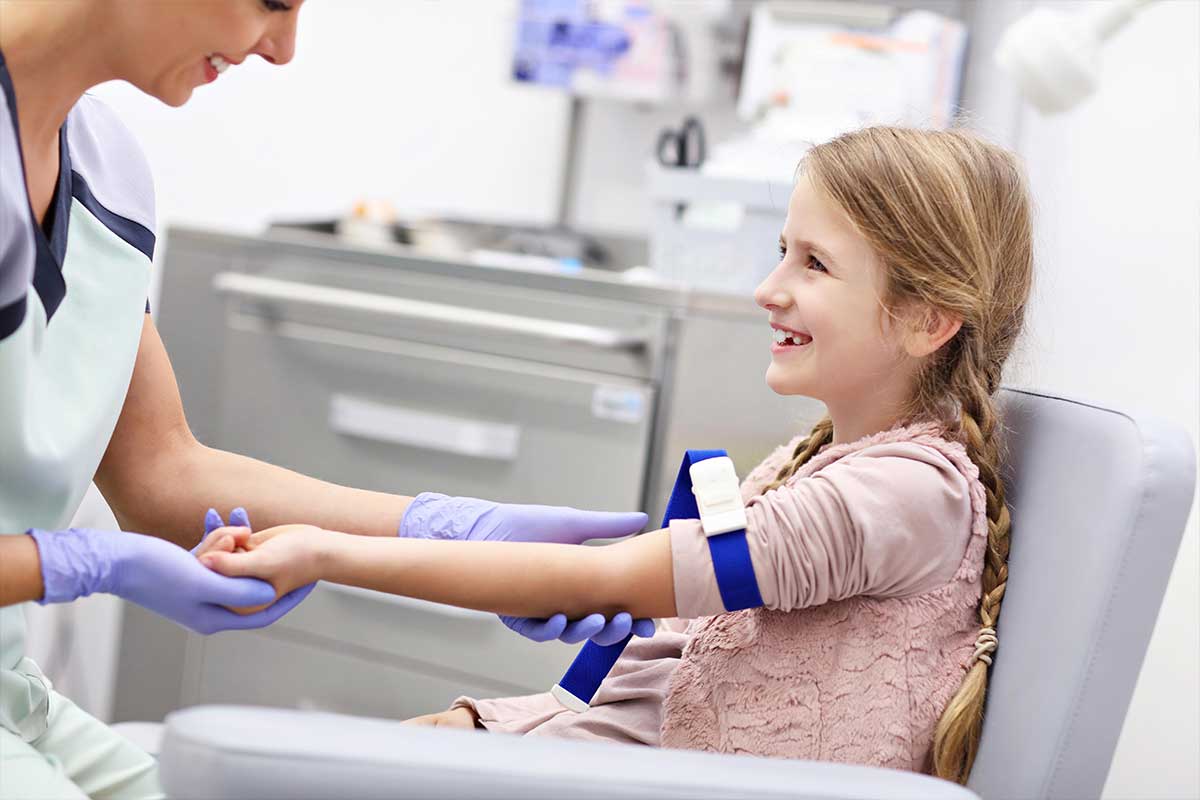
Preparing your children for medical procedures can be a daunting task, especially when it comes to lab visits and blood draws. The fear of the unknown tends to top the list of concerns, leaving parents wondering how to ease their children’s anxieties and ensure a smooth experience.
Dr. Yunchuan Delores Mo, director of laboratory support, and Jeannette Anderson, manager of phlebotomy and processing, both from Children’s National Hospital, offer these tips to parents who are new to the process:
- Keep your little ones hydrated in the days leading up to the blood draw, especially if a urine sample might be needed.
- Have children wear loose-fitting clothes for easy access without unnecessary clothing removal, minimizing discomfort.
- Be prepared for a potentially extended visit, allowing children extra time to adjust to the surroundings.
- Rely on the expertise of phlebotomists, who can offer guidance on comforting and holding your child during the procedure.
- If stool or urine collection at home is required before the blood draw, there’s no need to panic. Contact your provider for instructions.
A common question parents have is whether dietary choices matter before a blood draw. The answer is yes. Anderson advises considering blood sugar levels and seeking guidance from health care providers for specific details. Hydrating children with water and avoiding caffeinated drinks, like coffee or tea, can contribute to a smoother experience.
Fear of needles is another common issue across all age groups. To address this fear, phlebotomists tailor their procedural explanations to be age appropriate. Using gentle language for younger children, they might liken sensations to tickling. For older children, more direct communication is employed, emphasizing practical steps like cleaning to prevent infection.
Mo reassures parents that despite potential anxiety, children can find comfort in the hospital’s Child Life Services, designed to alleviate fears and create a more reassuring environment.
Feature image, stock.adobe.com
For more stories like this, subscribe to Northern Virginia Magazine’s Family newsletter.