Virginia’s winegrowers are accustomed to keeping a close eye on the weather. But the early-morning freeze on April 21 delivered a devastating blow to vineyards across the state. It severely damaged grape crops and left growers to contend with a season marked by extreme weather conditions.
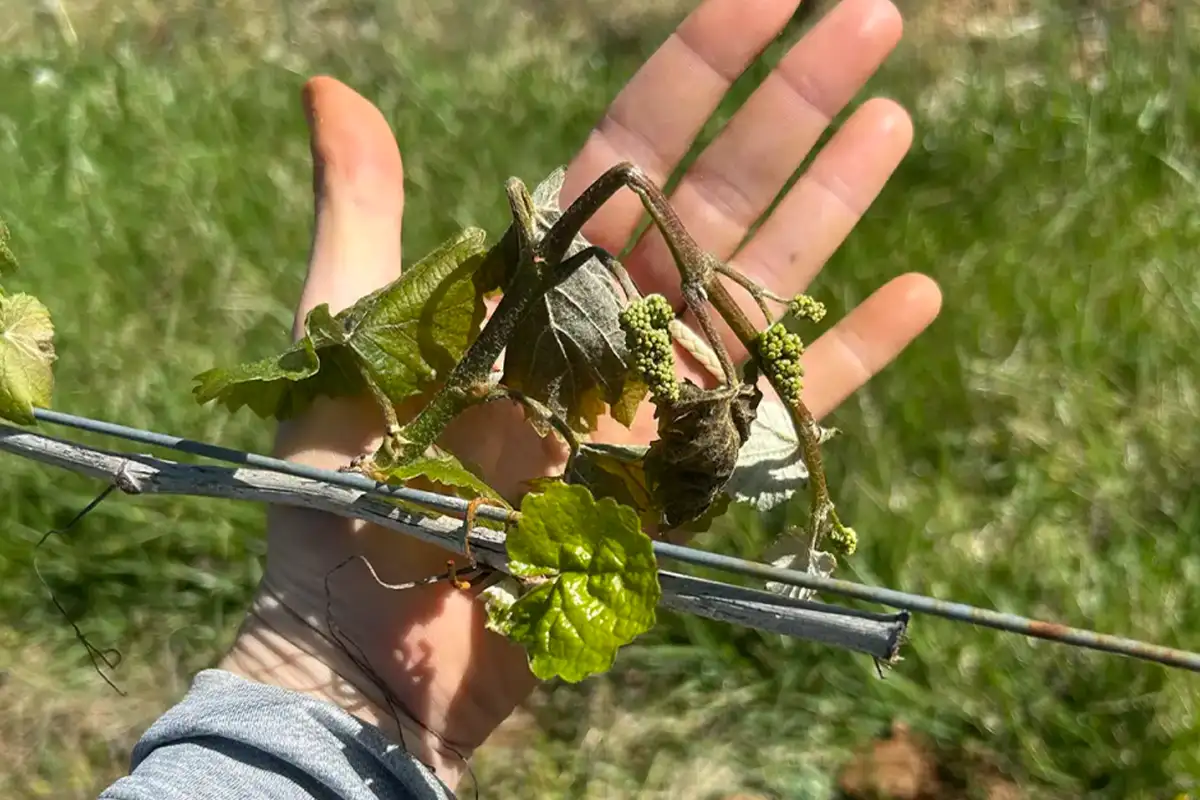
At 8 Chains North in Waterford, owner and winegrower Edz Sturans typically harvests 13 to 16 tons of white grape varieties. This year, the vineyard produced just three-quarters of a ton.
“The April 21 freeze was devastating to this year’s vineyard crop,” Sturans says.
The outlook for red grapes, which were still hanging on the vine when he assessed the damage, was somewhat more hopeful. Even so, Sturans estimates the vineyard will produce just 15% of its typical red-grape yield.
The silver lining: Most of the vines survived, offering hope for a more productive 2027 season.
Extreme Weather Conditions
For growers across Virginia, the freeze was one of several weather challenges that made 2026 an unusually difficult year. Unseasonably warm spring temperatures, a sudden late-April cold snap, and subsequent drought tested vines at a particularly vulnerable stage of their growing cycle. Damage varied from vineyard to vineyard.
At Barboursville Vineyards, winemaker Luca Paschina says the 2026 growing season was the most erratic in his 37 years of growing grapes at the estate.
“The first impactful moment came in early February,” Paschina says, when temperatures dropped into the single digits each night. An unusual ice storm, followed by snowstorms, made it difficult for vineyard crews to access the rows and prune the vines.
March brought warmer-than-average temperatures, prompting the vines to bud earlier than usual. The tender new shoots were especially vulnerable when temperatures plunged again on April 21.
The freeze, which brought temperatures into the low 20s, caused widespread damage across Virginia, particularly in lower-lying areas where cold air naturally collects.
At Barboursville, Paschina estimates frost reduced the crop by about 30%. Drought accounted for another 10% of the losses and contributed to smaller-than-average berries.
Despite the reduced yields, Paschina says grape quality ranged from very good to exceptional. Barboursville has declared 2026 an Octagon vintage, referring to its signature Bordeaux-style red blend. The winery also has sufficient inventory to carry it through spring 2028, when some of its 2027 wines are expected to be released, Paschina says.
Varying Crop Impacts
For smaller growers, however, a sharply reduced harvest can mean less wine to bottle and sell in the years ahead.
At Linden Vineyards, winegrower Jim Law says the damage varied dramatically depending on a vine’s position on the hillside. “Overall, our yields are below average, but it depends on what part of the slope you are standing,” Law says.
The frost hit the lowest section of the vineyard, where vines lost between 50% and 90% of their crop. Vines midway up the slope and higher escaped damage, he says.
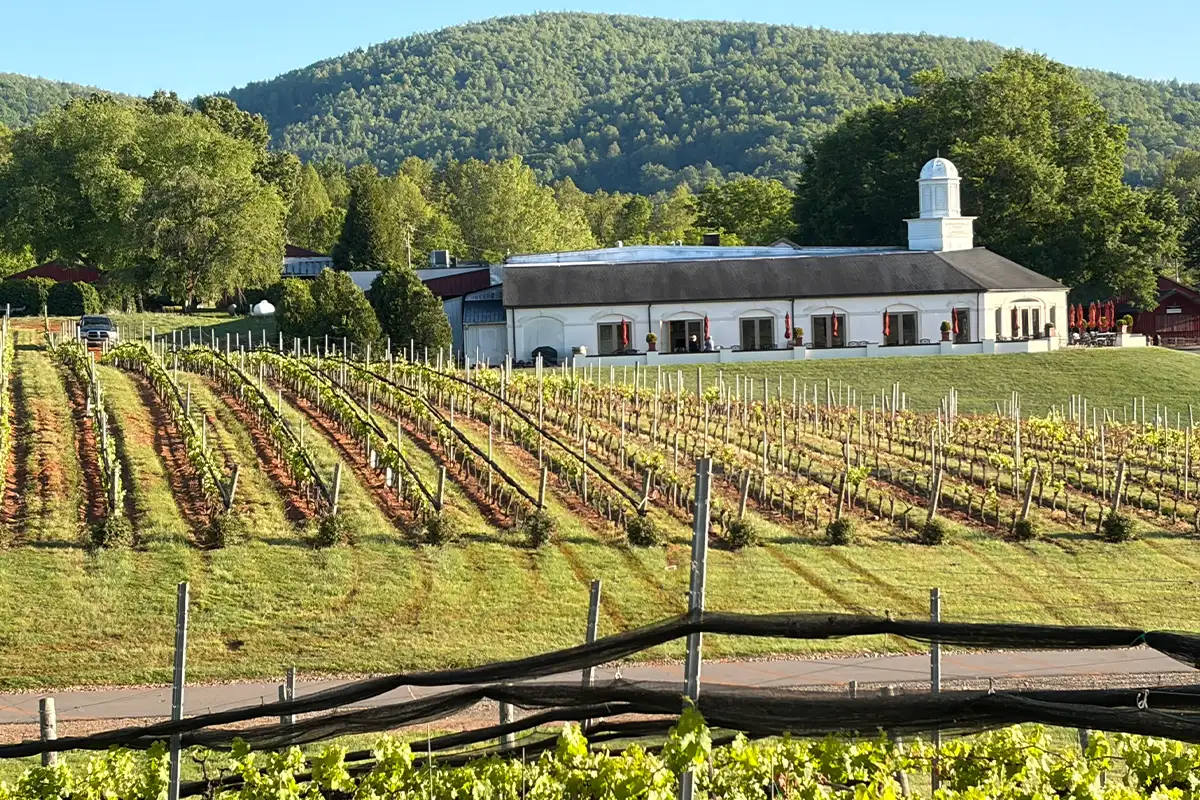
The contrast illustrates how a vineyard’s topography can influence its vulnerability to a spring freeze. Cold air settles in lower areas, while vines higher on a slope may escape the worst of the cold.
At Crimson Lane Vineyards in Linden, owner Tom Herrity said the vineyard experienced minimal impact from the freeze, which he attributed in part to the site’s elevation and slope.
“When we established Crimson Lane Vineyards, we selected the site for its elevation and slope, which help create natural airflow and reduce frost pooling,” Herrity says. “We feel very fortunate and deeply grateful that our vineyard experienced minimal impact.”
Herrity also expressed sympathy for growers elsewhere in the region. “Our hearts go out to our neighbors across the Virginia Piedmont who were affected by the late spring frost,” he says.
After a season in which weather dictated so much of what was possible, the possibility of a more generous harvest in 2027 will bring a welcome change.