Hyperlocal low-power FM station coming to Arlington
When people walk by Arlington Independent Media’s building on Wilson Boulevard, they will soon see radio happening before their eyes. From the street, the organization’s new live broadcast booth will be visible to passers-by, who can listen by turning the dial to 96.7 FM.
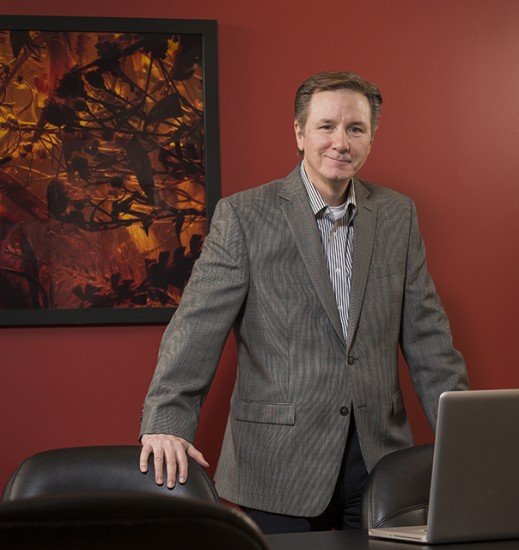
“When I was growing up, media was local personalities covering local events in a way that fit the local community. And with the Internet, we’ve sacrificed a geographical sense in media,” says Paul LaValle, AIM’s executive director. “We want people tuning in to listen to music and news produced by friends and neighbors.”
The new station jibes with AIM’s mission of educating members of the community about media and providing them with the equipment and opportunity to use what they’ve learned on the public access TV channel and for documentaries. The organization has about 600 members, 10 employees and 200 active volunteers, all of whom have access to classes and devices.
WERA 96.7 is a low-power FM station, meaning that it is community-based radio authorized for noncommercial purposes only. The Federal Communications Commission approved of AIM’s construction bid and has set a Dec. 9 deadline for the station to be up and broadcasting, at which point it will inspect the equipment and grant a license. The FCC didn’t allow these low-power FM stations in urban areas until Congress passed the Community Radio Act in 2012.
From the top of the building at 2300 Clarendon Blvd., an antenna will send a signal covering about 3.5 miles in radius, including most of Arlington County and, incidentally, the National Mall. LaValle says that 800,000 people will be able to listen to the station. In exchange for the space on top of that 10-story building, Arlington’s Office of Emergency Management will use WERA’s frequency to broadcast urgent messages to the community.
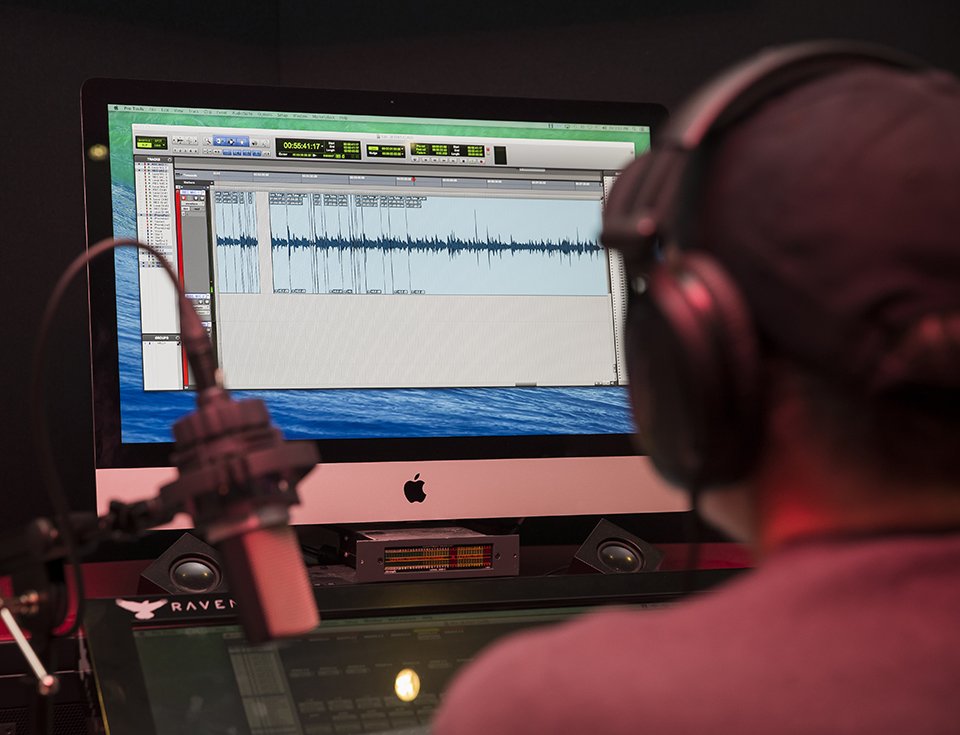
In addition to the broadcasting booth, AIM has built a new audio room for recording and mixing sound. It looks like it’s decorated with modern art befitting a trendy fusion restaurant, with small wood pieces of various sizes that were individually cut, sanded, polished and glued on the wall. Their purpose exceeds aesthetics—the layout of the wood was designed by a computer to best diffuse sound, and the room has no 90-degree angles because “sound gets bouncy” in corners, according to LaValle.
The launch of WERA created a new job at AIM, as well. Adam Barnett moved from Urbana, Illinois, at the end of September to help usher the station to broadcast.
“We want to make WERA as professional as possible,” Barnett says. “A lot of community radio stations fall apart because people don’t go to their shows or the website isn’t well-updated. We want to create a foundation to avoid that.”
The station has an off-the-bat commitment of six hours of original programming to the FCC, though the hope is to get to 24 hours of original content each day. The Program Advisory and Review Council determines who will get a show on the station.
“It’s going to be mixed format, so we want to have talk, news and music. The committee won’t have a problem with mixed language as well because this community speaks a lot of languages,” says Kimberly Phillip, who serves as the PARC’s chair. “A lot of stations are either Spanish or English with nothing in between, but on WERA it won’t be uncommon to hear an English news program and then a Vietnamese-interest show in Vietnamese.”
Ted Schneider, who sits on AIM’s board of directors and works as a radio engineer, notes that, “This is volunteer-run, so there might be less polish than some of the commercial stations that we’re in between on the dial, but that is going to be part of the fun of listening.”
According to Schneider, that raw quality will be an asset for WERA. “I think people have soured on commercial radio because of the sameness of the playlists and the fact that people aren’t live,” he says. “When you go to the hyperlocal level like we are, that’s where you’re going to get that immediacy that’ll get people to tune in.”
( December 2015 )