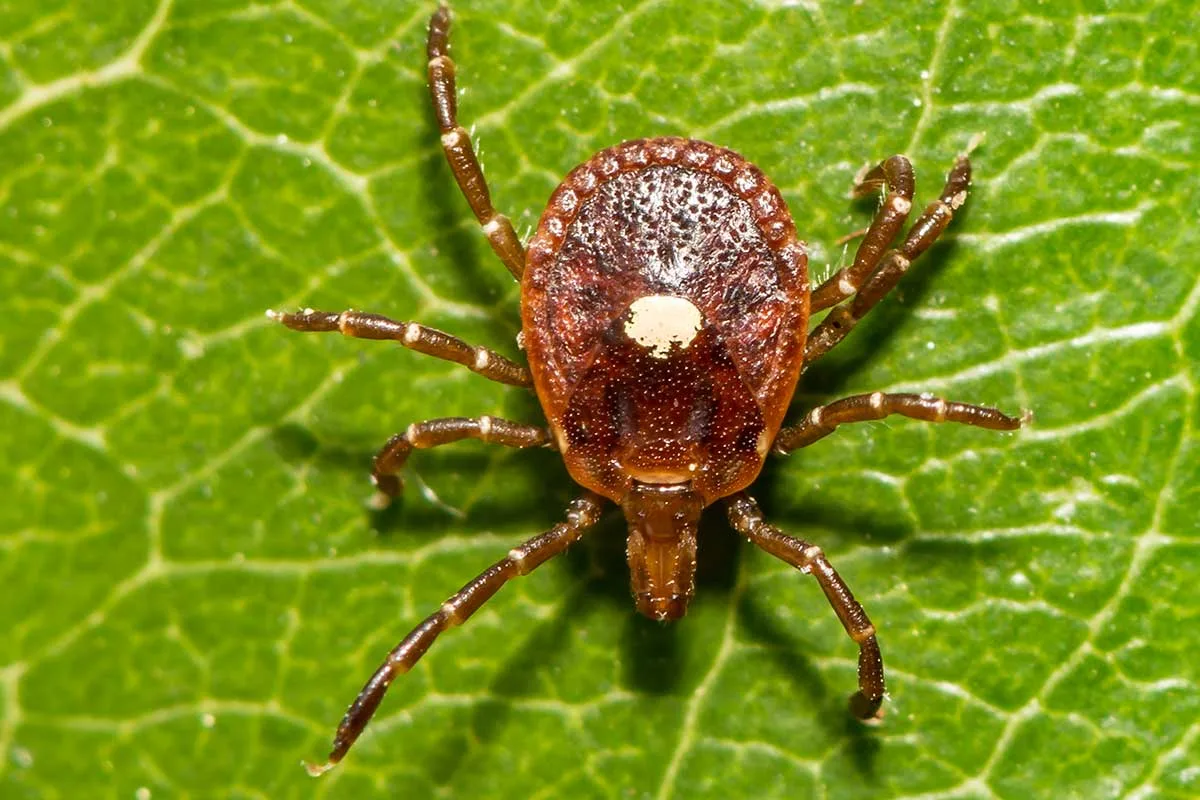
Northern Virginia is welcoming warmer spring weather. But unfortunately, spring also ushers in tick season.
Dr. Gary Kaplan practices integrative medicine in McLean. He says NoVA is “an endemic area” for ticks.
“Pretty much everywhere, in all parks, anywhere with high grass. All of these areas potentially have ticks in them. So, you’ve got to assume that you’re going to encounter them if you’re going for walks in the woods, if you’re going through high grass, if you’re just in the park,” Kaplan says.
Ticks go dormant in the winter and come out in the spring, Kaplan says. And spring is when ticks are in the larval stage. That’s also when they’re most effective at spreading diseases. And they’re also even more difficult to see than adult ticks.
“The majority of people who end up with Lyme disease don’t even remember the bite,” Kaplan says.
Tips for Avoiding Tick Bites
When you’re going outside, Kaplan says to wear light-colored clothes. “That way it’s easier to see ticks on you,” he says. You also want to tuck your shirt into your pants and your pants into your socks. Insect repellents with DEET also work well to prevent tick exposure.
When you get back inside, make sure to check yourself and your kids. “You want to check them head to toe,” Kaplan says. “Ticks get in the back of the neck. They get in the back of the knees. So you want to pay attention and see if there’s ticks anywhere on you.”

Ticks can also hitch a ride on your dog or cat, so you’ll want to check them as well.
Spraying your garden might help with repelling ticks, although Kaplan doesn’t recommend it. More organically, some plants with strong scents, such as lavender, rosemary, mint, garlic, and wormwood, can keep repel ticks.
What to Do If You Are Bitten
If you find an attached tick, take a pair of tweezers, grab the tick by the head and lift it out of you. Be sure to pull straight up to remove the entire tick.
Once you’ve removed the tick, you want to get it checked. Put it in a plastic bag and take it to your local public health office. “The state will analyze them for you and tell you whether or not they’ve got any of a multitude of tick-borne diseases,” Kaplan says, adding that it’s a free service.
If you are infected, you might see a bullseye-shaped rash that’s a classic symptom of Lyme disease. But only about 25% of patients get such an obvious symptom. Any unexplained localized rash, Kaplan says, can be a sign of tick-borne disease.
Other symptoms include fever and chills, among other symptoms. Kaplan says Lyme disease is called “the great imitator,” and “it can look like a whole bunch of different things.” It can mirror symptoms like those with ADHD, depression, anxiety disorders, and other neuropsychiatric disease symptoms, Kaplan says.
If you have any of the symptoms, Kaplan says to see a doctor immediately. A medical professional can perform a titer (the test for Lyme disease), and they’ll likely start you on antibiotics right away.
“As long as you’re not allergic to doxycycline, minocycline, or it’s not appropriate because of age … we give two weeks of antibiotics until we’ve proven, one way or the other, that the tick is either not infectious or we know what bugs it’s carried,” Kaplan says. Small children will be prescribed amoxicillin or penicillin, he says.
It sounds aggressive, and it is. “We go at least two weeks of antibiotics if we have somebody who’s been bit. We want to prevent Lyme disease. And certainly, there’s a percentage of people who end up sick for years [from tick-borne disease], and we want to prevent that from happening.”
Long-Term Lyme Health Affects
Neglecting Lyme treatment can have serious long-term effects, Kaplan says. “Chronic Lyme disease can be completely disabling. So, you can end up with severe fatigue, headaches, muscle aches and pains generalized.”
He adds that some kids have been unable to continue in school because of the damage from tick-borne disease. “We see the onset of all kinds of neuropsychiatric syndrome, especially in kids called PANS/PANDAS.”
“Fatigue, pain, sleep disturbances, headaches, anxiety, depression — there’s a whole range of problems that occur associated with this. But frequently they’re misdiagnosed as chronic fatigue syndrome or fibromyalgia or depression or anxiety disorder.”
Different Tick-Borne Diseases
Ticks can cause a host of other problems, including anaplasmosis, which can lead to organ failure and even death, as well as Rocky Mountain spotted fever.
And recently they’ve been found to spread Alpha-gal syndrome (AGS), a rare condition that leads to an allergy to red meat. The tick that spreads AGS, as well as tularemia and Erlichiosis, is becoming more prevalent in the mid-Atlantic thanks to warmer temperatures from climate change.
The different tick-borne diseases require different treatments, so it’s important to identify what you’re up against early. “These bugs, when they’ve been in the system for a while, get pretty good at immune evasion, meaning that they hide from the immune system,” Kaplan says.
Featured image, ondreicka/stock.adobe.com