Sleep apnea, a disorder where breathing stops and starts during sleep, may affect your day-to-day life, contribute to dental problems, and raise your risk for serious medical conditions.
More than 30 million people in the U.S. have sleep apnea, but only 6 million have been diagnosed, according to the American Medical Association. With obstructive sleep apnea, the muscles supporting the soft tissues in the back of the throat relax too much and narrow a person’s airway.
Various factors such as genetics, anatomy, age, and obesity raise your risk. “If someone gains weight, there’s more fat depositing in the tongue and in the tissue surrounding the airway, which then increases the air blockage,” explains Dr. Ziad Ali, an oral and maxillofacial surgeon at the Elevation Center in McLean.
Sleep apnea has also been linked to other dental problems, such as teeth grinding, mouth breathing, and temporomandibular joint disorder.
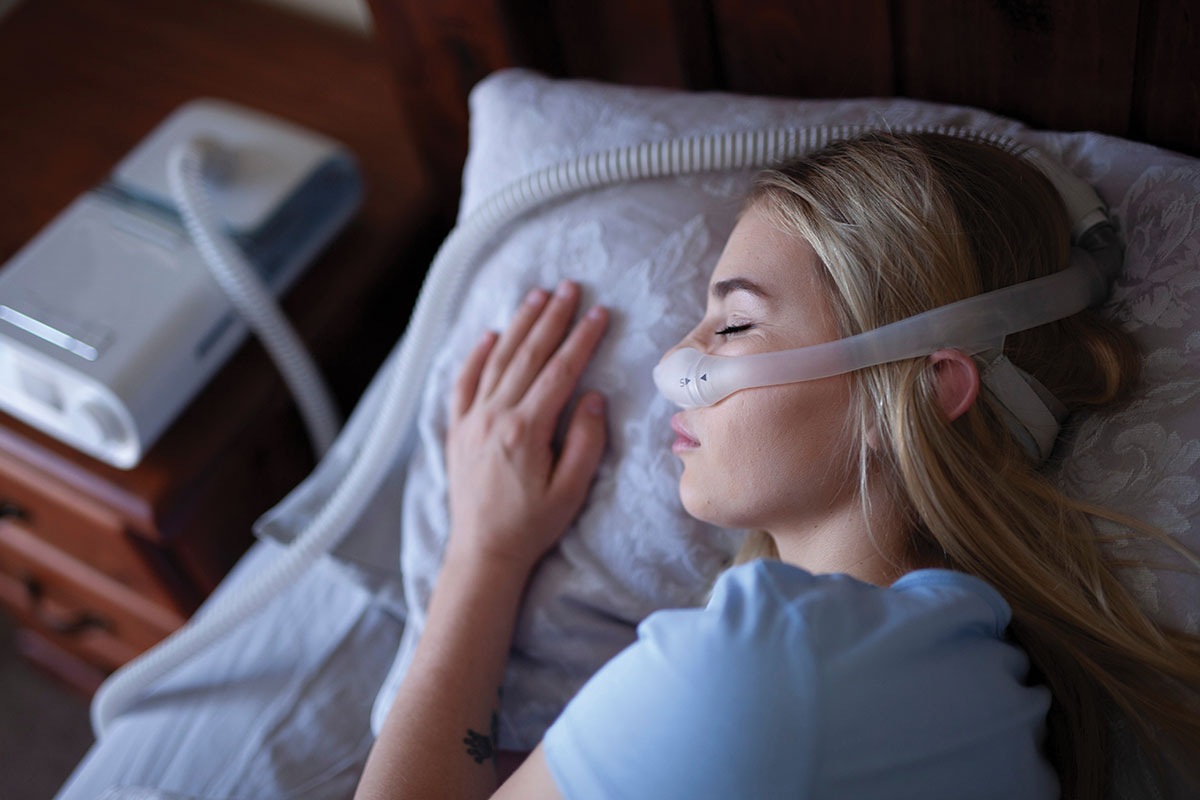
Treatment options are no longer limited to CPAP (continuous positive airway pressure) machines. “You could have alternative treatments, like, for example, a dental device that repositions the lower jaw forward, thus stretching the soft tissue in the roof of the mouth and the tongue forward and allowing the air to go through,” Ali says.
A sleep doctor might recommend the oral device for patients with mild sleep apnea, Ali says. In cases where other treatments have failed, he says surgery to advance the jaw and chin bones forward can be an option.
Feature image Hope/stock.adobe.com
This story originally ran in our November issue. For more stories like this, subscribe to Northern Virginia Magazine.