It may have felt like a five-year extinction, but the Smithsonian’s National Museum of Natural History’s dinosaur and fossil hall is back and better than ever.
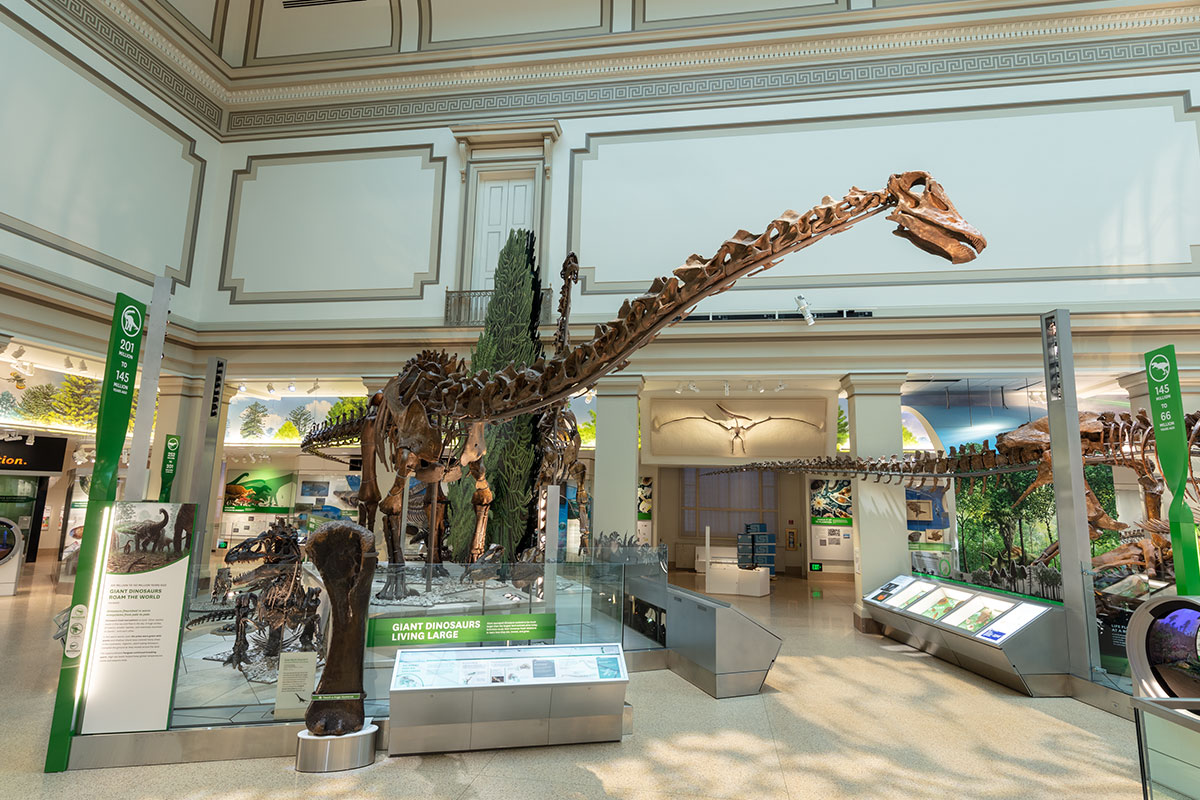
On Saturday, June 8, guests were welcomed into The David H. Koch Hall of Fossils – Deep Time, a 31,000-square-foot exhibit that features over 700 fossil specimens, dozens of specialized topics and a continuous story from what scientists refer to as “deep time.”
The term is broadly defined as the billions of years that scientists believe to be Earth’s history, beyond what has been studied in a much smaller glimpse of time through historical artifacts and scientific research. The exhibit hopes to encompass its many facets through its educational explanations, previously unseen artifacts and interactive technology for guests of all ages.
The fossils, some of which are not only seen but can be touched by visitors, include mammals, reptiles, plants and insects, as well as an authentic, 67-million-year-old Tyrannosaurus rex skeleton devouring the skeleton of a Triceratops.

Some of the influential topics emphasized are mass extinction, evolution and climate change. Visitors can learn how mass extinctions of species affect the overall health of the continental regions and the planet, how species’ bodies have evolved over time (even why each organ serves a purpose!) and how scientists have researched the global effects of climate change in recent years.

Attendees can also visit the Coralyn W. Whitney Fossil Basecamp to participate in hands-on activities and see fossil preservation in real time at the FossiLab.
The Smithsonian National Museum of Natural History has extended hours through the summer, and is open from 10 a.m. to 7:30 p.m. For more information on the exhibit or the museum in general, please visit si.edu. // Smithsonian Museum of Natural History: 10th Street and Constitution Avenue NW, Washington, DC; Monday through Sunday, 10 a.m. to 7:30 p.m.; free
Want to know about the best summer events happening in NoVA? Subscribe to our Things to Do newsletter.