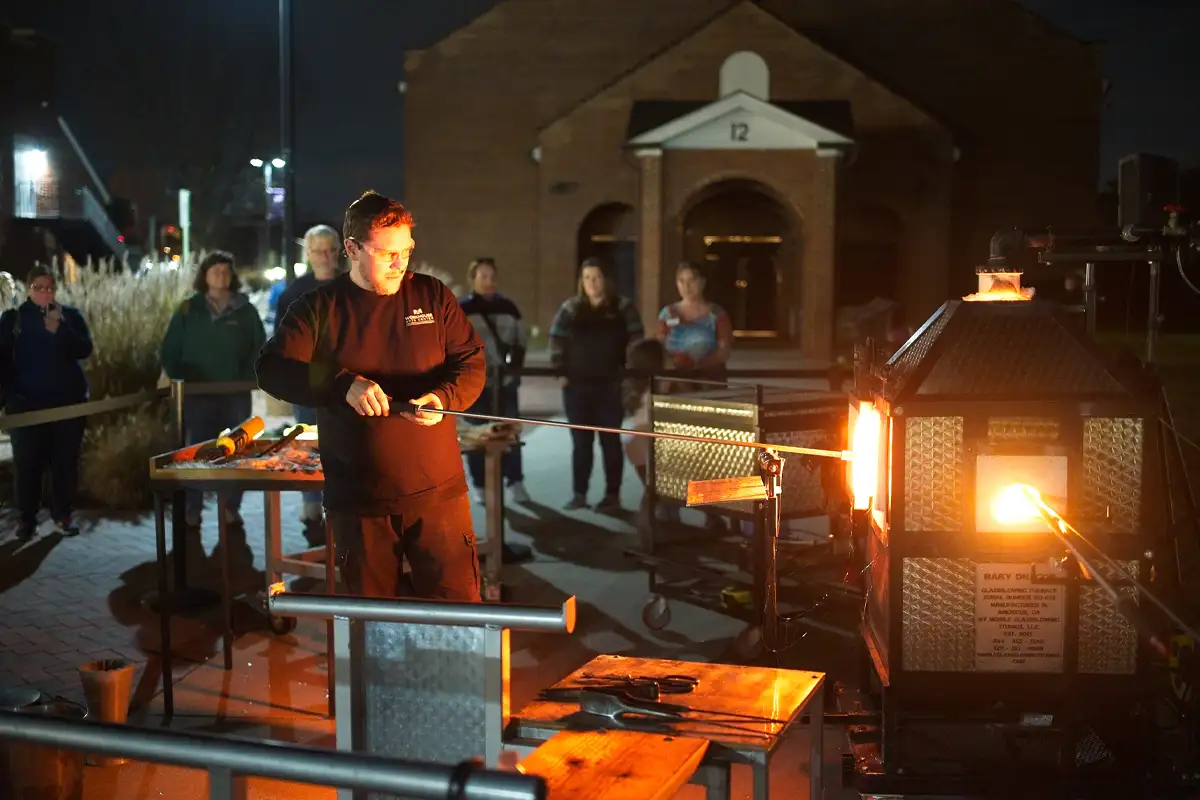
Have you ever watched an artist form a piece of molten glass into a beautiful sculpture? Soon, you’ll be able to do just that — and even make your own glass creations. Lorton’s Workhouse Arts Center is in the process of creating a new public glassblowing studio called the Hot Shop.
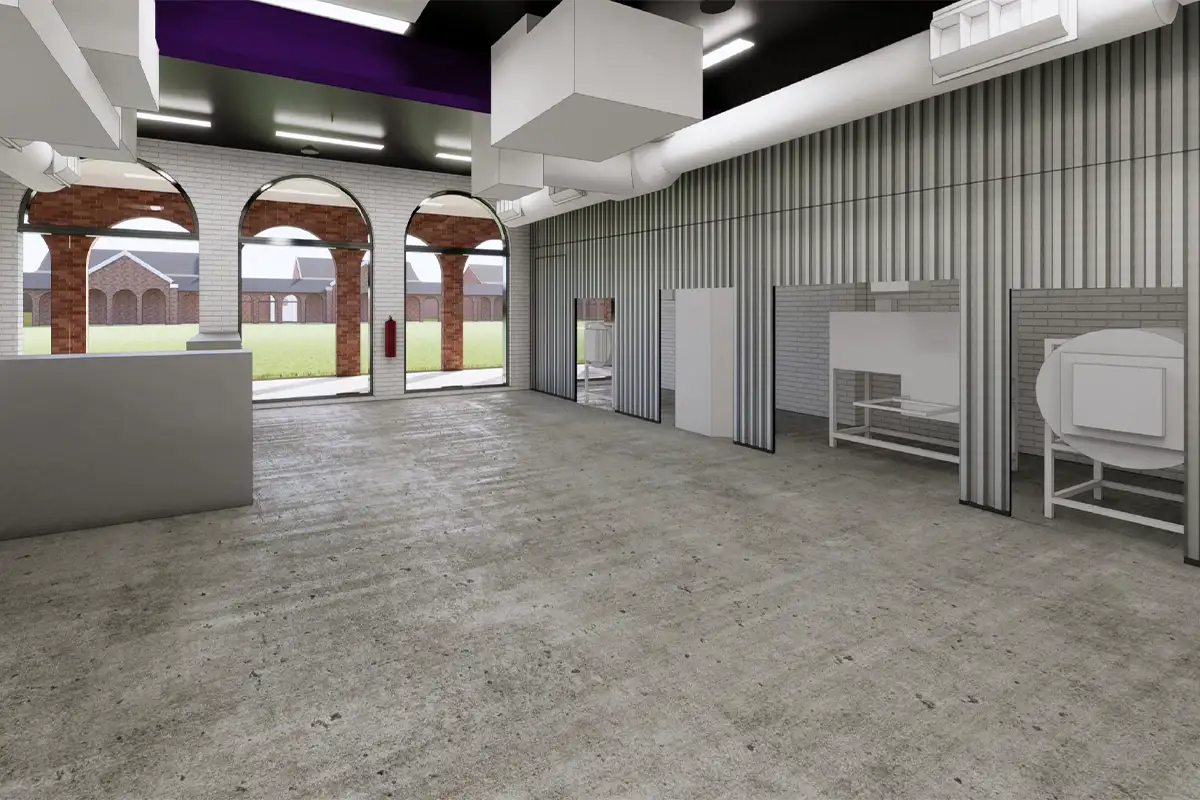
This new studio will transform Workhouse’s Building W-7A into a space with specialized glass-working equipment and facilities. It will build on the art center’s existing glassblowing program to offer more classes, public demos, and studio access.
Ian Schmidt, the director of the glass and ceramics departments and a professional glassblower, is leading the project. “The plan is to have this seven-day-a-week public studio where glassblowing is happening and where the public can come see this amazing art form,” he says.
What’s in Store
This will be the first public-facing glassblowing studio in the region. The new facility will allow guests to visit and watch glassblowers at work. Artists will demonstrate and explain the craft. Guests will sometimes even go home with small glass trinkets that are raffled off at the end of the demo.
“When they come to the campus, they’re going to basically see 2,000-degrees molten glass being made into a sculpture — into a figure, a bowl, into something huge or something small,” Schmidt says. “It’s going to be a pretty dynamic, really captivating experience.”
It will also provide an opportunity for artists of all skill levels to try out the art form through classes. The studio will offer one-time classes, some multiple-week classes, and “master classes” with renowned international glassmakers.
The facility will also be digitally integrated with cameras inside the furnaces so guests can see what’s going on inside a 2,000-degree piece of equipment. It will also give visiting artists the chance to create content to promote their work.
“We’re trying to create a space where we can offer this to artists to come in to not only make their work, but create content from the making of the work, which sometimes is equally as valuable as the work itself,” Schmidt says. “We want to be this place that captures that ability for an artist to display and talk about their work.”
Creating the Hot Shop
This new facility will build upon Workhouse Arts Center’s existing glass programs, which currently hosts classes and runs mobile glassblowing demonstrations. Currently, the program can host about 2,000 students. The Hot Shop could increase that amount by about 30%, Schmidt says.
The project will include two workstations with furnaces, an electric pot-melting furnace, and annealers, which help cool the glass.
And the facility itself will undergo major changes, Schmidt says. “The whole facility is getting rebuilt, and it’s going to have a lot of infrastructure to help keep it cool, make sure that there’s a lot of airflow, and that people, when they work there, are really comfortable.”
This project has been in the works for a few years, Schmidt says. He’s led similar hot shop openings around the country, and when he started in his role at Workhouse two years ago, he began thinking about how to get a hot shop up and running.
“When I got here, I did a quick assessment, got a plan together, presented that to our board, then to Fairfax County, then kind of got a lot of support from some of our board members,” he said.
Workhouse is currently working to fundraise $75,000 to complete the project. So far, about $30,000 has been raised. Construction will begin soon and run through the fall, and the facility should open in late 2026 or early 2027.
Feature image of Ian Schmidt courtesy Workhouse Arts Center