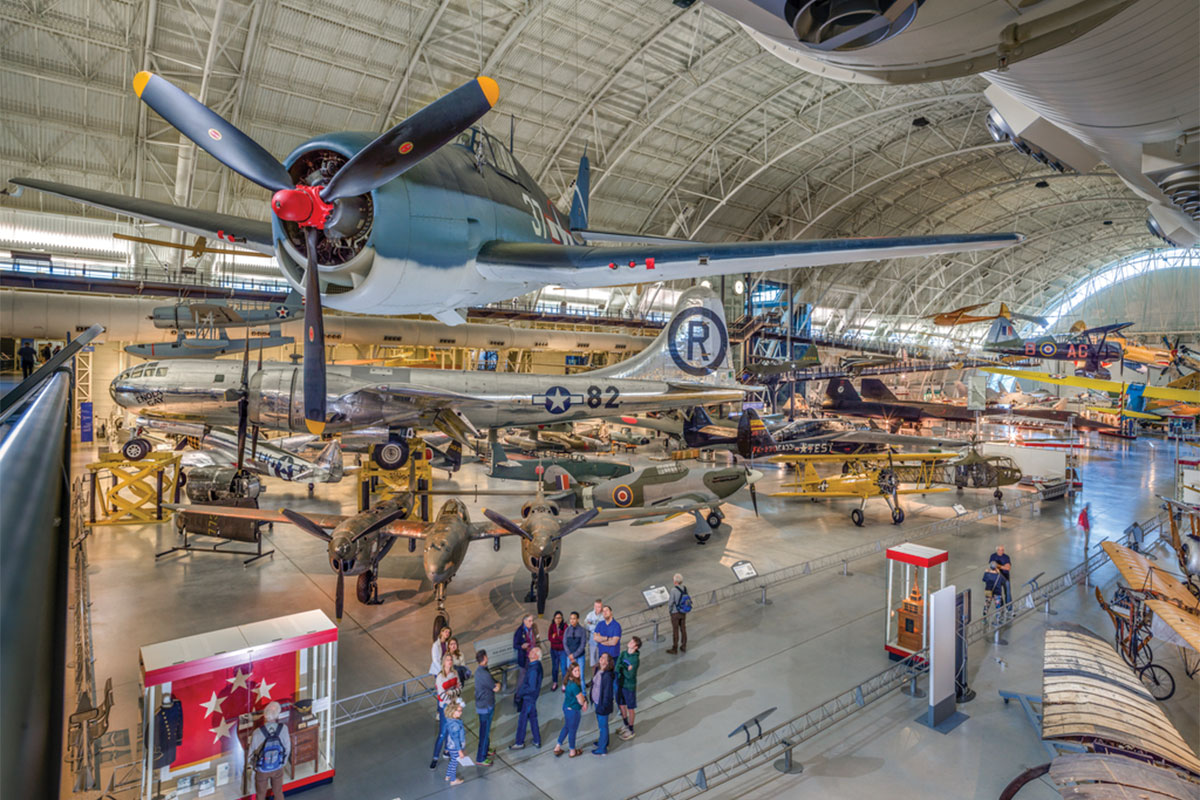
The National Air and Space Museum’s Steven F. Udvar-Hazy Center tells amazing aerospace stories and showcases some of the world’s rarest and most historic air and space artifacts.
The Chantilly location, a companion facility to the museum on the National Mall, opened December 15, 2003.
There, the Smithsonian displays items it had in storage and has expanded its educational mission.
“The building was designed with the intent of showing some of these artifacts in a way that you never see them,” says Jeremy Kinney, associate director for research and curatorial affairs at the National Air and Space Museum. “There is really, truly something for everyone.”
Start of an Era
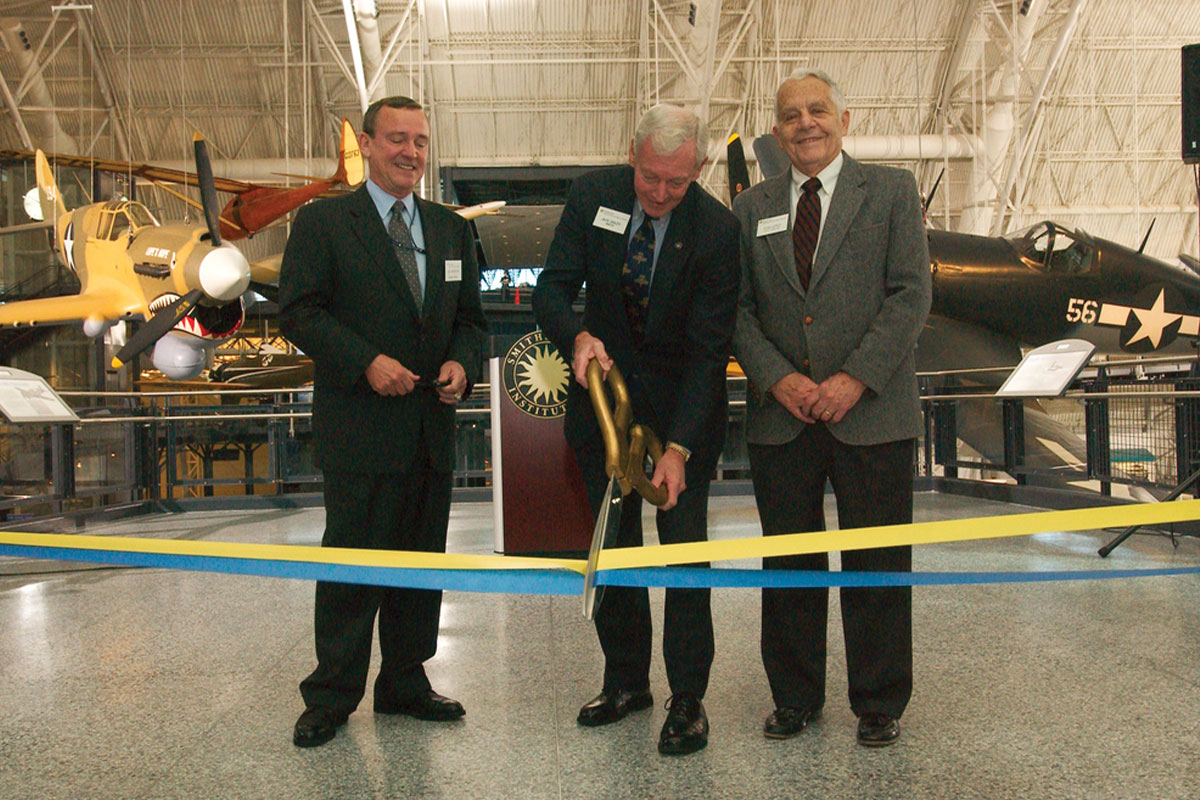
In 2003, Gen. John “Jack” Dailey, director of the National Air and Space Museum, cuts the ribbon at the official opening. On the left is Joe Anderson, museum associate director for the Udvar-Hazy Center. On the right is Donald Lopez, the museum’s deputy director.
Curtiss JN-4D “Jenny”
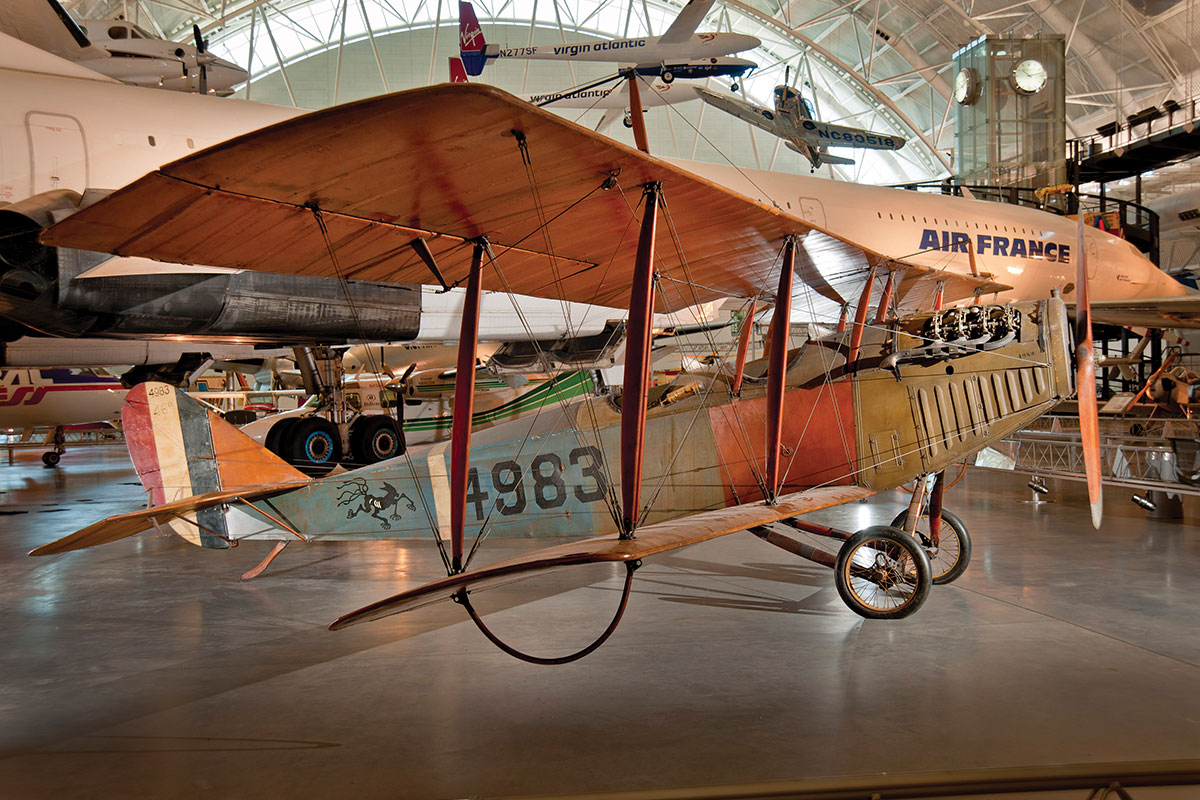
The Curtiss JN-4D “Jenny” from World War I, Kinney says, shows “the very beginnings of when aviation is becoming modern and people are learning to fly.” When you see it, he says you’ll notice it “has the patina of over 100 years, that’s survived to this day.” Jennys served as barnstorming and mail-carrying planes in the 1920s.
Boeing 367-80 “Dash 80”
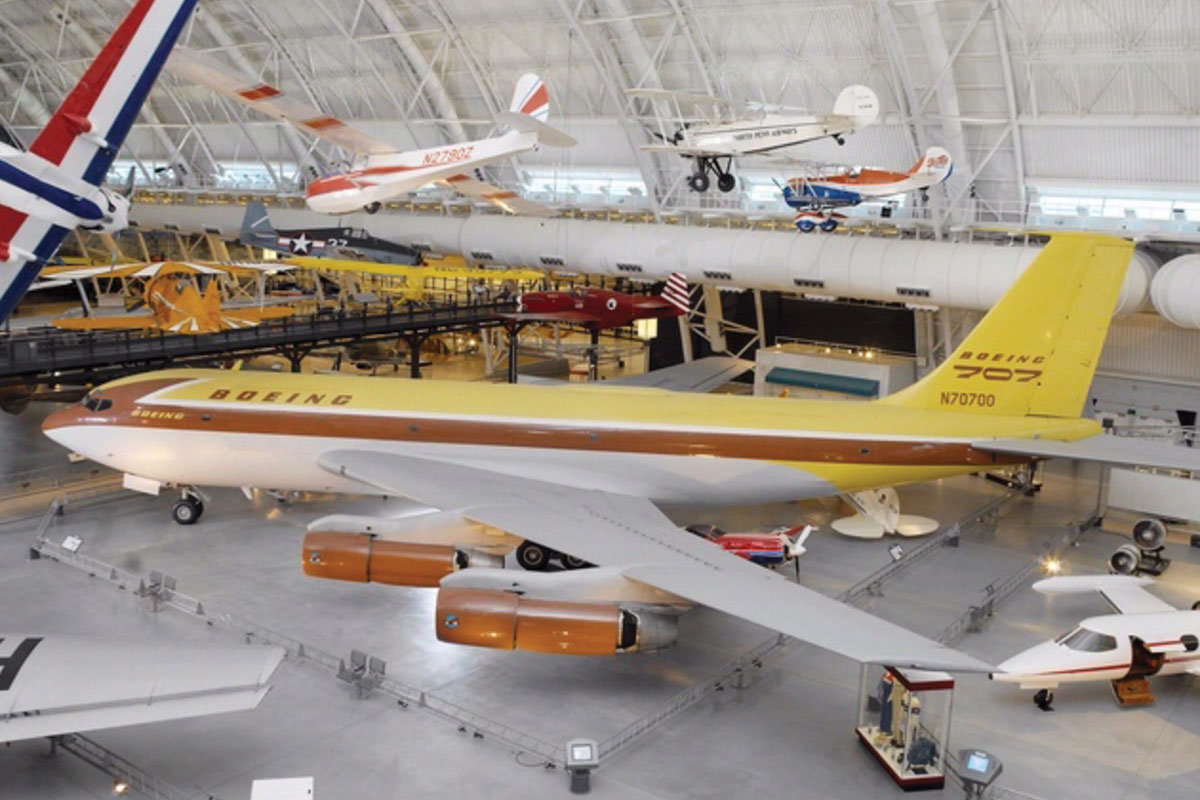
The “Dash 80” took flight in 1954, becoming the prototype for the Boeing 707. Kinney says that’s the airplane that shaped air travel and made flying the global technology we know today.

Lockheed SR-71 Blackbird
The SR-71 Blackbird, considered the world’s fastest jet-propelled aircraft, was built during the Cold War era with paint formulated to absorb radar signals. It greets you at the Boeing Aviation Hangar. In 1990, Air Force pilots delivered it from Los Angeles to Dulles in 1 hour, 4 minutes, 20 seconds. It moved into the hangar on September 30, 2003.
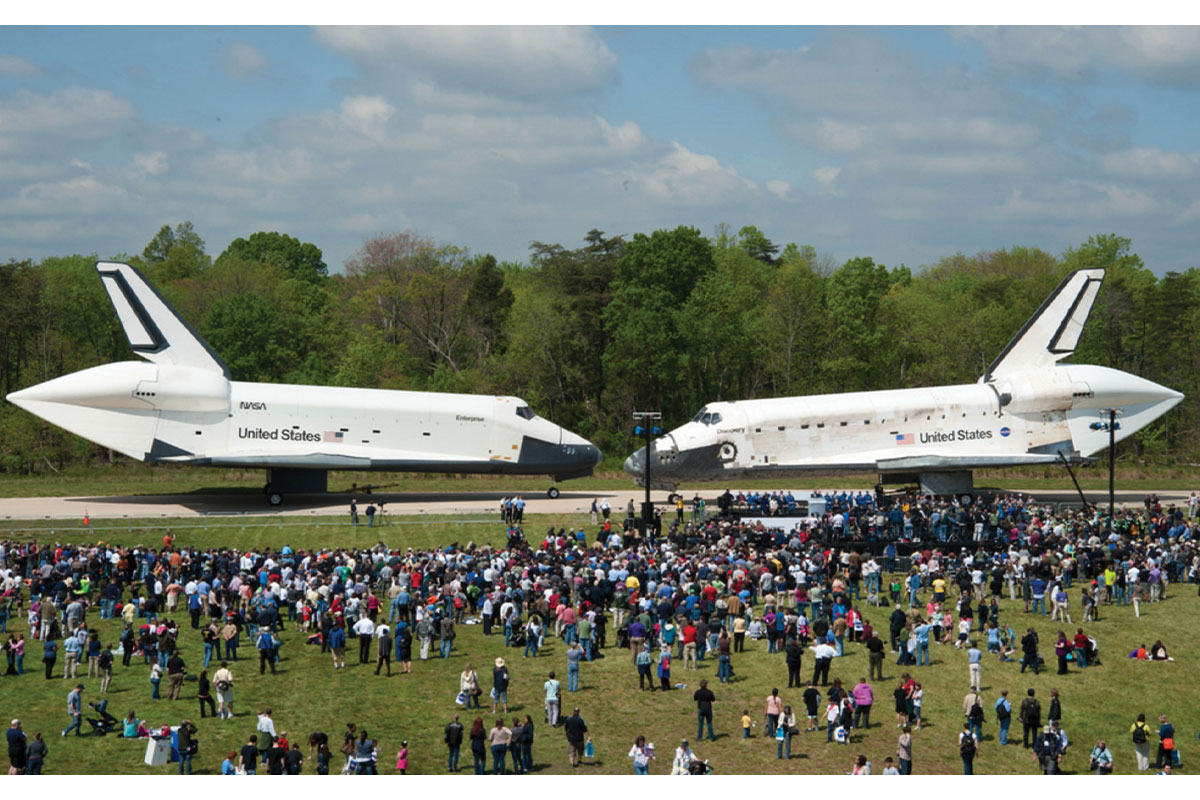
Enterprise Meets Discovery
The April 2012 arrival of the spacecraft Discovery, which flew almost 150 million miles in space, was “a major moment in history,” Kinney says. “People stopped on the side of the Beltway to watch this flyover.” Discovery piggybacked a ride on a 747 to Dulles. It then came nose to nose with Enterprise, the first space shuttle orbiter ever built, and replaced it at the museum.
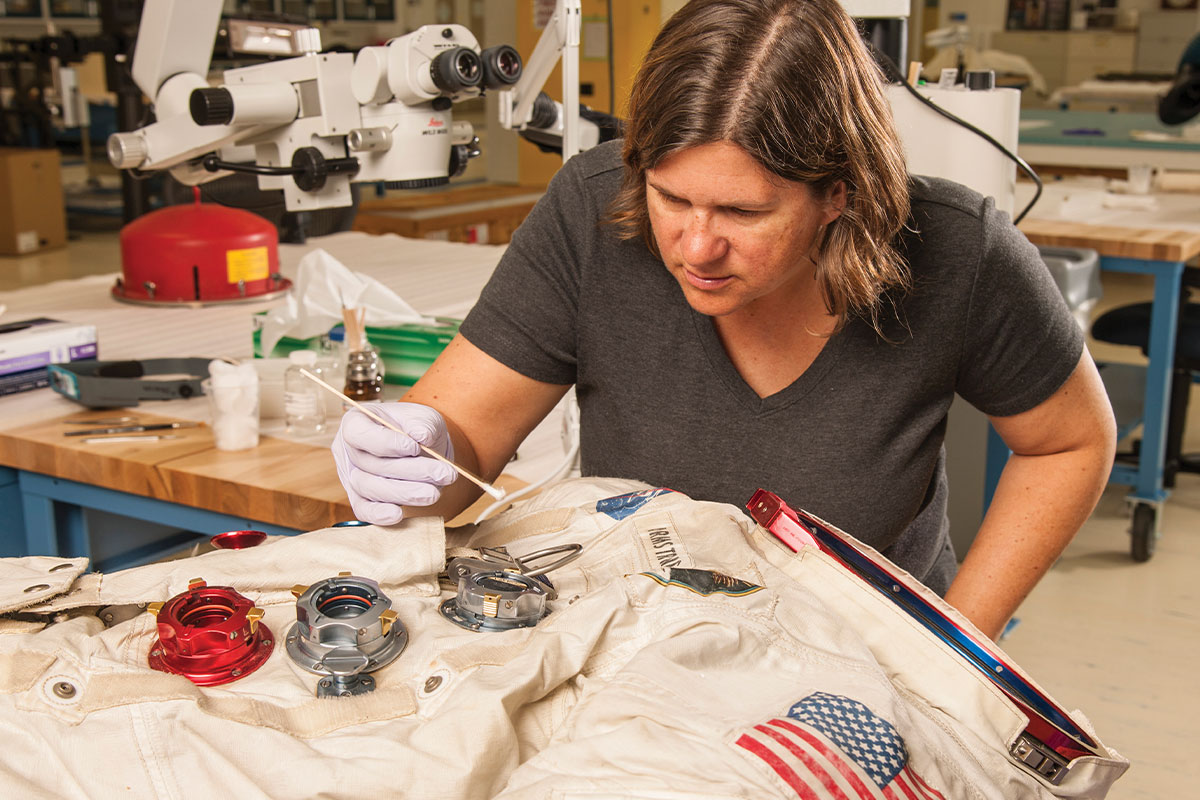
Moon Mission
Behind the scenes, Neil Armstrong’s spacesuit from the 1969 Apollo 11 moon mission is worked on by objects conservator Lisa Young at the Emil Buehler Conservation Laboratory in Chantilly.
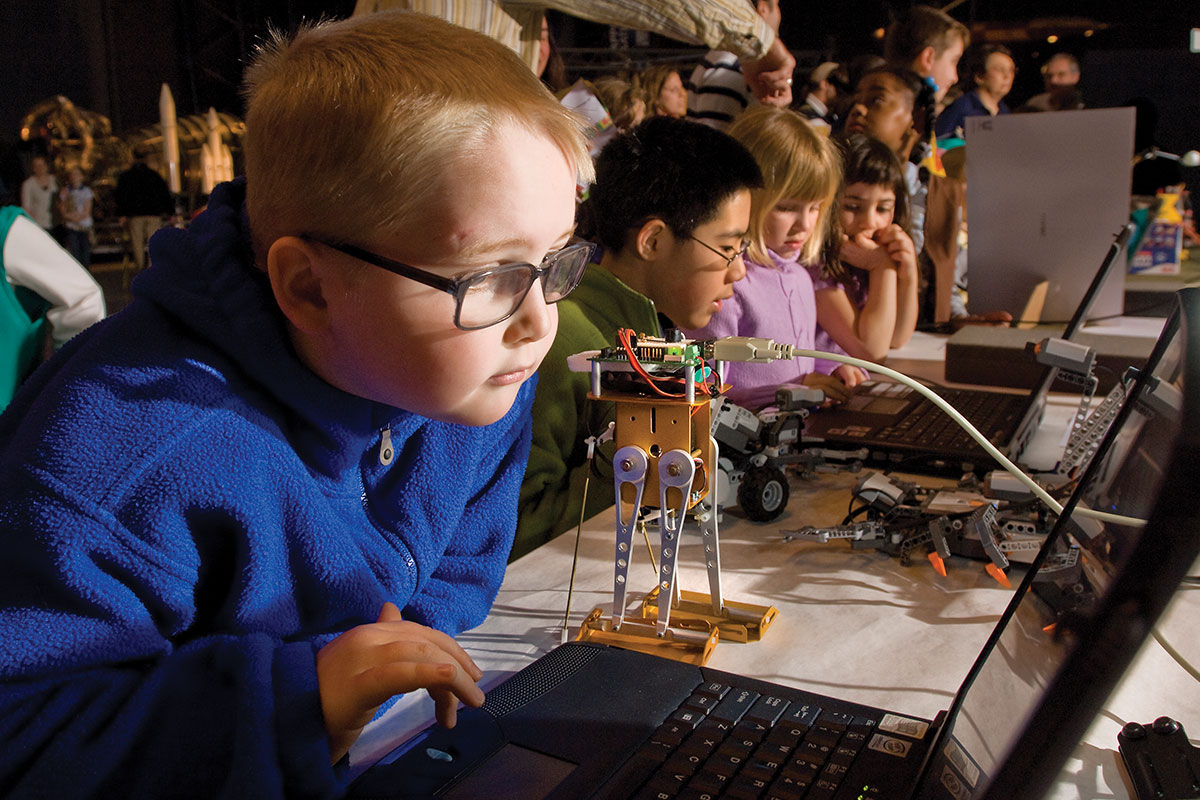
Local Love
While the Udvar-Hazy Center is a global aerospace destination, locally, it’s become part of the community with special events like family days, hands-on science activities for children, and IMAX movies.
Special Anniversary Celebration on December 2
To celebrate its 20th anniversary, the museum has a number of activities planned from 10 a.m. to 2 p.m. on Saturday, December 2.
You will have a rare opportunity to go behind the scenes at the Mary Baker Engen Restoration Hangar. Usually, you can only see what happens there from a glass-enclosed mezzanine. “Curators will give in-depth talks about highlighted artifacts such as the SR-71, the Martin B-26 Flak-Bait, space shuttle Discovery, the Friendship 7 capsule and the mothership model from the movie Close Encounters of the Third Kind,” according to a news release.
Plus, aviation industry pioneer Steven Udvar-Hazy, the museum’s main benefactor, will give an on-stage interview. Museum director Chris Browne will be at the F-14 plane he flew when he was in the Navy.
And there will be hands-on activities for younger visitors, as well as story time.
Steven F. Udvar-Hazy Center: 14390 Air and Space Museum Pkwy., free, parking $15
Feature image by Eric Long, courtesy Smithsonian Air and Space Museum
This story originally ran in our December issue. For more stories like this, subscribe to Northern Virginia Magazine.