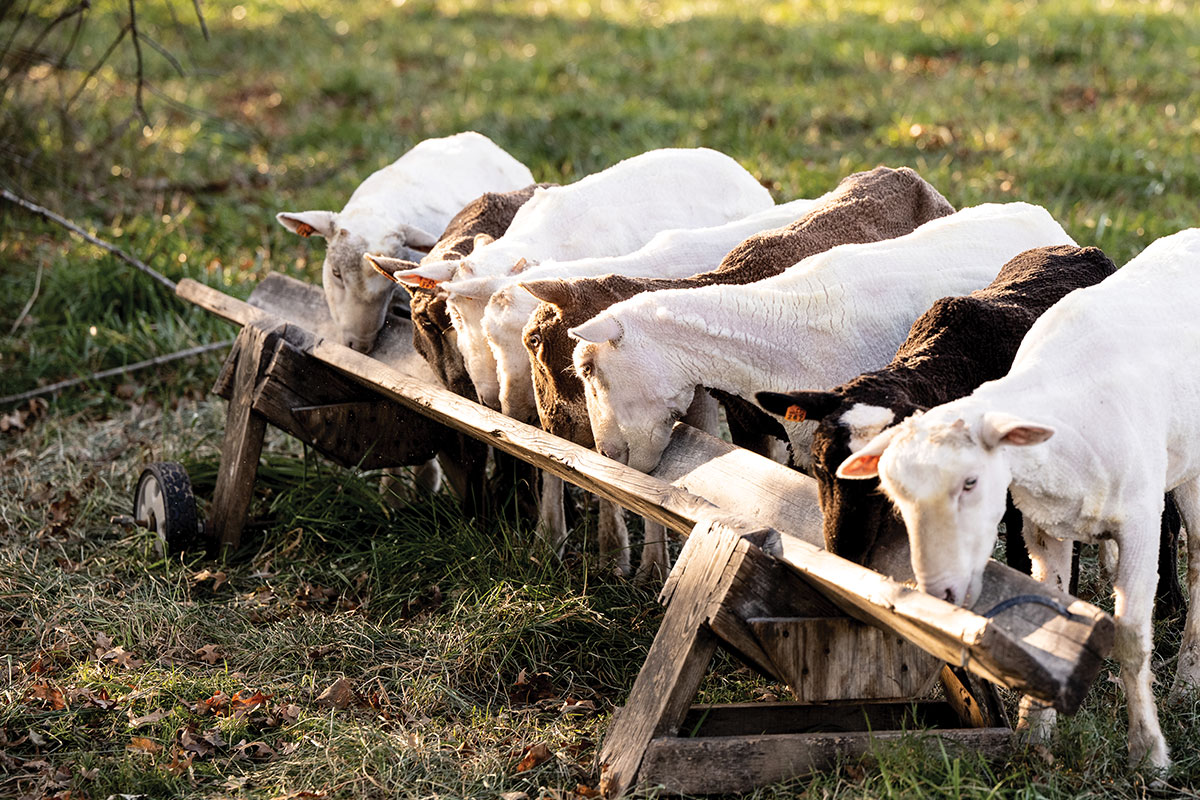
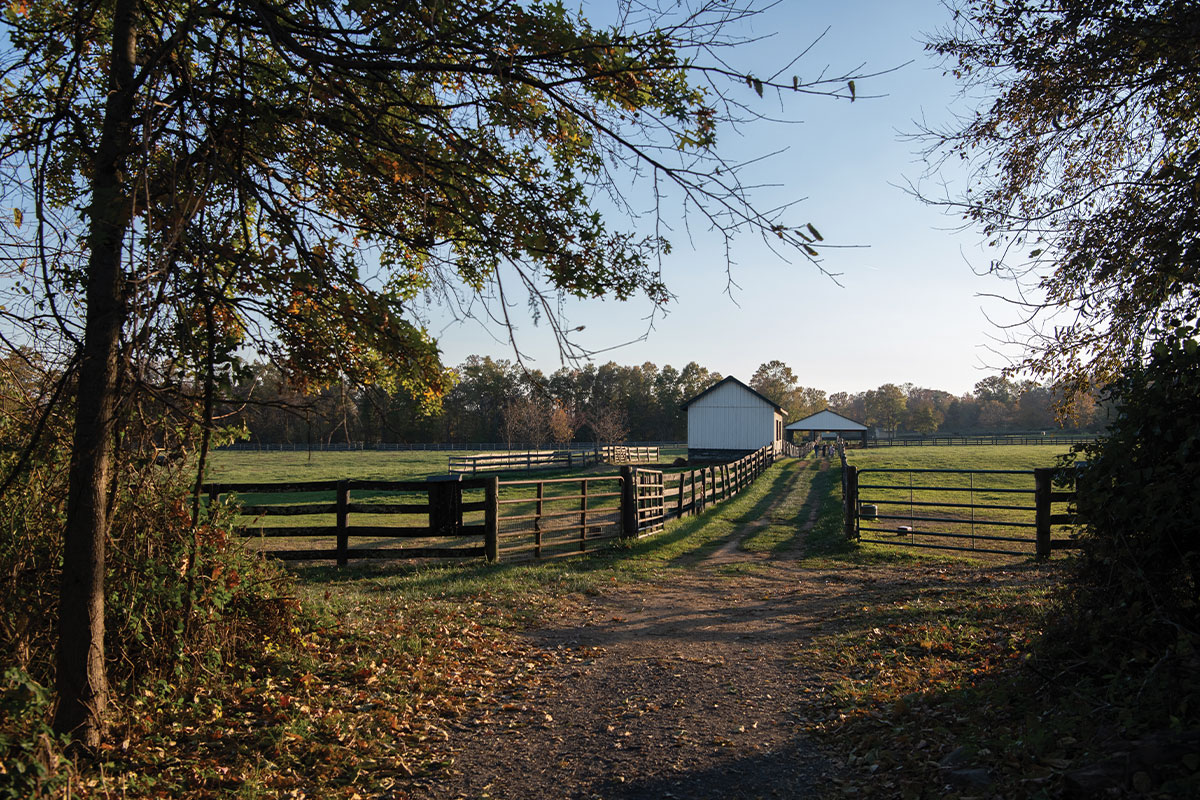
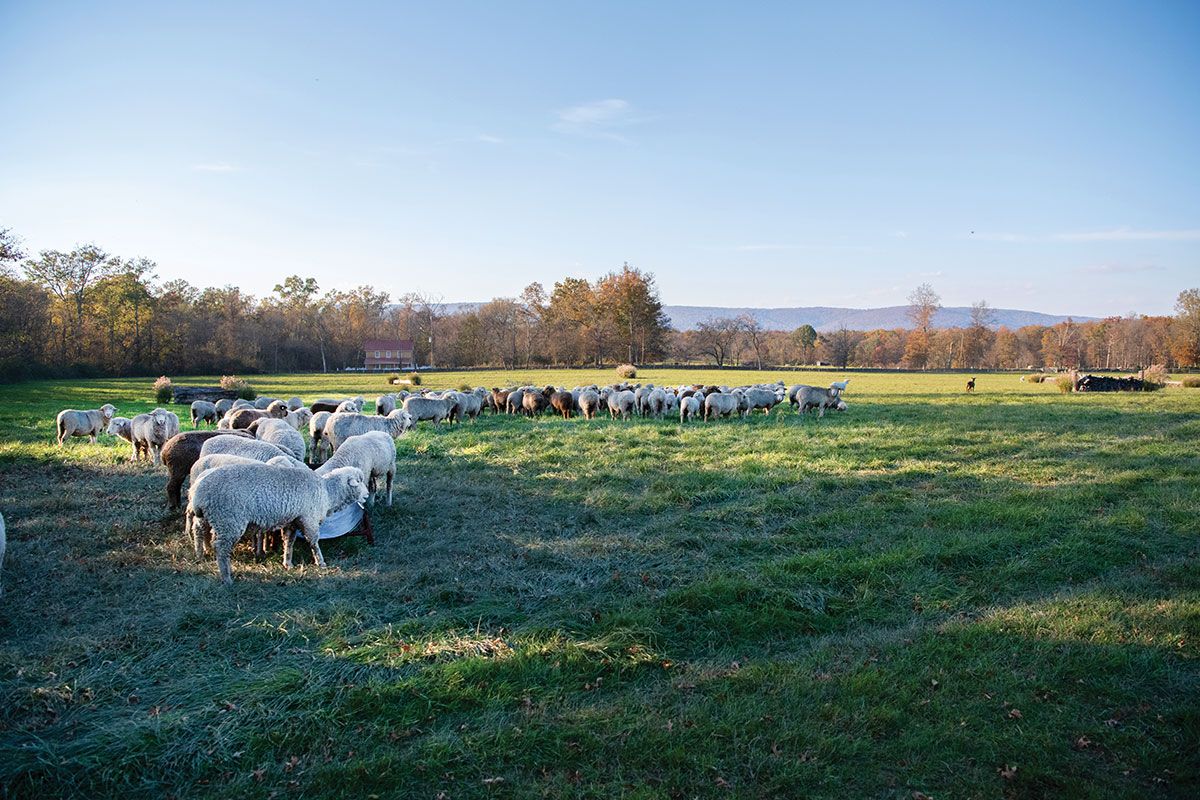
In a sprawling, bucolic Middleburg farm, Franny Kansteiner is a shepherd to a flock of around 300 merino sheep. She’s also the CEO and designer for her company, Gum Tree Farm, which produces and sells luxury merino wool clothing and accessories. She oversees the full production process of everything she sells, from the moment a sheep is born to the moment a customer walks out the door with a new garment.
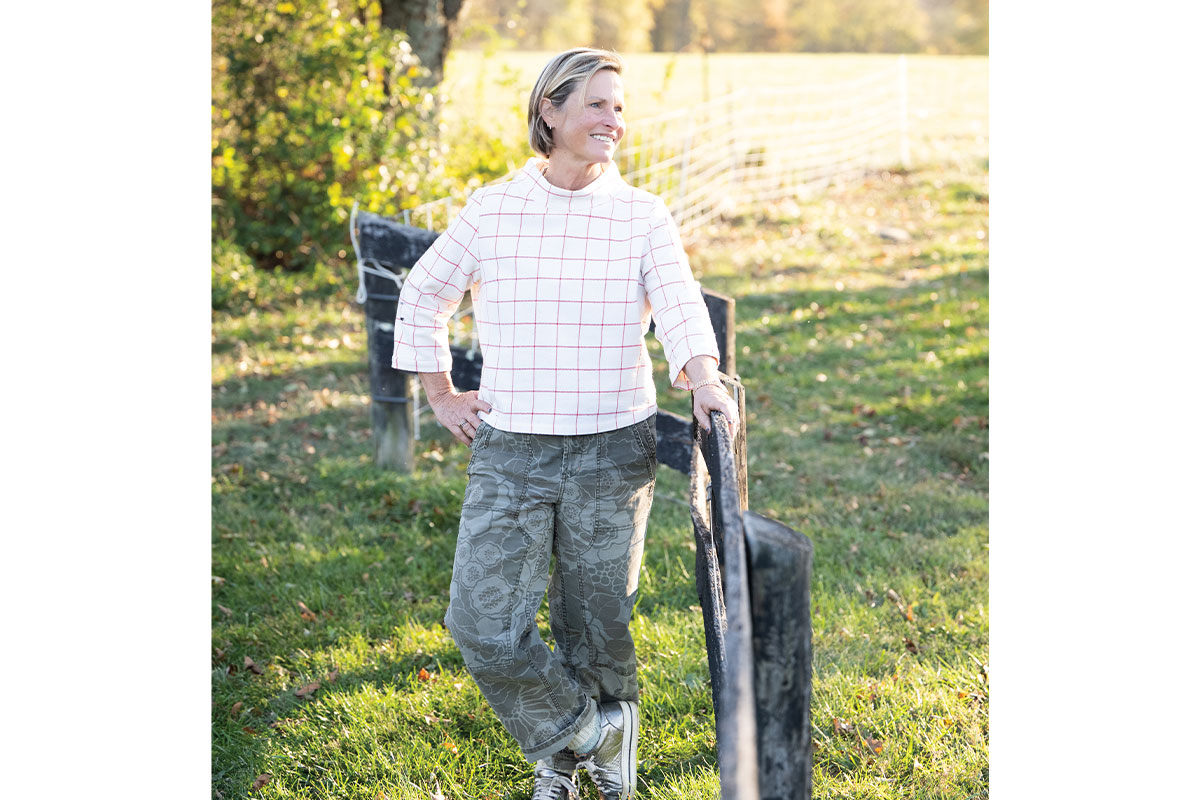
She calls this approach “farm-to-fashion,” and it means that she — and, in turn, her customers — knows exactly where, how, and from what her products are made.
While the concept of local, mindful textile sourcing and conscientious practices aren’t unheard of in the fashion industry, very few companies are able to oversee the process as thoroughly as Kansteiner.
“Most shepherds don’t get to see it all the way through to production. And most designers don’t get to grow their own fabric. … I know that I’m sort of lucky and unique that way,” Kansteiner says.
Organic Origins
Gum Tree Farm began with a gift. In 1995, when Kansteiner and her husband, Walter, were newly married, she offered horse riding lessons at their farm. She says it made sense to add more animals to the farm, and a neighbor gave her three lambs named Faith, Hope, and Patience.
She learned how to spin the wool from the lambs into yarn and how to knit that yarn into clothing. It started small, with a few hand-knitted mittens, socks, and baby sweaters that were gifted to family and friends. As demand grew, she began leaving items on a table with an “honesty box,” where people could leave cash in exchange.
Those three sheep quickly became 300, and she now sells her products at a showroom in Middleburg, online, and in about 10 pop-up shops per year.
Sheep Come First
There are a lot of responsibilities that come with being the shepherd-designer-CEO of a company like Gum Tree Farm. So how does she balance them?
“The shepherding comes first,” she says. “Keeping the sheep alive and healthy and thriving and doing well on the farm, and picking nutrition and breeding programs and things like that, that’s what got me in it.”
The flock lives on a serene farm of about 100 acres, where they’ve been bred, born, and raised.
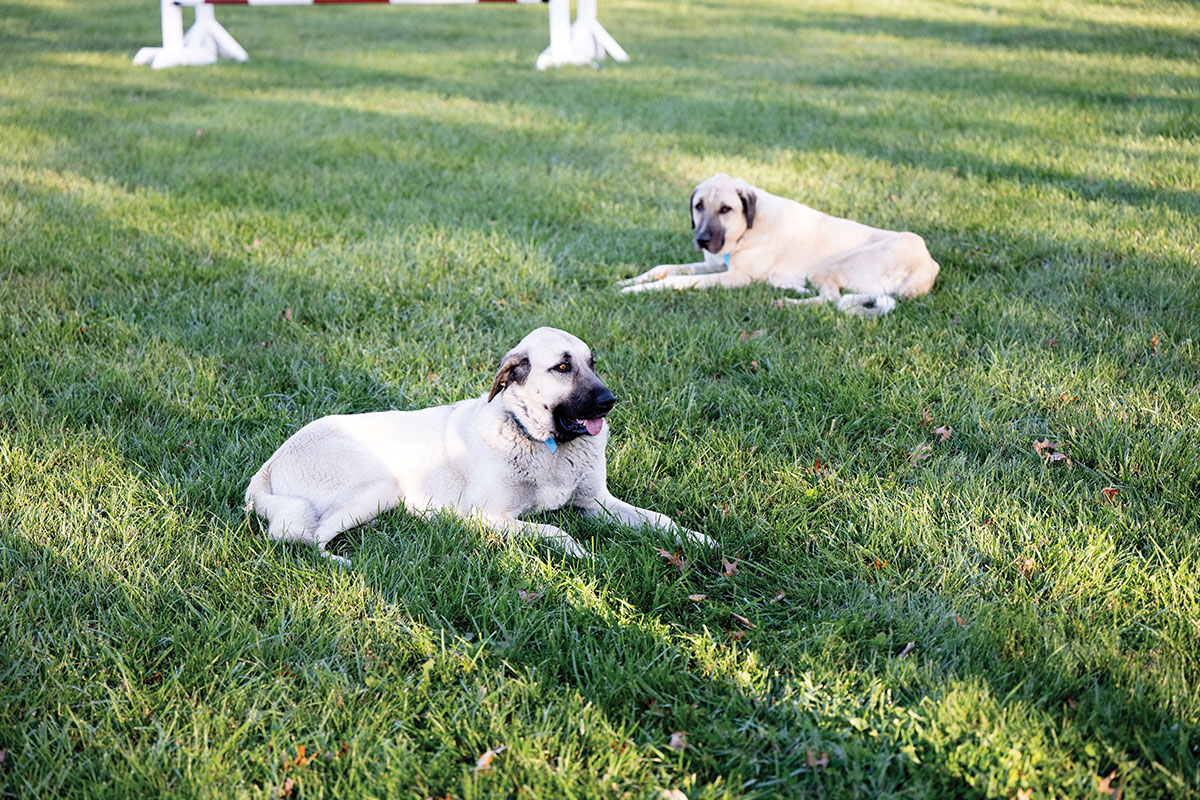
Some of the stars of the farm are Bluto and Olive, livestock guardian dogs that scare off threats like coyotes, eagles, and neighboring dogs that may harm the sheep. While the farm used to lose around 10 to 12 sheep per year to predators, it hasn’t lost a single one since Bluto arrived.
Merino sheep, the kind that live at Gum Tree Farm, are a domestic breed originally from Spain that produce an ultra-fine wool for a soft final product.
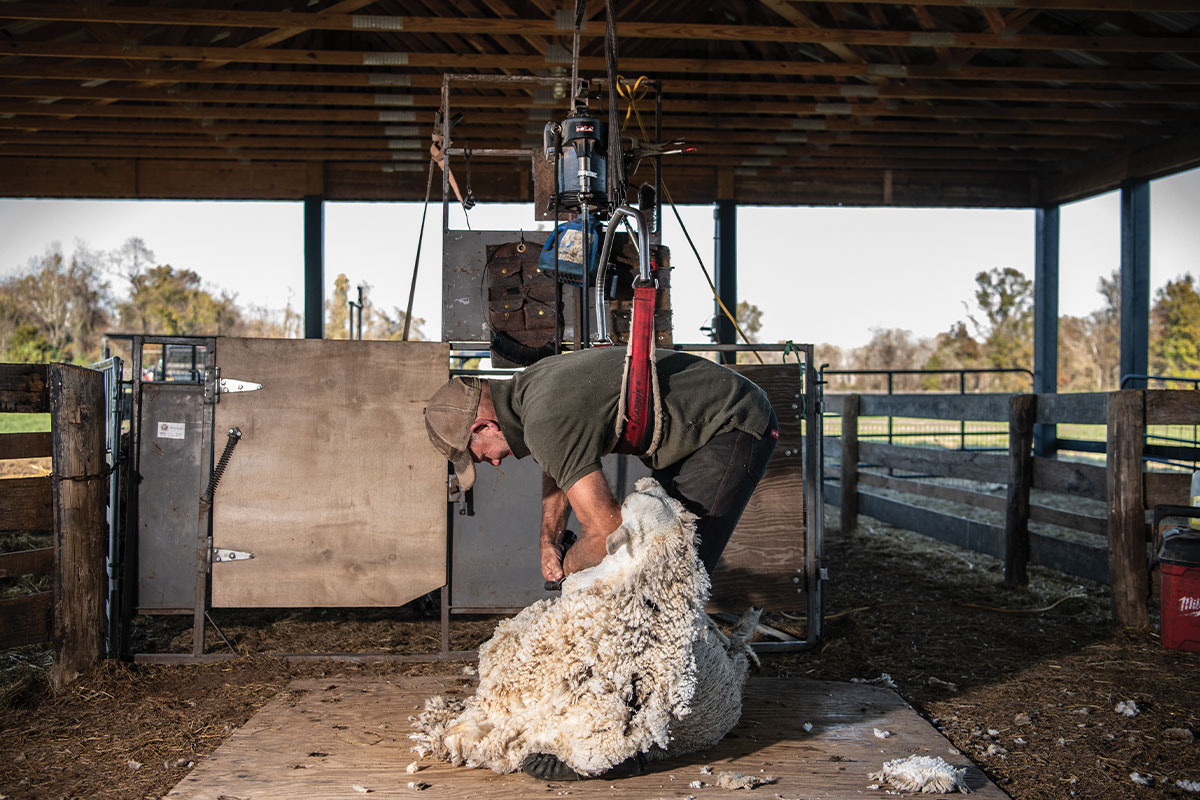
The sheep are typically shorn once a year. One by one, a shearer holds the sheep and methodically buzzes off their wool before releasing them to join their flock. The wool comes off in one large fleece, which is spread out on a table so the pieces that are dirty or matted can be removed and placed in a separate pile. From there, it’s bagged up, ready to be washed and spun.
“This whole process is connected from the earth,” says Ellie Auch, head of creative and design at Gum Tree Farm. “It’s almost like science, in a way, where there’s this connectedness between farming and everything you wear.”
Processing and Production
Gum Tree Farm’s operation has grown to a point where it’s not possible for Kansteiner to do it all herself anymore, so she has sought out spinners and weavers from across the U.S. who can help turn the raw wool into useable yarn and fabric.
She has found a network of artisans to work with, including weaver Rabbit Goody, who runs Thistle Hill Weavers in Cherry Valley, New York. “I know the whole family that have produced these things, everything from the sheep that were born, to Rabbit who wove it, to David at Green Mountain Spinnery who washed it,” Kansteiner says.
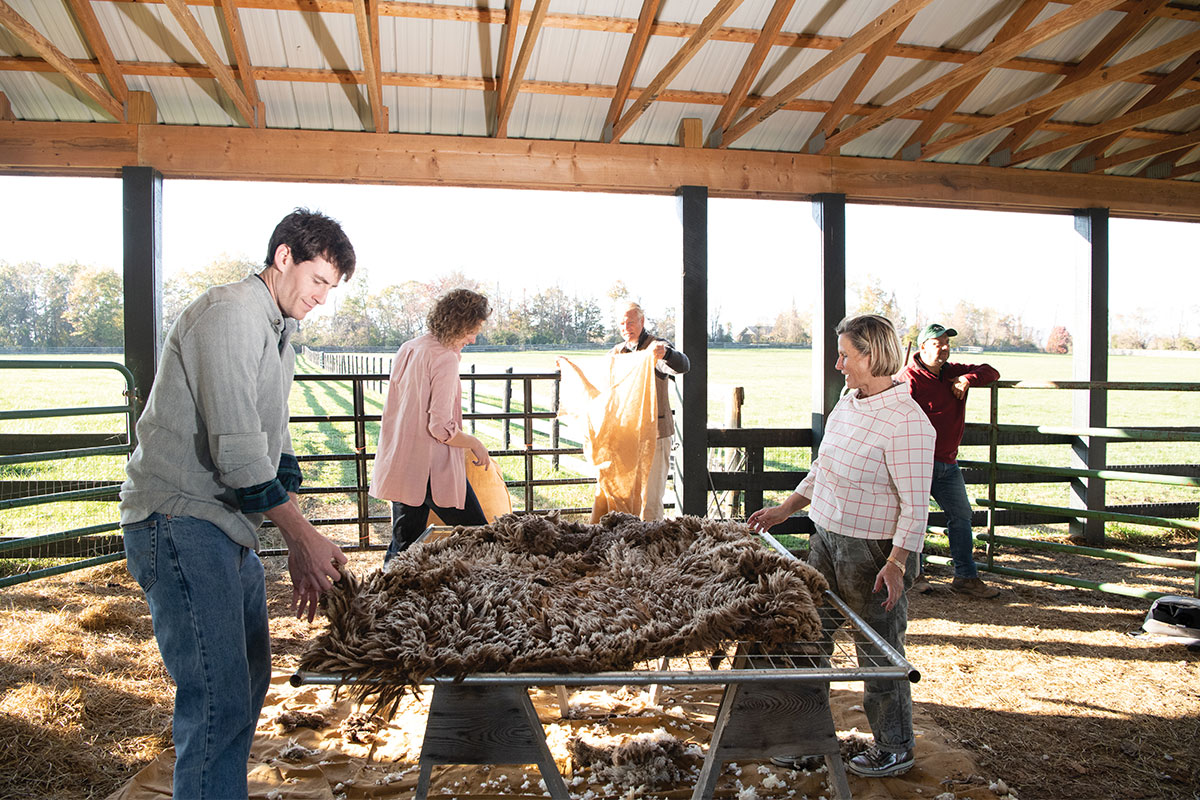
There aren’t many places in the U.S. that do this sort of work, but keeping production in the U.S. is an important part of her business, Kansteiner says. Most textile production moved offshore after the 1990s, but staying local means she knows that her clothing has been made ethically, even if it raises the cost of the final product.
“At first, I felt guilty about the sticker shock. But to be honest with you, I don’t,” Kansteiner says of her high-end pieces. “We’ve paid fair wages to people that make it. When you buy things that are really inexpensive, the price tag on humanity is way high.”
Conscious, Classic Designs
That intentionality is present in every element of the design. There’s only so much wool, and it can take up to two years from shearing the wool to the time a product is ready to be sold.
“I think we [are] more selective in what we use our fabric for because we only get so much of it every season,” Auch says. When a design sells out for the season, there’s no quick way to make more. “Which makes it more special. It’s almost like a piece of art … they’re like limited editions.”
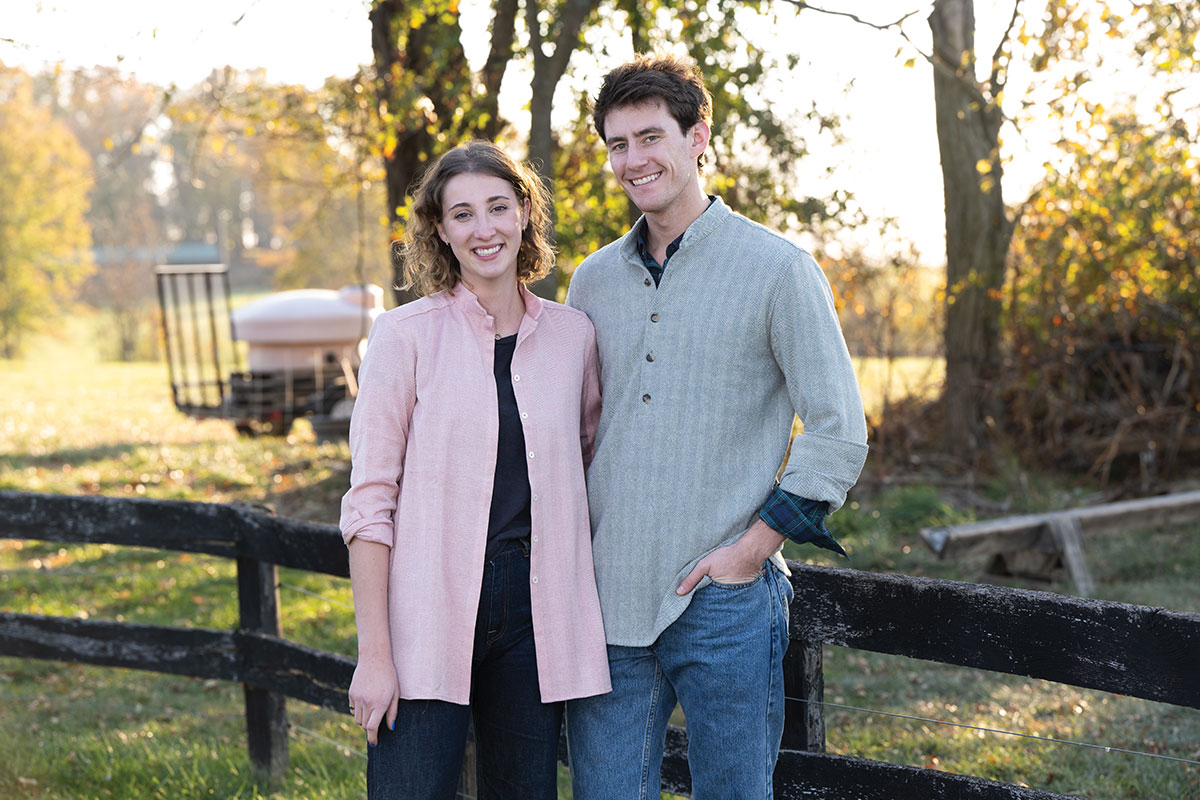
Kansteiner says she hopes to strike a delicate balance: to create durable, wearable items that are beautiful at the same time. This means simple, classic designs that will stand the test of time.
There’s the Audrey shirt, $625, a chic, simple top with a high, wide neckline — plans are in motion to eventually produce a sweater version of the top. The Circle shirt, her first design, has a round pocket on the front in a contrasting pattern to create a visual pop. It’s also $625.
Without formal training as a designer, Kansteiner finds inspiration in art, including Henri Matisse and painter Agnes Martin. She comes up with ideas for new designs when she thinks of something she needs in her own closet or when customers express a desire for a particular item.
At the end of the day, Kansteiner’s goals for the future of the company are simple.
“I would like to be able to keep making beautiful things that are inspiring to people and honor the sheep and their wool.”
Feature image by Michael Butcher
This story originally ran in our January issue. For more stories like this, subscribe to Northern Virginia Magazine.