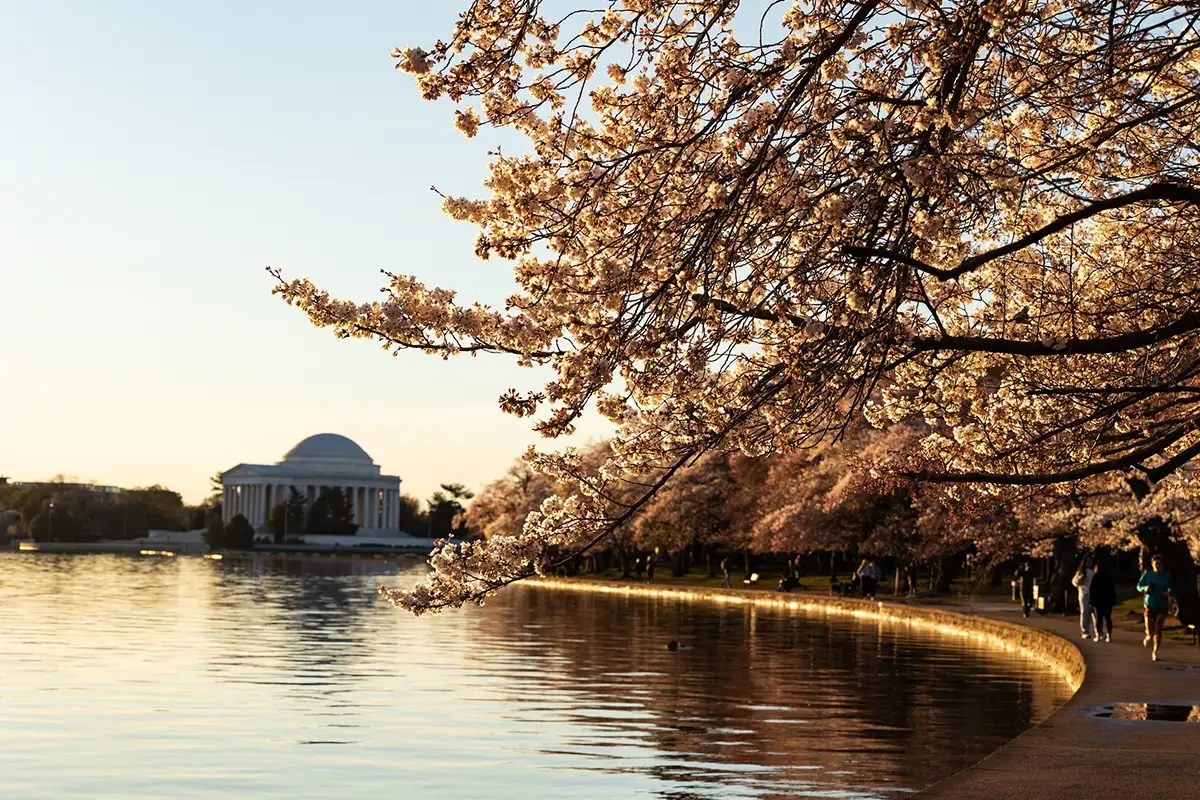
The wait is over — Washington, DC’s iconic cherry blossoms have hit peak bloom, the National Park Service’s National Mall and Memorial Parks announced on social media Thursday morning. They reached their peak three days earlier than NPS’ initial prediction of March 29 to April 1.
“Glorious clouds of white and pink cherry blossoms now ring the Tidal Basin, creating a splendid spring spectacle. Come enjoy the beauty,” the post said. It attributed the earlier-than-predicted bloom to the recent warm weather.
Peak bloom is defined as the point when 70% of the Yoshino cherry trees are in full bloom. That means that it’s prime time to visit the Tidal Basin and other sites around DC and NoVA to get the best view of the cherry blossoms in all their glory.
The peak lasts for several days, but it can depend heavily on weather conditions. Strong winds or rain can damage blossoms, while mild weather helps them last longer.
DC’s famed cherry blossom tradition dates back to 1912, when Japan gifted the city more than 3,000 cherry trees. Today, there are roughly 3,800 cherry trees planted around the Tidal Basin, NPS estimates, primarily the Yoshino and Kwanzan varieties.
Visiting the Cherry Trees
The peak bloom coincides with ongoing National Cherry Blossom Festival celebrations, which run through April 12. This weekend, there are events such as BloomFest at the Tidal Basin, the Blossom Kite Festival, and the Sakura Taiko Festival.
Keep in mind when going to visit the pretty pink trees that a portion of the Tidal Basin area will be blocked off. NPS took on a renovation project in 2024 to repair damaged portions of the seawalls there. While that project wrapped up early, the section will remain closed through this cherry blossom season.
Peak bloom season inevitably means dense crowds around Washington, DC. Check out our tips for seeing the cherry trees this year. Or, if you want to bypass the rush of the Tidal Basin, head to other scenic spots in Northern Virginia or Maryland that also have blossoms.
Don’t forget to treat the delicate trees with care whenever visiting. That means no removing blossoms, touching branches, stepping on roots, or leaving trash behind.
Feature image courtesy NPS/Kelsey Graczyk