
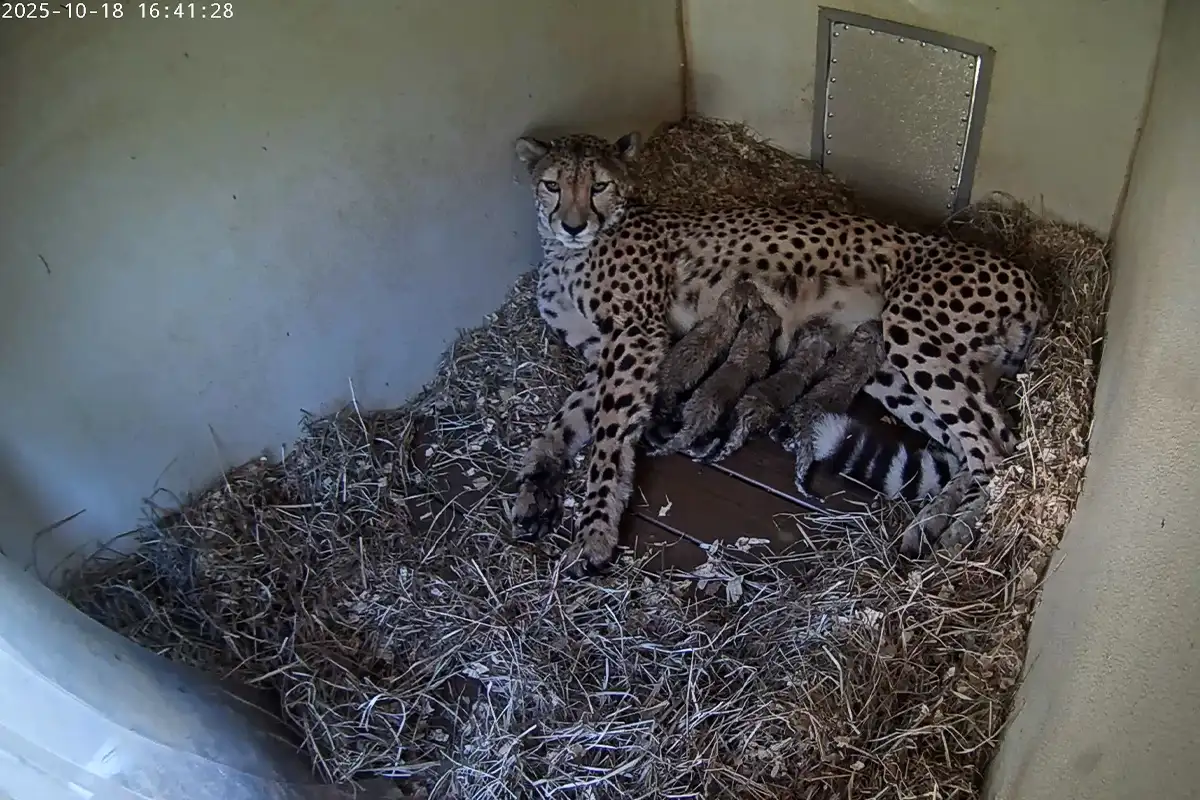
A litter of four cheetah cubs was born on October 17 and 18 at the Smithsonian’s National Zoo and Conservation Biology Institute (NZCBI) in Front Royal to first-time mom, 5-year-old Amabala — who was born at the facility herself. The cubs are the 20th litter born on the Front Royal campus and viewers can watch the cubs grow through the Cheetah Cub Cam livestream.
The livestream is not only for viewers to enjoy. Since animals born at NZCBI experience limited human contact, the animal care staff use the stream to remotely monitor the cubs and Amabala. This allows the cubs to bond with their mother while staff collect behavioral research information. The litter appears to be active, vocal, and eating well.
“Cheetahs can be challenging to breed, in part because female reproductive cycles can be sporadic and their behavior is often very difficult to interpret,” said Adrienne Crosier, a carnivore biologist at NZCBI who leads the cheetah Species Survival Plan (SSP), in a release. “It’s taken our team of keepers, veterinary staff and biologists thousands of man-hours to produce 20 litters. For that 20th litter to be Amabala’s is an exciting, full-circle moment for us.” Amabala herself was born on camera in 2020.
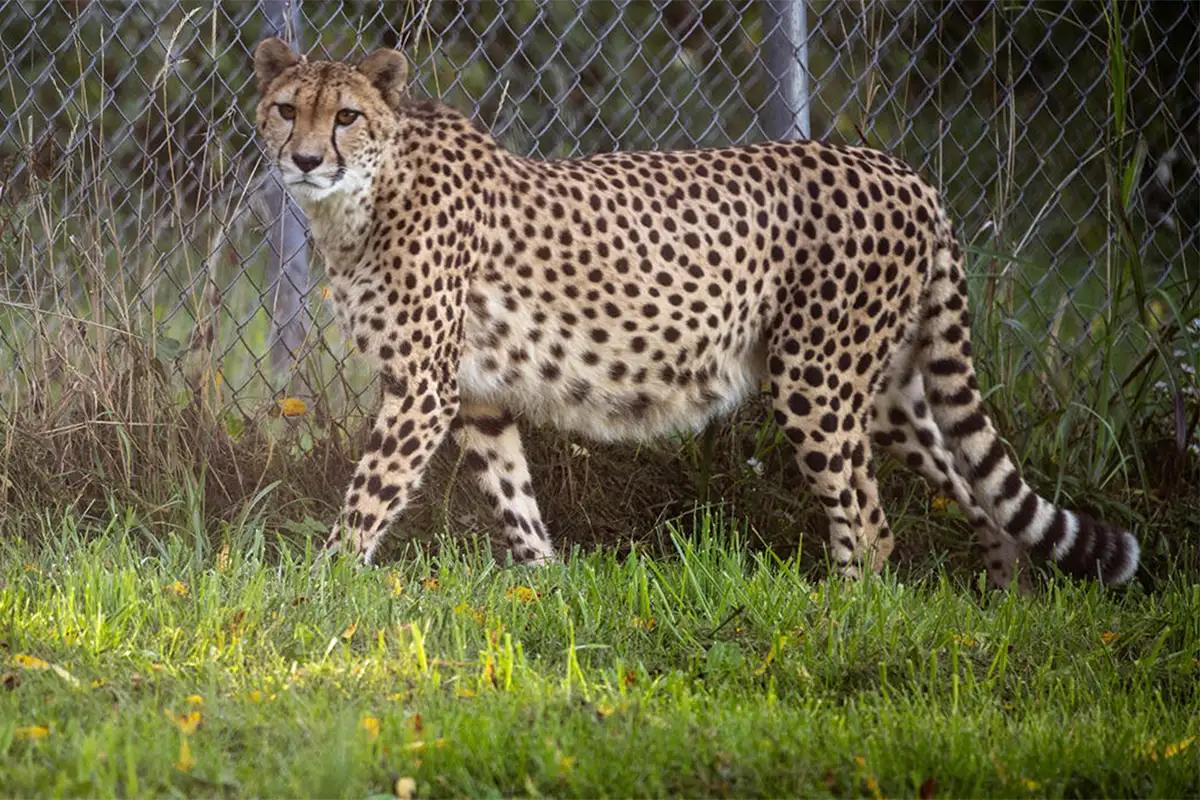
NZCBI is a part of a group of 10 cheetah breeding centers across the country that aim to maintain a North American cheetah population called the Cheetah Breeding Center Coalition. Along with the Association of Zoos and Aquariums’ population management center, members of this coalition determine which animals to breed depending on factors like genetic makeup, health, temperament, and more.
The cubs’ father, 8-year-old Flash, is a genetically valuable cheetah, making it likely the cubs will be important in the future of this breeding program.
The International Union for Conservation of Nature considers cheetahs vulnerable to extinction, with only an estimated 7,000–7,500 cheetahs left in the wild. Most wild cheetahs live in small populations in sub-Saharan Africa, with poaching, habitat loss, and prey-base loss contributing to their vulnerability.
Feature image courtesy Smithsonian’s National Zoo and Conservation Biology Institute