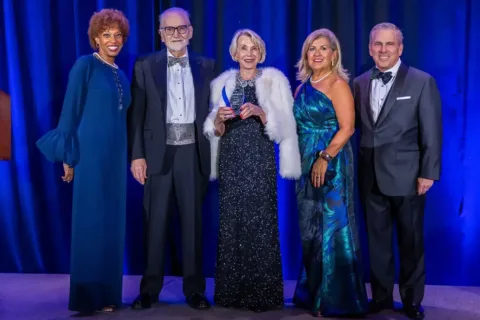
The room that 50 years ago to the day served as a makeshift morgue became a chapel of sorts for families and loved ones of the 92 passengers and crew aboard TWA Flight 514.
A private ceremony on Sunday drew more than 200 attendees from around the country to the Bluemont Community Center, 16 miles west of Leesburg, to hear heartfelt testimony from federal transportation leaders, local civic officials, and three family members who, exactly five decades ago, lost relatives in the historically tragic air crash. It was on December 1, 1974, the Sunday after Thanksgiving, that the Boeing 727 slammed into a mountainside in foggy, snowy weather.
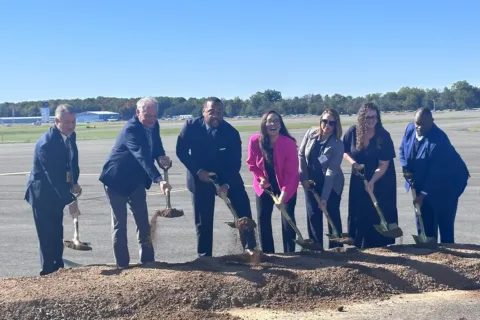
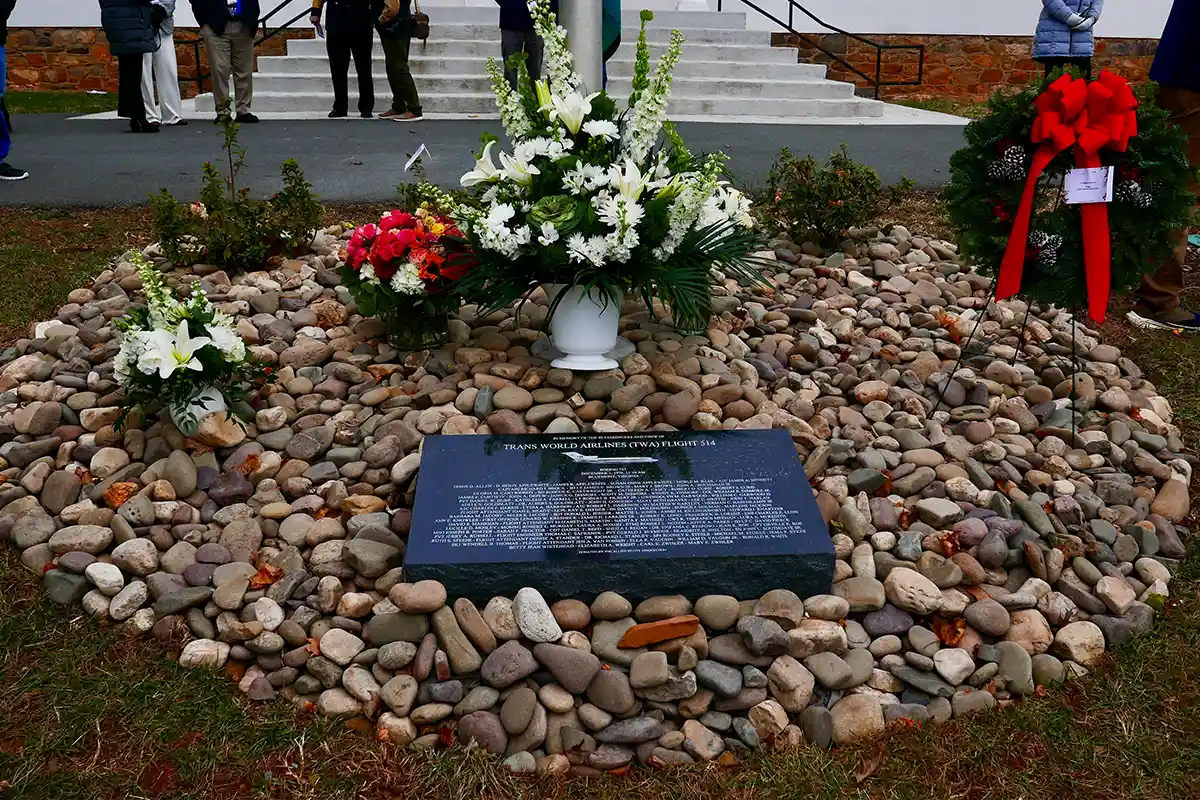
After the somber 90-minute indoor ceremony, the attendees moved outdoors for the dedication of a permanent memorial at the Bluemont center. The memorial, a plaque embedded into a black granite stone with 92 etched names, was unveiled beneath half-staff flags as volunteers read aloud the names of the passengers and crew who died. A Coast Guard trumpeter played “Taps,” and an ill-timed airplane roared overhead in the gathering clouds.
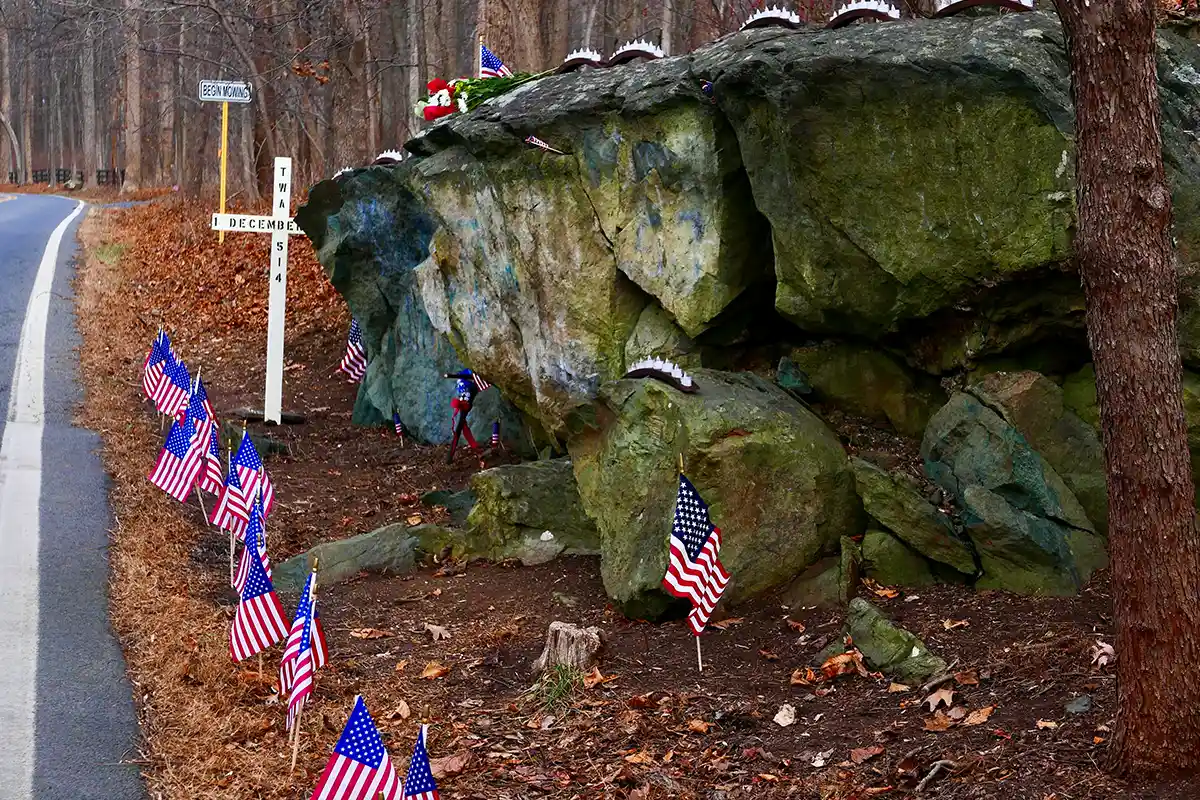
A day earlier, small American flags, votive candles, flowers, and wooden crosses appeared at the actual crash site, a few miles away atop Route 601. The unassuming rock outcropping that borders the road are the same boulders that the plane struck at 265 miles an hour, sheering off 380 feet of hardwood and pine trees that first-responders — some of whom attended the ceremony — described as giving the forest a flattop haircut.
The flight coming from Indianapolis and Columbus, Ohio, was supposed to land before noon at Washington National Airport, now Ronald Reagan Washington National. But National was closed by aviation officials because of atrocious weather — wind, snow, sleet, rain, thunder, lightning, all in the same late morning. The flight was diverted to Dulles International Airport. Because of confusion and a misinterpretation of air traffic terminology between the cockpit and air traffic controllers, the pilots had no idea a cloud-covered mountain loomed ahead. The misunderstanding would lead to huge changes in the aviation industry and modifications in air traffic control procedures.
Aviation officials taking the stage on Sunday assured the audience that the data collected from the recovered black boxes has been used to save lives and make flying “the safest mode of transportation,” in the words of Jennifer Homendy, chair of the National Transportation Safety Board chair, during her turn at the microphone. While the black boxes were found, the crash completely destroyed the plane.
Flight Safety Foundation President and CEO Hassan Shahidi and chair of the Loudoun County Board of Supervisors Phyllis Randall also spoke. Randall offered that the memorial in front of the building assures that loved ones’ names will always be spoken.
The event was spearheaded by the Bluemont Citizens Association and cosponsored by, among others, the Air Line Pilots Association, the Allied Pilots Association, and the Association of Professional Flight Attendants. Several members attended in uniform.
A video of the ceremony was taped for posting on the Bluemont Citizens Association’s website at a later date.
Feature image by Buzz McClain
For more stories like this, subscribe to Northern Virginia Magazine’s News newsletter.