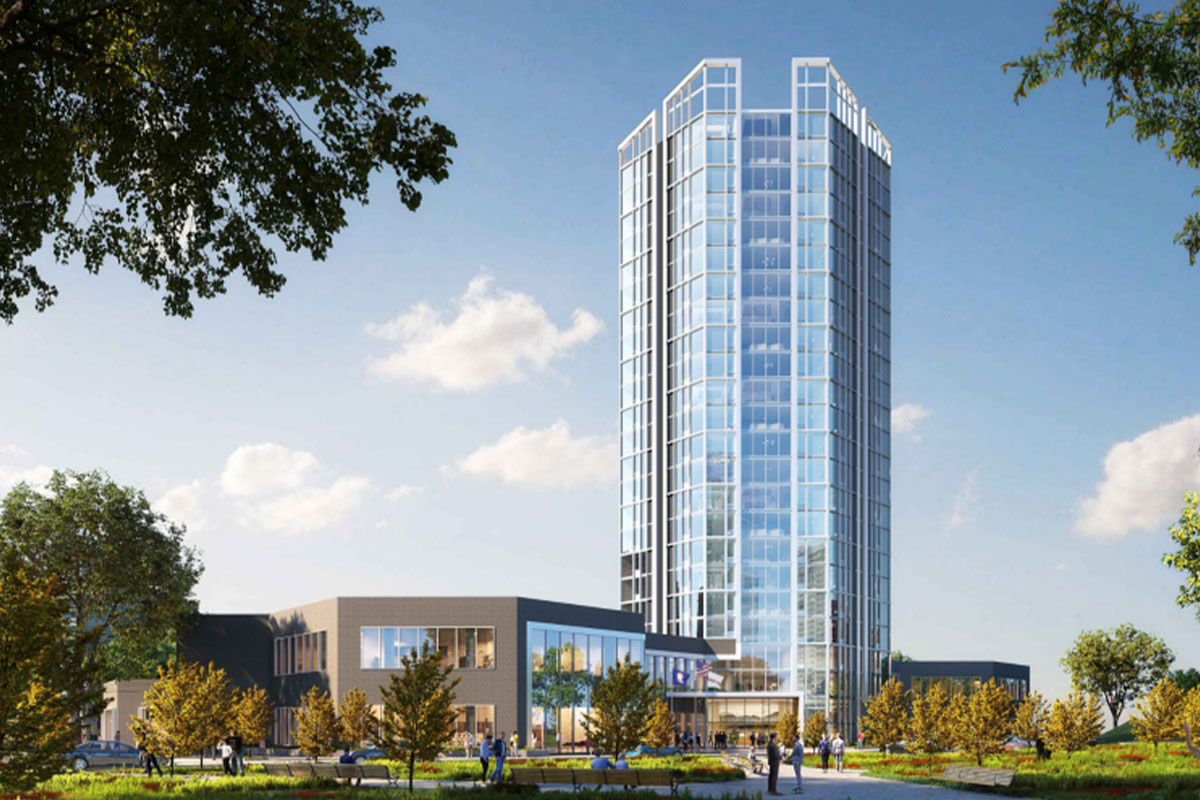
The former Tysons Sheraton Hotel will be converted into permanent, multi-family housing consisting of up to 544 apartments.
The Fairfax County Board of Supervisors approved the plan, proposed by JBG Tysons Hotel, LLC, without objections in a public hearing on January 23. With this plan, the existing structure of the hotel will be modified to create small studio apartments.
“Those units will be naturally occurring affordable units by virtue of the fact that the hotel will be preserved, all of the infrastructure and existing conditions on the site will be preserved,” including the parking garage, said Bob Brant, a land use attorney at Wash Colucci who represented the applicant at the hearing.
“This is providing a different type of residential unit that’s not available currently in this part of Tysons,” said Hunter Mill District Supervisor Walter L. Alcorn. “That’s good, that will help provide some new housing options, at least market rate housing options, for folks in the area.”
The former hotel will also contain 5,000 square feet of retail space.
This application is part of the previously approved Tysons West mixed-use development, an approximately 16-acre site with residential housing, offices, and retail space within a half-mile from the Spring Hill Metro station.
In addition to the changes to the Sheraton, the application also proposed to reduce the size and footprint of a previously approved mixed-use building in Tysons West called Building C. The plan will reduce the number of residential units in Building C from 400 to 265 and the amount of retail space from 50,000 to 5,000 square feet in order to preserve more parking.
This development will contain 3.05 acres of publicly accessible urban park space, including recreation spaces and urban plazas, and nearly 40,000 square feet of private outdoor space.
Alcorn also noted that the future Boone Boulevard ramp, connecting Boone Boulevard to the Dulles Toll Road, was an important detail in creating this application. “That is a big deal for this part of Tysons,” Alcorn said. To make the ramp possible, the developer agreed to put aside $250,000 in escrow to relocate the Sheraton’s loading facilities.
Alcorn called the plans for electric vehicle charging “less than overwhelming” — a minimum of 2 percent of parking spaces will have EV charging stations — but said that because it is a conversion of an existing building, he doesn’t believe it’s “realistic to expect major improvements.”
“This is something, I think, as a board we need to push more, particularly with new construction, to have higher levels of EV commitments,” Alcorn said.
Feature rendering courtesy Fairfax County
For more stories like this, subscribe to Northern Virginia Magazine’s News newsletter.