DiAnn Park’s fascination with native plants and the pollinators they lure to her Vienna yard began with a Mother’s Day gift 20 years ago. Her husband, Tom, bought her five native plants from a National Wildlife Federation sale. The beautiful, spring-blooming false indigo perennial captivated her and launched her into “more awareness of other natives.”
She started replacing grass with native plant beds and removing invasive or non-native plants, such as English ivy, stilt grass, and day-lilies. To understand the life cycles she was now witnessing, Park studied to become an Arlington Regional Master Naturalist, a chapter of the Virginia Master Naturalist program. She also volunteers in a riparian HOA area nearby, helping to remove non-native plants (multiflora rose, Chinese privet, and others) and planting native seeds and plants.
“I am very inspired by nature, so this is really my passion,” says Park. Everyone comments on how beautiful her yard is, and people walking by even stop to pose for photos, she says. Bees, butterflies, birds, and turtles find a home in Park’s yard, too, where they discover the abundant pollen, nectar, seeds, caterpillars, and forage they need to thrive.
Your Yard’s Ecosystem
Park was at the forefront of the growing trend to add native plants to support struggling pollinators and other wildlife.
“The North American bird population has plummeted by 3 billion birds in the overall population” since the 1970s, says David Mizejewski, a wildlife expert with the National Wildlife Federation. “A big part of that is because of our lawns and our non-native plants.”
The common American yard aesthetic includes a grass lawn that’s bordered by non-native shrubs, like nandina, evergreen azaleas originally from Asia, and non-native evergreens. Unfortunately, such plants don’t support the life cycles of vital pollinators. Without a healthy pollinator population, the food system is at risk. Plants can’t produce fruit and seeds unless they are pollinated.
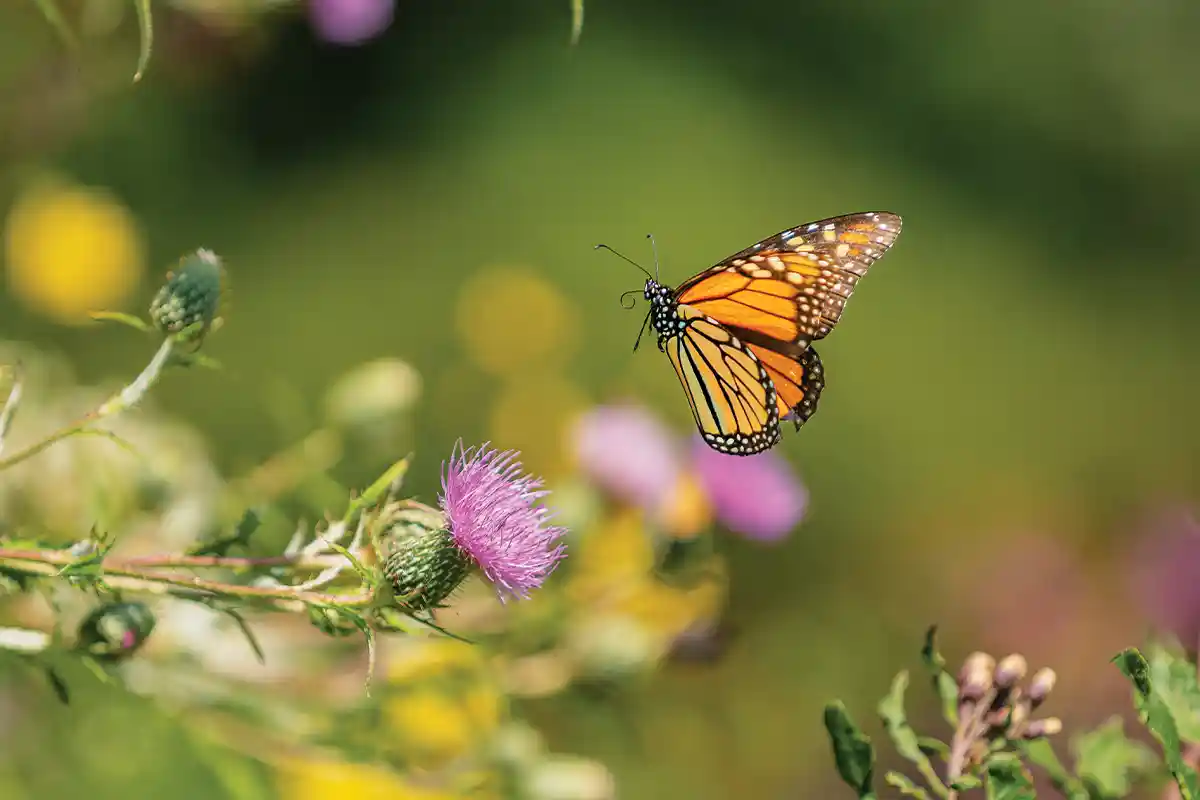
Many people don’t realize that “our yards are actually part of the ecosystem,” Mizejewski says. “We’ve replaced the indigenous, native plant communities with lawns and non-native plants that just don’t have the ecological connections that our native plants do.” Like the monarch butterfly with milkweed, many pollinators — bees, butterflies, moths — have co-evolved to be dependent on certain plants, known as their host plants. No milkweed means no monarchs. No spring beauty plants means that the native mining bee that feeds on it will disappear.
However, there’s good news. Everyone — whether they have a yard, a balcony, or simply potted plants — can support pollinators by planting native plants. That’s “a simple way of thinking globally and acting locally,” says Mizejewski.
Create Your Own Park
Some may ask: What about our parks and preserves? Aren’t those spacious enough to support pollinators? The answer is no.
“In most of Northern Virginia, our park land makes up less than 10 percent of the land space out there,” says Matt Bright, executive director of Earth Sangha, a native plant nursery in Springfield that supplies much of Fairfax County’s native habitat restoration plants. “We can’t make up the habitat loss that we’ve had solely in our parks.”
Many parks are overrun with invasive, non-native plants — English ivy, bamboo, Japanese knotweed, tree of heaven — that don’t support pollinator life cycles. Their rapid growth prevents native seeds and saplings from sprouting and thriving. Excessive deer can also stunt the growth of a healthy understory in the area’s woodlands.
Doug Tallamy, a University of Delaware entomologist, has become a vocal guru for the native plant restoration movement. “We need all the ecosystem services to keep us alive on this planet, and we need them everywhere.” As the co-founder of the nonprofit Homegrown National Park, Tallamy encourages homeowners to view their spaces as part of the parks system. With that outlook, an abundant wildlife habitat can be created.
Once native plants are established, they “generally require less maintenance and certainly less fertilizers and chemicals than lawns,” says Thomas Schneider, a conservation landscape designer and owner of Native Roots. Their deep roots help prevent erosion and absorb rain and runoff better than non-native plants.
How to Get Started
Fall is the ideal time to plant. Park recommends taking time to figure out the sun pattern and soil types on your property before doing so. Download the detailed Plant NOVA Natives guide as a starting point. It helps homeowners assess their yards and recommends trees, shrubs, perennials, and native grasses for all settings.
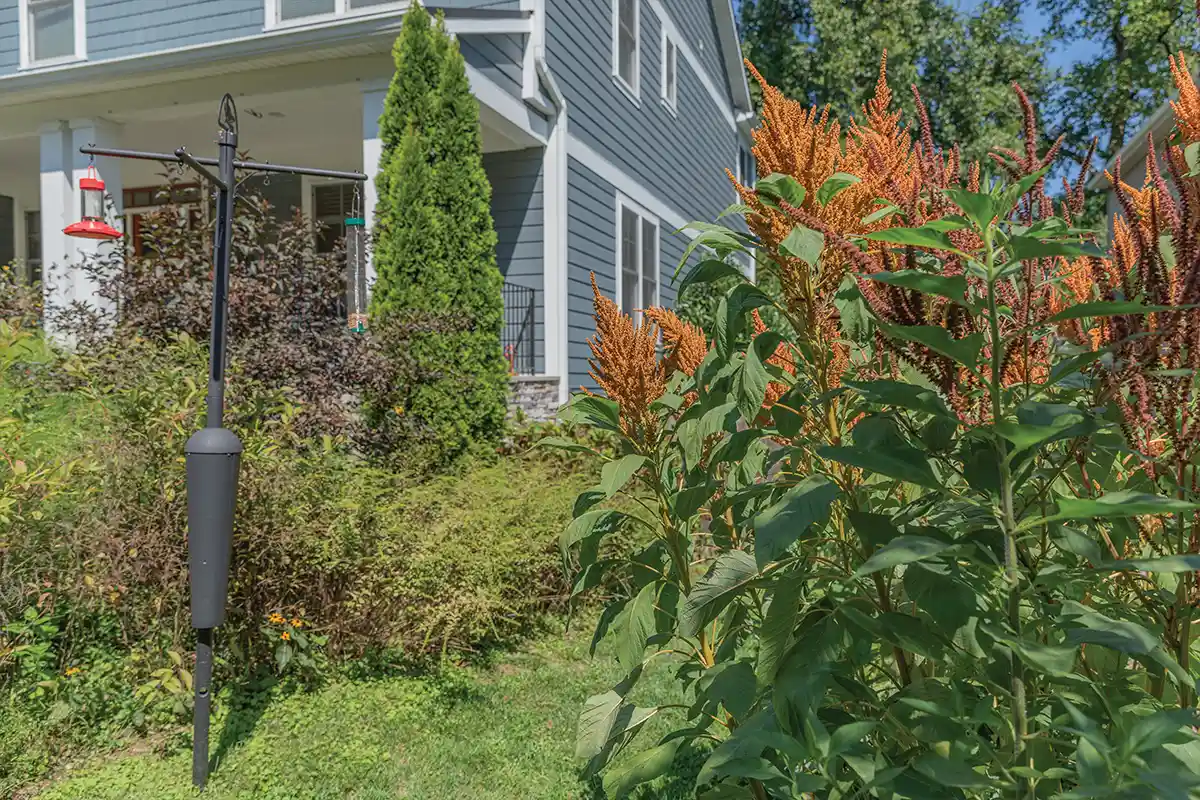
After watching a video featuring Tallamy explaining the value of native plants, Kate Carey’s Falls Church family was inspired. “Once I discovered natives, a huge world opened up,” she says. “The kids began to peruse the Plant NOVA Native guide seeking out certain flowers.” When the Careys shopped at Earth Sangha for native plants, they were told to “have fun with it,” and that advice stuck with her.
Both Park and Carey advise seeking out like-minded plant groups on Facebook or in your neighborhood. Native plant enthusiasts often share seeds and thriving plants and offer helpful advice. Park recommends mulching the first 6 inches around native beds to help them look more managed.
Want some help planning and executing? Many landscape designers, like Schneider, specialize in conservation landscaping that uses native plants. Such designers ensure you’ll have something blooming through the seasons and “that plants behave well and play well with each other,” says Schneider.
Protect What You Lure
Unintentionally, many homeowners are killing the pollinators that visit their yards. Some plant vendors sell plants, even native plants, that have been treated with neonicotinoids, which are toxic to most pollinators. “They’re 7,000 times more toxic to insects than DDT was,” says Tallamy, who says to ask native vendors if their plants are free of neonicotinoids.
Another trend with negative consequences for pollinators is widespread mosquito spraying by companies that brand themselves as eco-friendly. “The sprays that they’re using are basically synthetic forms of broad-spectrum pesticides called pyrethroids that literally will kill any insect they come in contact with,” says Mizejewski.
One easy household change can help support moths, often unappreciated pollinators. Many nights, moths waste their limited energy and lifespan circling white outdoor bulbs rather than mating, which would “create the caterpillars that run the food web,” Tallamy says. Buy yellow bulbs as replacements because those wavelengths don’t attract moths.
A New Yard Lens
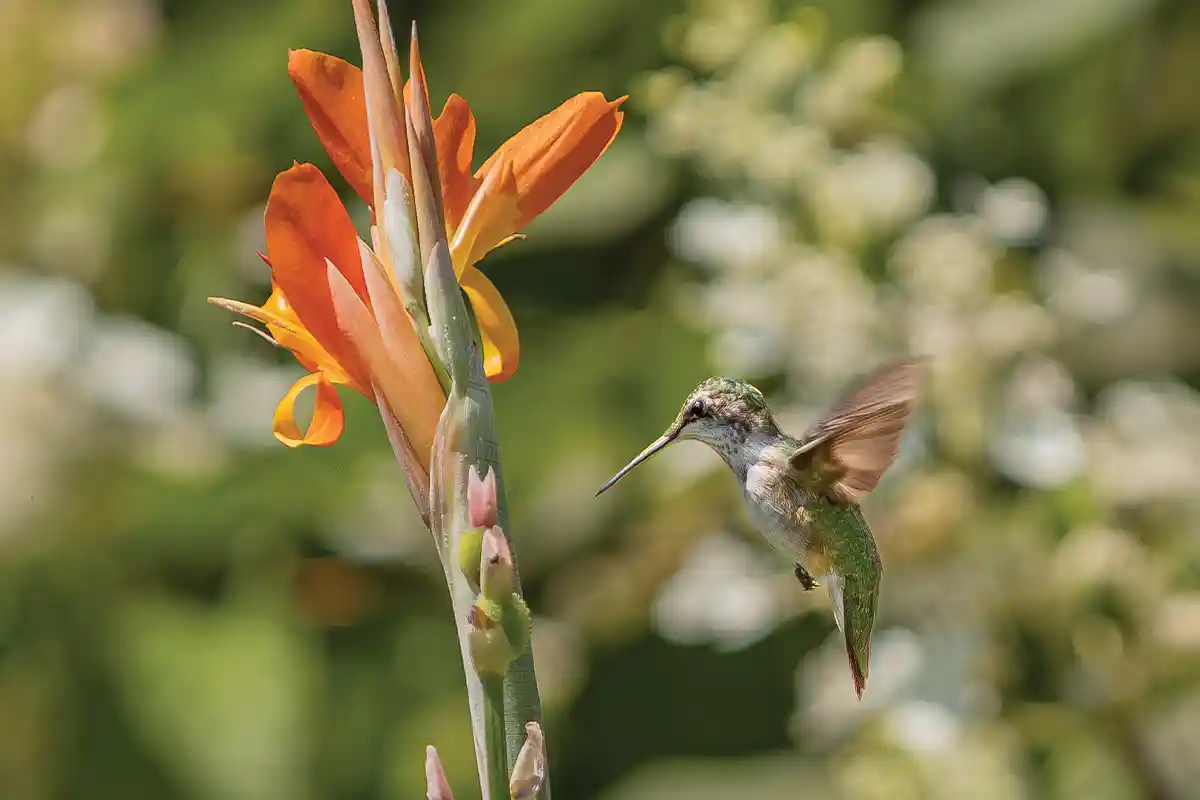
When Barbara Kanninen and her husband bought their Arlington home, she found a mix of native and non-native plants there. Hearing knowledgeable friends talk about what to plant and what to remove inspired her to learn more. She also took the ARMN training class and now works as a park naturalist for Fairfax County. Most mornings she turns on Cornell University’s free Merlin app that identifies birds by their songs and watches birds, including pollinating hummingbirds, enjoy her yard while she drinks her coffee.
Kanninen has experienced what Mizejewski describes as getting “reconnected to the land that you live on. Few people can watch a hummingbird at a flower and not feel something good,” he says. Planting a native pollinator garden “will change how you see your space.”
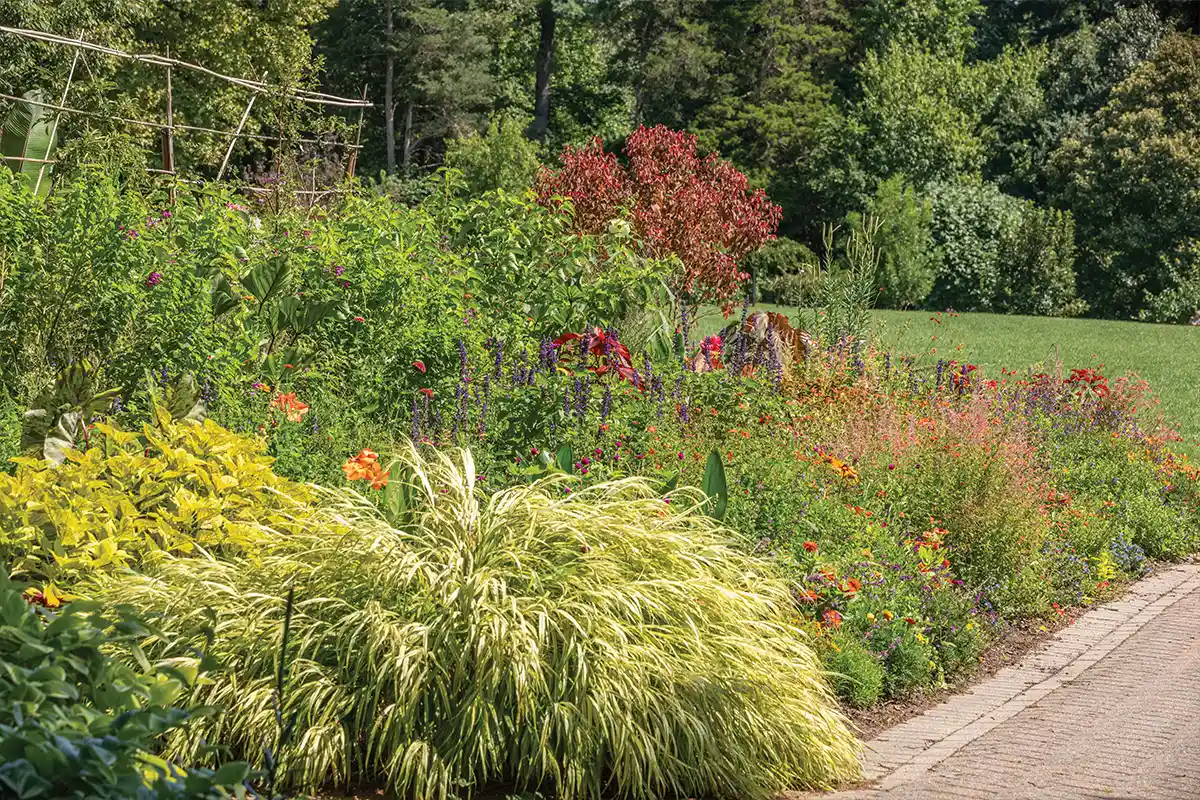
Feature image of Green Spring Gardens in Fairfax County by Emily Campos
This story originally ran in our October issue. For more stories like this, subscribe to Northern Virginia Magazine.