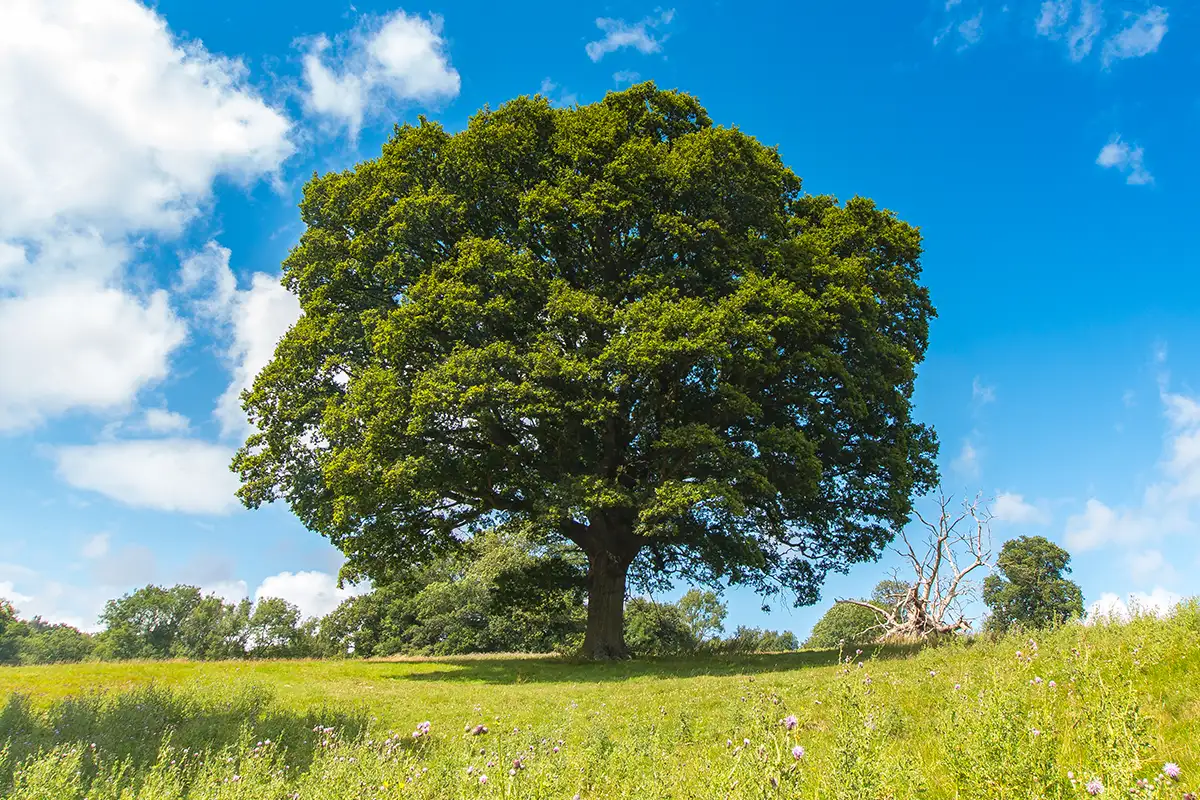
What’s up with local oaks? That’s a question community forester Jacob Zielinski is often asked by NoVA residents. Many have seen large oaks dying and are wondering if it’s worth planting new young ones.
Zielinski, a certified arborist with the Virginia Department of Forestry, says recent oak deaths are due in part to the trees fulfilling their typical life span of 100 years. A 1920s timber boom led to land disturbances that first prompted many oaks to grow.
Oaks have also endured “a lot of impact from current construction and from climate change,” which impacts all our trees, says Vincent Verweij, Arlington County’s urban forest manager. Because oaks are so prevalent, their loss “becomes a disproportionate amount to the layperson’s eyes.”
Both foresters wholeheartedly encourage planting the 19 types of oaks that are native to our region, particularly those that thrive in urban settings, such as swamp white oak. Zielinski recommends planting black oaks from the red oak family, while Verweij suggests trying Shumard oak, which is “underrepresented in our canopy,” or blackjack oak, a smaller red oak.
Oaks are a keystone species that are essential to overall ecosystem health. The trees provide “the biggest bang for the buck,” says author and University of Delaware entomologist Doug Tallamy. Their size and density enable them to “sequester more carbon than almost any other plant.”
Because oaks support caterpillars that act as food for animals such as nesting birds and their growing chicks, oaks are “supporting the food web better than anything else,” Tallamy says. The trees also shade your home — which can reduce energy costs — while also helping to manage storm water, Verweij adds.
Verweij advises planting 1.5-inch trunk diameter trees rather than larger ones because, he says, “they require less aftercare and tend to get more easily established in their site.” Larger trees may already have root damage or growing challenges. He says to water young trees regularly as they establish roots.
When planting, Zielinski recommends spreading nonshredded hardwood mulch less than 3 inches thick and at least 3 feet out from the trunk or to the tree’s crown spread. Otherwise, lawn mowers may damage the roots.
Roots can “establish potentially five times more volume under mulch than under turf,” due to mulch’s fungal connections that lawn lacks, Zielinski says. Mulch shouldn’t touch the trunk. Also avoid thick mulching, which prevents roots from absorbing water.
In the end, these new oaks will serve as beautiful landscaping and create a succession layer to support birds and other wildlife in the area.
Feature image, stock.adobe.com
This story originally ran in our March 2026 issue. For more stories like this, subscribe to Northern Virginia Magazine.