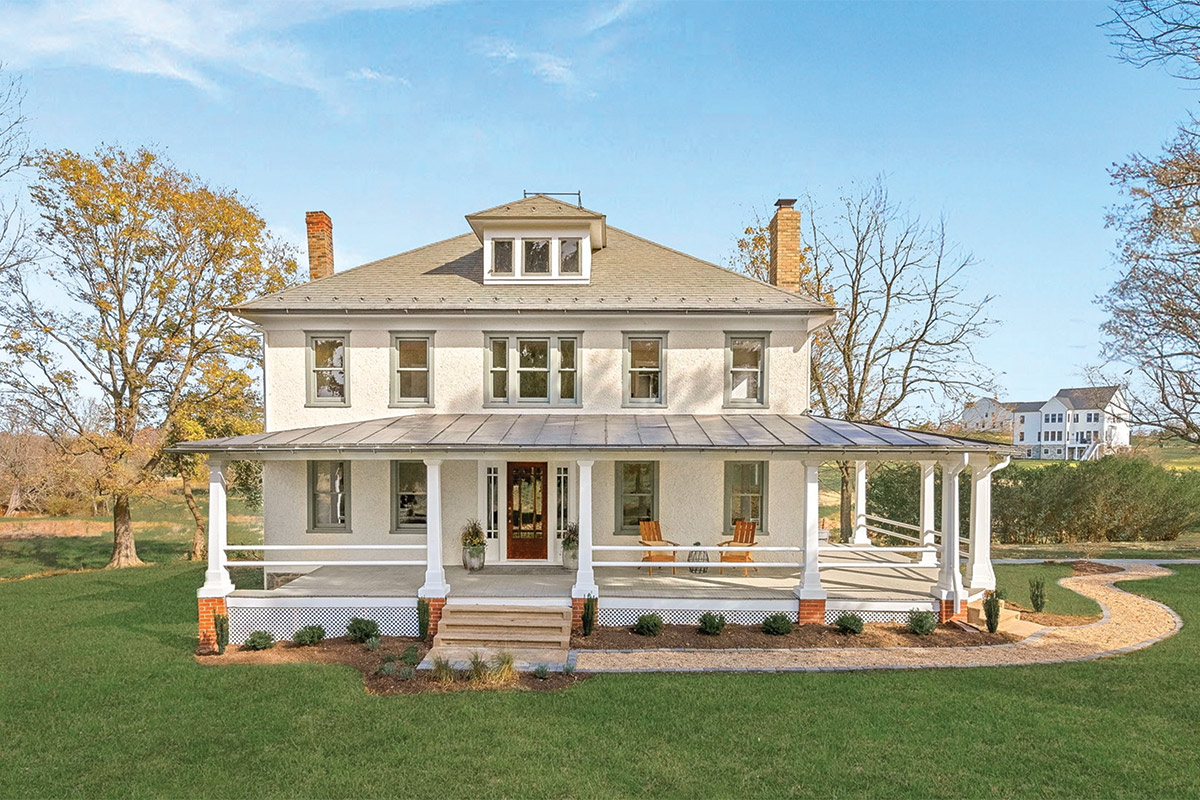
When Jenn Johnson and her mother, Patricia, were searching for an investment property to restore last year, one Waterford home made such an emotional impact that they purchased it without stepping inside. A hop over the fence (with permission from the real estate agent, of course) and a peek through the windows of the 1928 American Foursquare was all they needed to commit to it.
Once a 250-acre cattle farm, the property, now on nearly 4 acres, had since fallen into disrepair. The Johnsons saw an opportunity, Jenn says, to “preserve the soul of the home while making it functional and timeless for modern living.” That principle guided every decision that followed. “It was as if the house had chosen us, calling out for someone to bring it back to its former glory.”
Power Moves
The first renovation challenge was working for a month without functioning power. Most of the original acreage from the property was now divided into a development, Glenmore Farm, and when the Johnsons closed on the property, Van Metre Companies extended underground power and utilities to their property; it just took a little longer than expected.
“We could not work on the inside, so we just started working on the exterior,” Jenn says. “We ripped up all the cracked concrete, we painted the exterior. We just totally reimagined what the outside would look like, all based on a generator.” Jenn’s dad, an engineer, “jerry-rigged” a generator to work with a plug from the 1920s. He hooked it up to the well so they could power-wash the outside and have access to water in general. In addition, they updated the home with a new HVAC system for year-round comfort.
The Right Path
The Johnsons’ careful attention to the entire property, both inside and out, resulted in a postcard-perfect, livable home. For the landscaping, they chose natural materials like flagstone and pea gravel instead of poured or stamped concrete.
For plants, they added boxwoods and Japanese maple, Patricia says. They also put in a curving walkway around the side of the house that led to the true front door; there was previously only a walkway to a side door. “There was nothing connecting you to the front door unless you walked around the wraparound porch,” says Jenn. “So, when we were trying to reimagine how a future family might come to live here, it would make the most sense to have an additional walkway to the front door.”
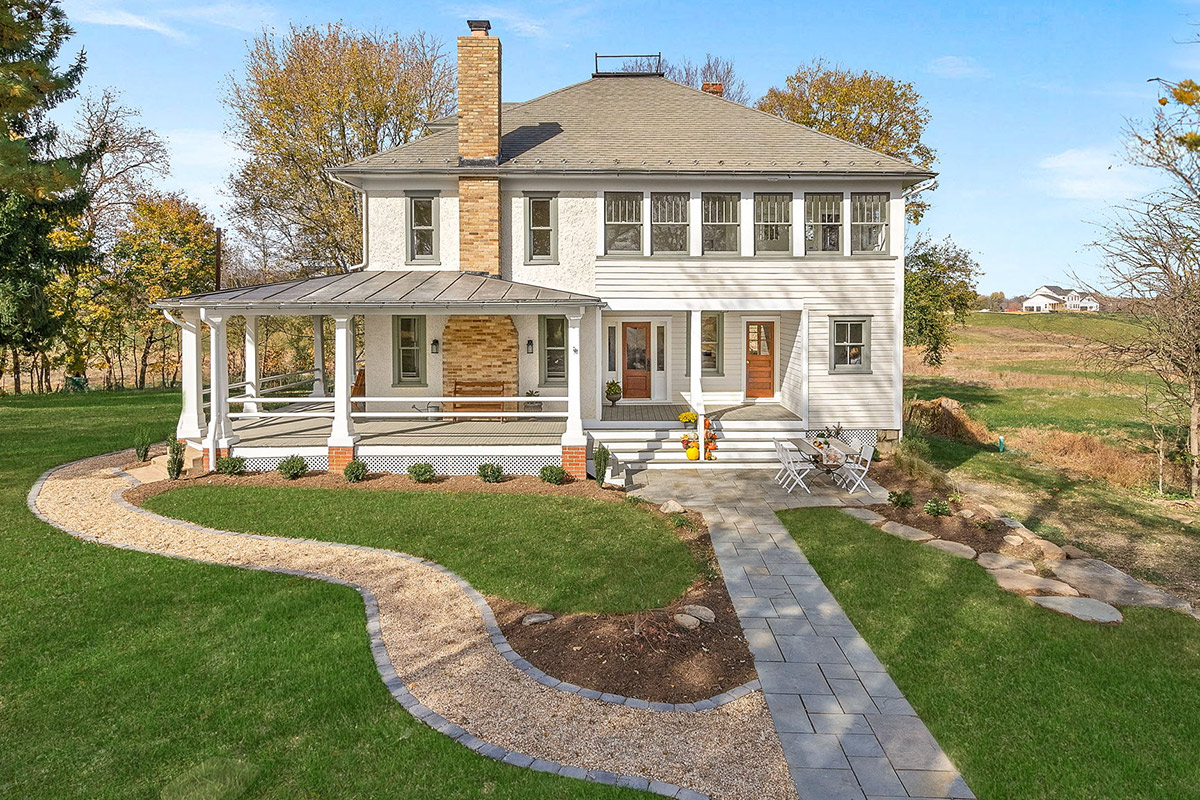
“We wanted it to obviously be whimsical and charming and like it had always been there with the original house. So, we used some pea gravel to build that out and make some curved lines in it, so it wasn’t super angular. We replaced the concrete path with flagstone, and we used a lot of traditional landscaping,” Jenn says.
The creamy base color and darker trim stayed true to the original design but were also chosen to appeal to a modern buyer. Jenn, who left a corporate career to focus on her passion for real estate, is a Realtor at Pearson Smith Realty. When we spoke, she was working on listing the home.
Interior Upgrades
One advantage to restoring an older home is the quality of original materials and construction. Patricia says that of the 50 or so original windows in the home, only about four had to be replaced. The hardwood floors also held up remarkably well and needed minimal restoration.
The Johnsons diligently restored the home’s original features, including the floors, plaster walls, baseboard molding, doors, brass hardware, and built-ins.
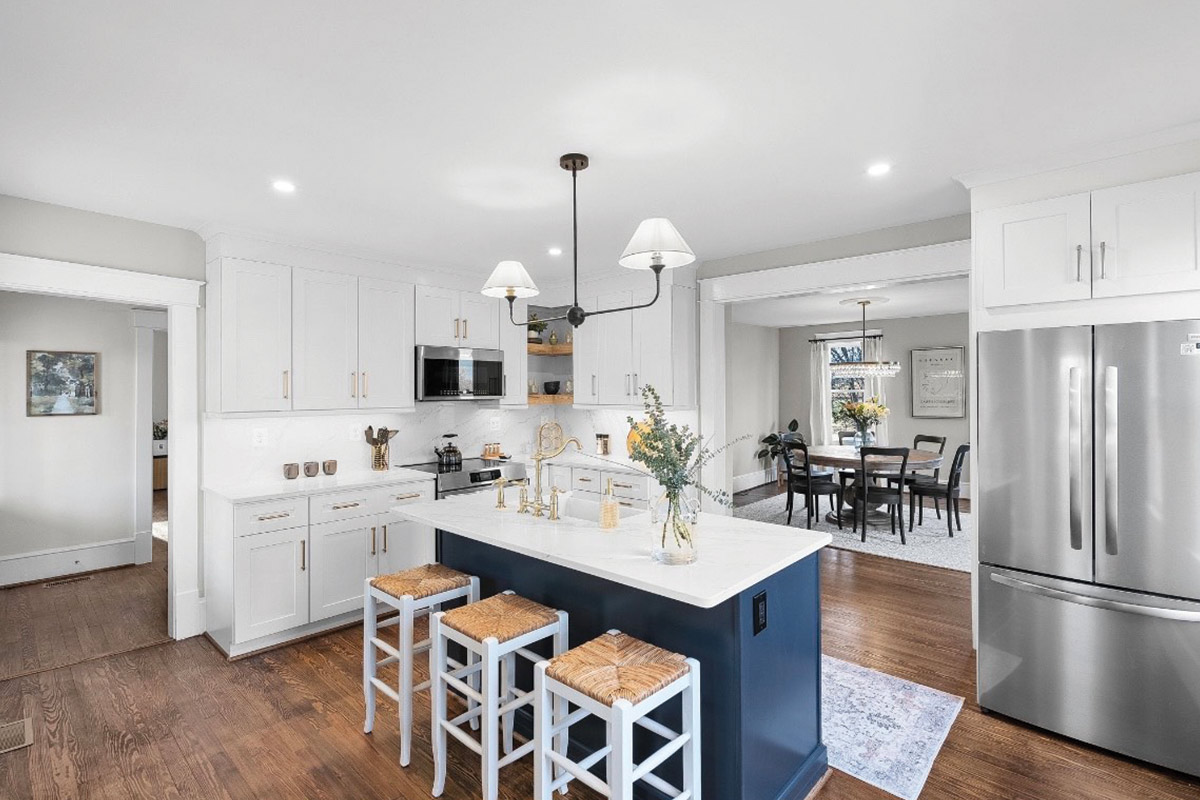
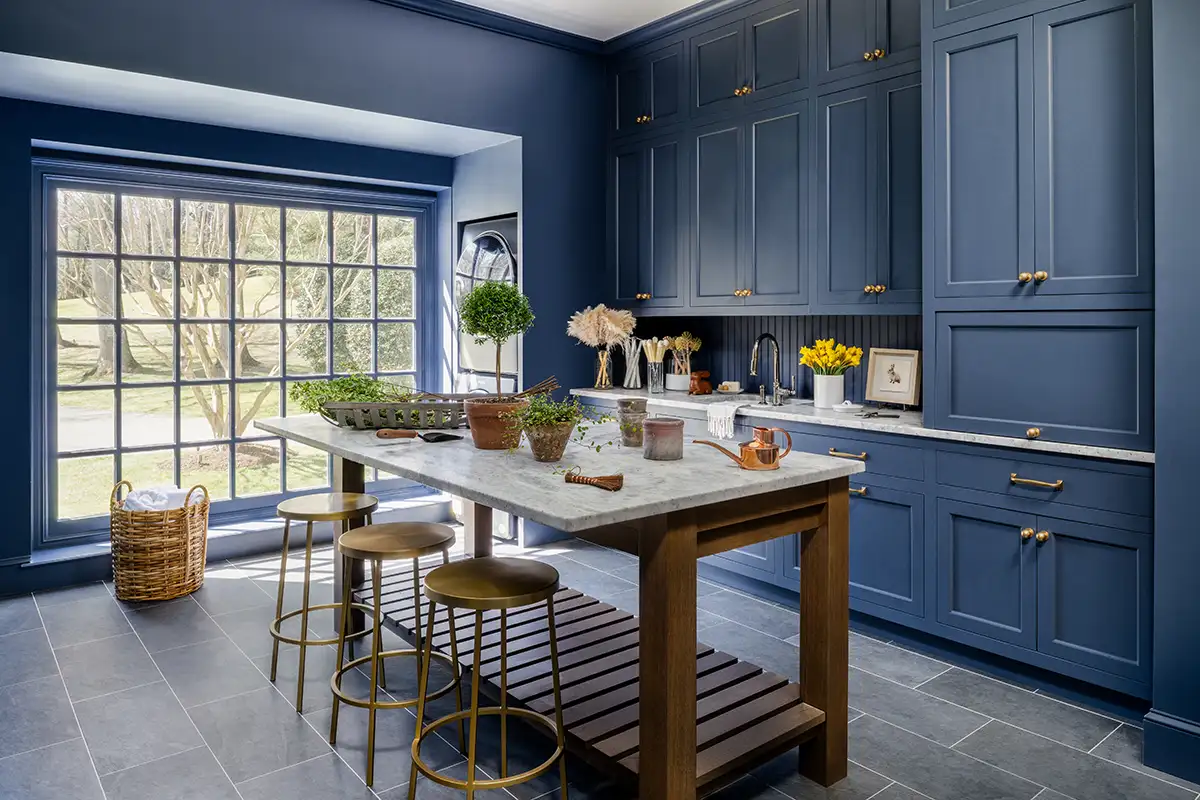
Once they had functioning power and were able to work on the inside of the house, they had to decide what to demo. On the first floor, everything was kept in the same spot, including the kitchen, which was significantly renovated. “The kitchen underwent a dramatic transformation into a gourmet space that balances classic farmhouse elements with contemporary functionality,” Jenn says. “Bookmatched quartz counters, a deep navy blue island featuring a fluted farmhouse sink, and all new cabinetry have given it new life.”
The kitchen also features a Frigidaire appliance package and an induction cooktop. In addition, they opened the layout, widening the space between the dining room and kitchen, to help guests and family seamlessly mingle between the two rooms.
On the second floor, “a state-of-the-art primary bath was added to elevate comfort without compromising the home’s vintage character,” Jenn says. They broke through a wall and joined two closets (a storage closet and a walk-in closet from another bedroom) to create a larger primary bathroom and walk-in closet.
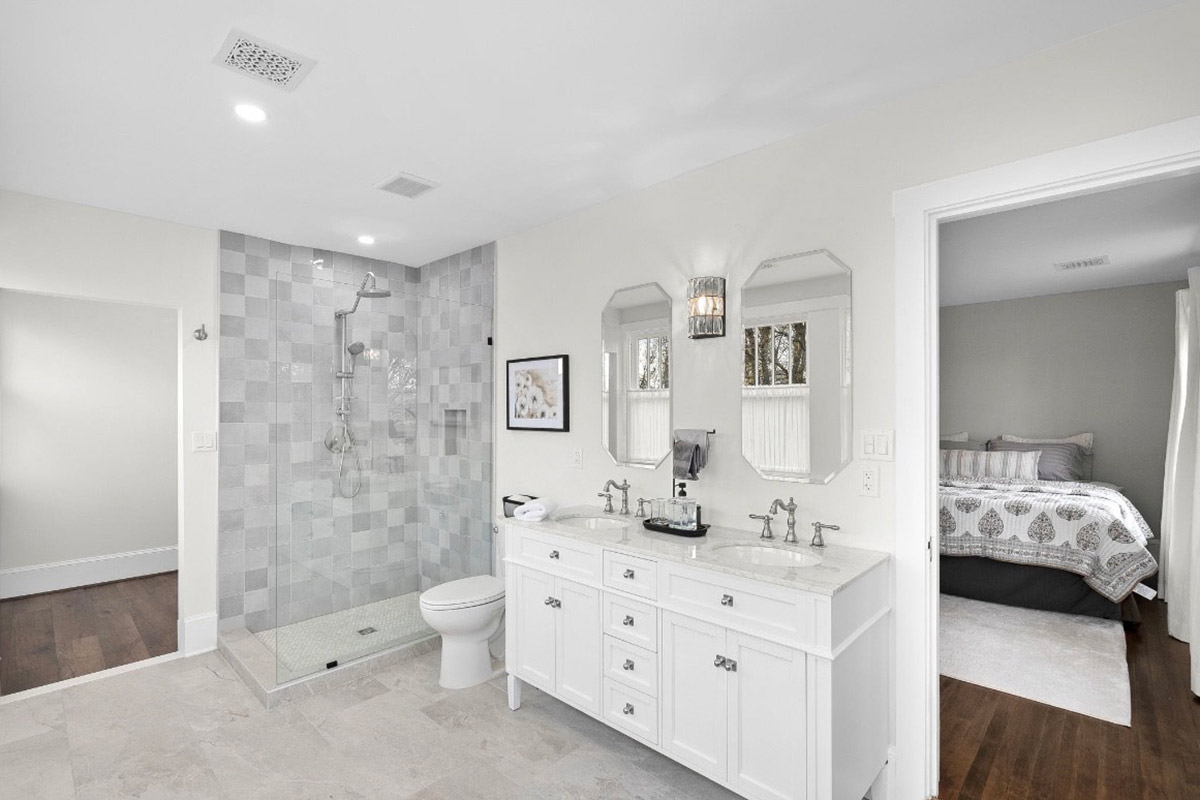
Luckily, the natural light from all of the windows made the space bright and airy. They added tiles that looked handmade (“they’re imperfect in a good way,” Jenn says) and a bright, classic Pottery Barn vanity. Their design goal was to “stand the test of time and be high quality.”
Family Reunion
Last December, the Johnsons met the Legard family, the original stewards of the 1928 farmhouse and noted antique tractor collectors.
Jenn says the family once owned more than 1,000 acres in Loudoun County. She and Patricia proudly showed them what they’d done with the property.
“Sitting with them, we were transported to a time when this property thrived as a cattle ranch. The barns were filled with horses, antique tractors dotted the landscape, and summers brought the sweetness of blueberries from a cherished bush nearby. Their stories brought new meaning to every corner of this home and land, making us feel like part of something much larger.”
Feature image courtesy Jenn Johnson
This story originally ran in our April Issue. For more stories like this, subscribe to Northern Virginia Magazine.