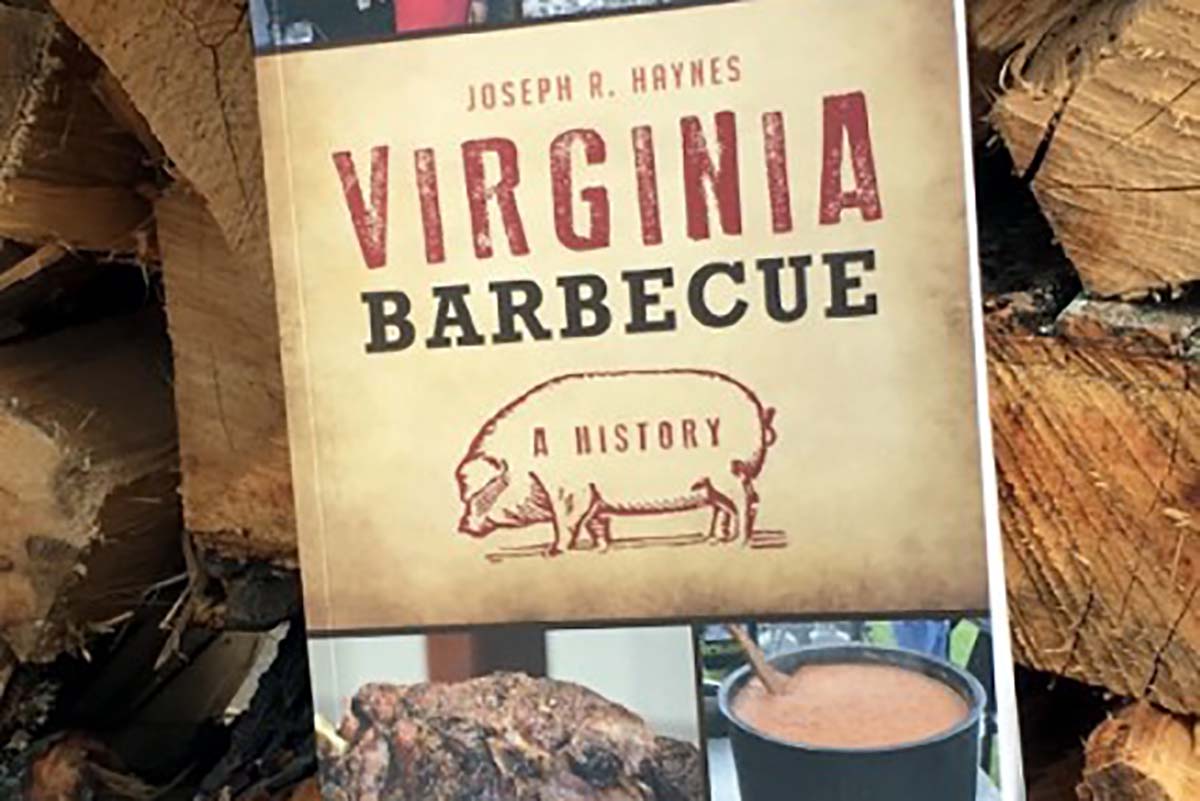
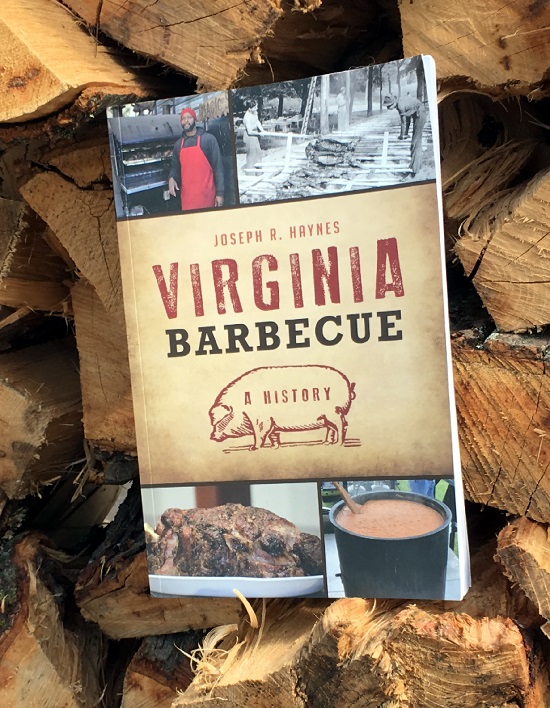
After his mother passed away, Joseph Haynes knew he wanted to write a book about Virginia’s culinary history. He explored his mother’s heritage—she was part Powhatan—and indulged in his love for barbecue. He started his barbecue affair in high school when he worked at Allman’s Bar-B-Q in Fredericksburg. He’s studied it ever since then, traveling across the country, tasting different recipes and learning from the top pitmasters in the nation. What started as a few articles turned into 600 pages of research and notes and, this September, morphed into Virginia Barbecue: A History.
Growing up in Virginia, Haynes, 54, always loved Southern barbecue and noticed that the state’s take on barbecue carried a distinct flavor and taste, and he later discovered its identity. “There are four main styles of authentic Virginia barbecue sauce: the tangy sauces of southside Virginia; the vinegar-based sauces seasoned with herbs of the Shenandoah Valley; the central Virginia sauces spiked with spices; and the sweeter and richer barbecue sauces of Northern Virginia,” Haynes says.
Haynes’ motivation for the book wasn’t to rank Virginia barbecue as better than any other state’s tradition. Instead, he wanted to highlight the local tradition and fill in gaps in barbecue history. Previously, records only approximated that barbecue originated in South Carolina. “To me, that just wasn’t good enough,” Haynes says.
“I went wherever the study led me, even if it went against my beliefs,” Haynes says. “A lot of my beliefs were changed by doing this study.”
Haynes’ surprises included the fact the definition and spelling of barbecue has changed numerous times over the years. “As late as the turn of the 20th century, [the definition of barbecue] used to include meat that was dried into what we would call today jerky.” He also learned about the so-called barbecue trees, or trees that were planted during Andrew Jackson’s presidency to shade politicians as they ate barbecue, sitting in separate areas by party affiliation. (The trees were later uprooted when the grounds were renovated in the 1870s.)
While Haynes says he received praise for his book from the barbecue community, some still remain skeptical of the term Virginia barbecue. Haynes counters, saying, “Anyone who gives this book and Virginia barbecue a fair shot—and actually eats at a place that serves Virginia barbecue—you’ll start to realize ‘Hey, you know what, there is something to this Virginia barbecue thing.'”
For Northern Virginia barbecue specifically, Haynes recommends Long Dog BBQ in Sterling, Triple Crown BBQ in Luray, Taste O’ South in Ashburn, King Street Blues in Alexandria and The Apple House in Linden.
Haynes is writing another book and expects it to be released next spring. The follow-up, says Haynes, will “add some additional information about Virginia barbecue, but most of it will be about the history [and] lore of Virginia fish frys, Virginia Brunswick stew and Kentucky burgoo.” The upcoming book will contain more recipes, including traditional Virginia sides such as hoecake, hash and scrapple.
This Sunday, Haynes will give a talk on Virginia Barbecue: A History, touching on the Powhatan Native Americans and the arrival of the Virginia colonists, the history of the word barbecue and the development of Virginia barbecue recipes. The free event takes place at the Manassas Museum.