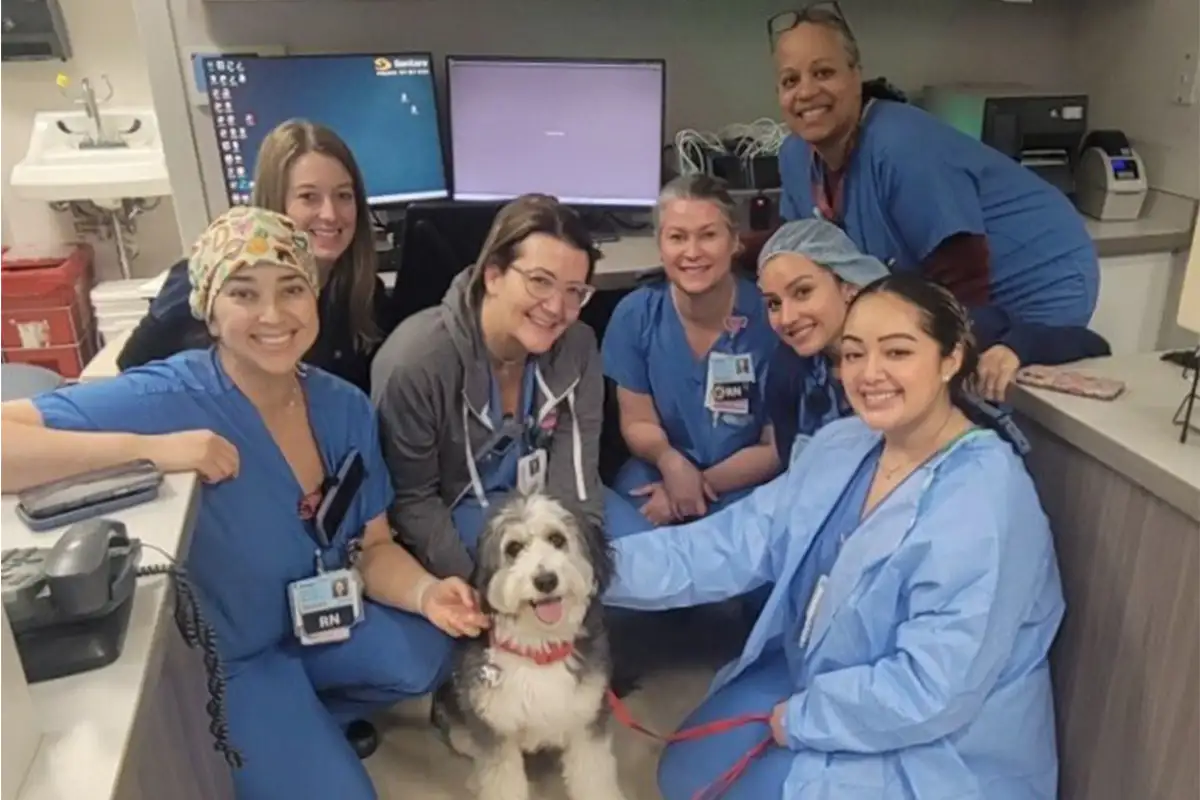
A friendly wagging tail may not replace medicine, but at Sentara Northern Virginia Medical Center (SNVMC), it’s becoming an essential part of the healing process.
Over the past year, the hospital’s therapy dog program has grown from one certified dog to five. This expansion has reached patients, families, and hospital staff alike.
National research highlights the measurable impact of therapy animals in clinical settings. According to SNVMC, studies show hospital therapy dog visits can reduce patient anxiety by an average of 34%. These interactions can also improve the emotional wellbeing of healthcare workers by increasing positive mood and reducing burnout.
“In a hospital defined by high stakes and critical care, these therapy dogs remind all of us that healing comes in many forms,” said SNVMC President Jeff Joyner in a statement. “Sometimes, it arrives on four paws.”
Meet the Dogs
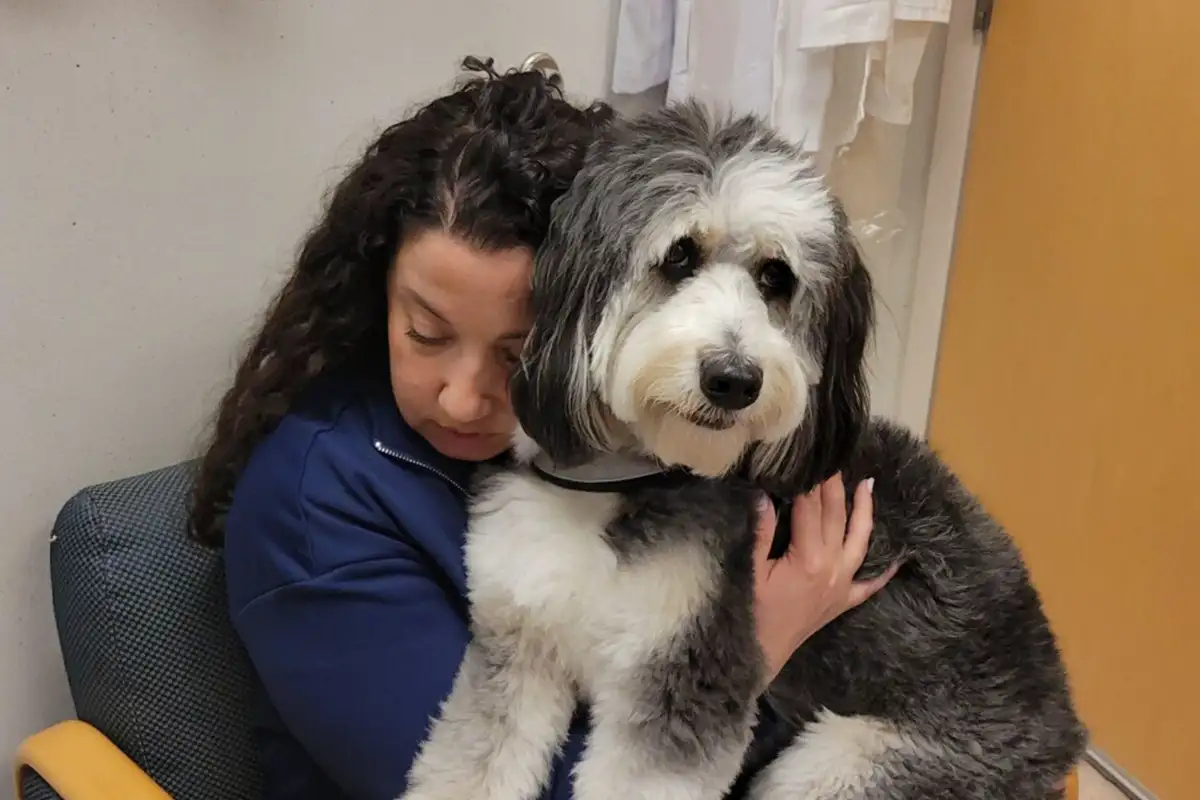
Hope, a four-year-old Aussiedoodle, is one of the program’s most familiar faces. Accompanied by her handler, Paula Miller, she frequently visits high-intensity units, including the ICU and Emergency Department.
“People ask if certain breeds are better for therapy work,” Miller said. “But it’s not about the breed – it’s about the dog.”
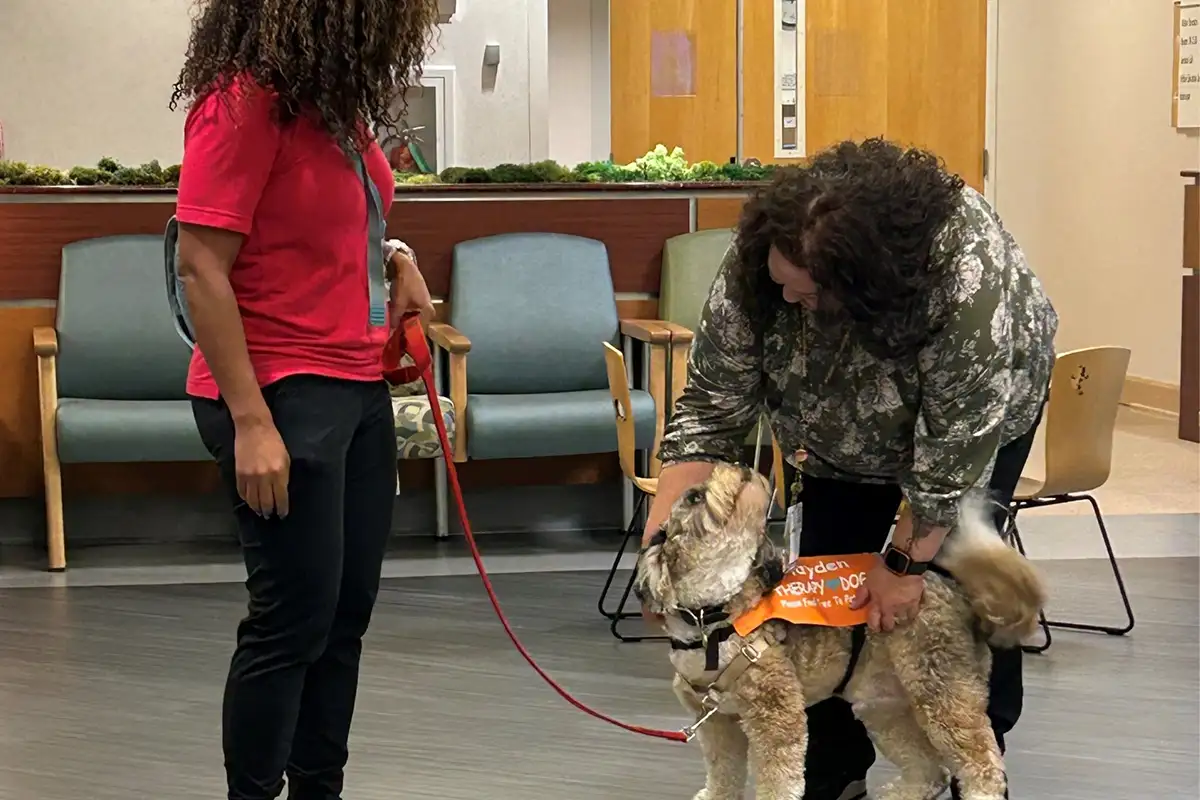
Hayden, a three-year-old Bernadoodle, has also become a regular part of hospital life. His handler, Tanyia Davila, says Hayden works best in a hospital environment and is even trained to retrieve her EpiPen in an emergency.
“In a place filled with alarms and urgency,” Davila said, “he brings something that can’t be prescribed – unconditional love.”
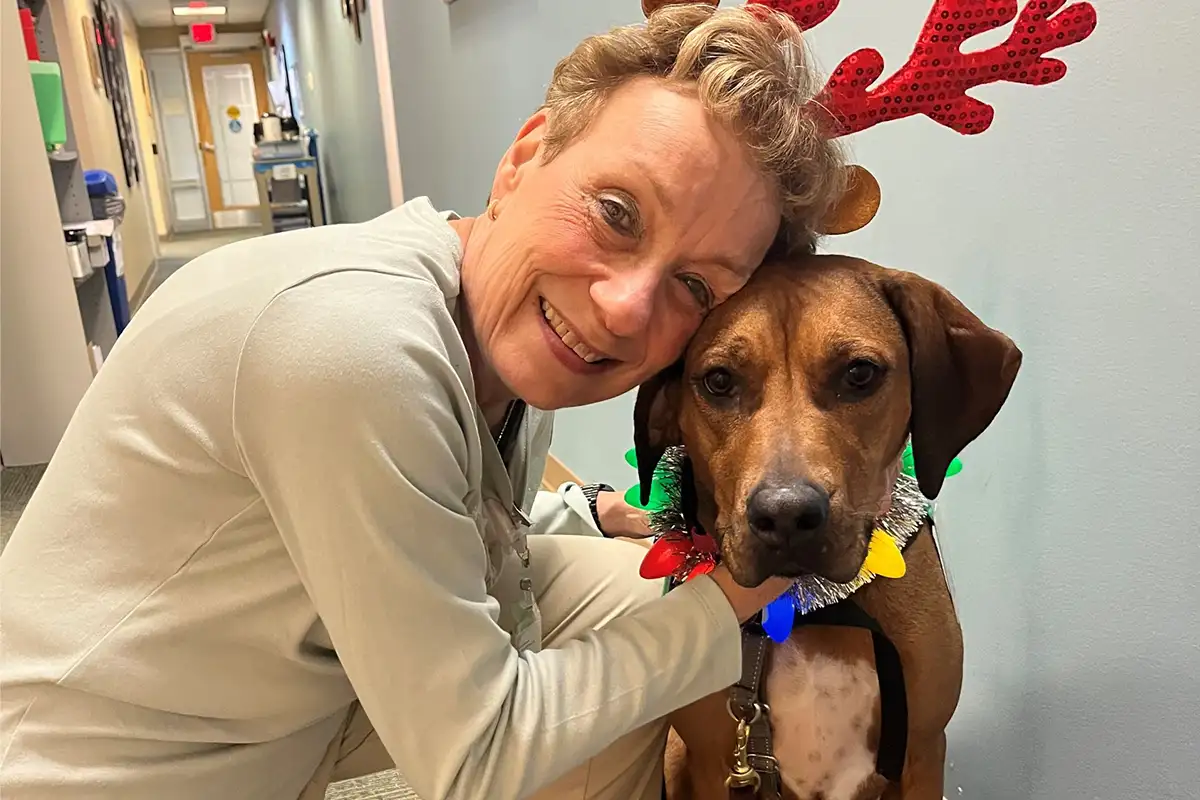
Ellie – affectionately known as “Ellie Belly” – is a 2-year-old Rhodesian Ridgeback, and one of the newest additions to the program. She visits weekly with her handler, Sue Gladstone, a semi-retired nurse who understands hospital life personally.
“The stress of a normal day in a hospital can always use a moment of calm,” Gladstone said. “Our goal is simply to put a smile on someone’s face.”
As the program continues to expand, the hospital leaders are encouraging additional volunteers to get involved.
Feature image courtesy Sentara Northern Virginia Medical Center