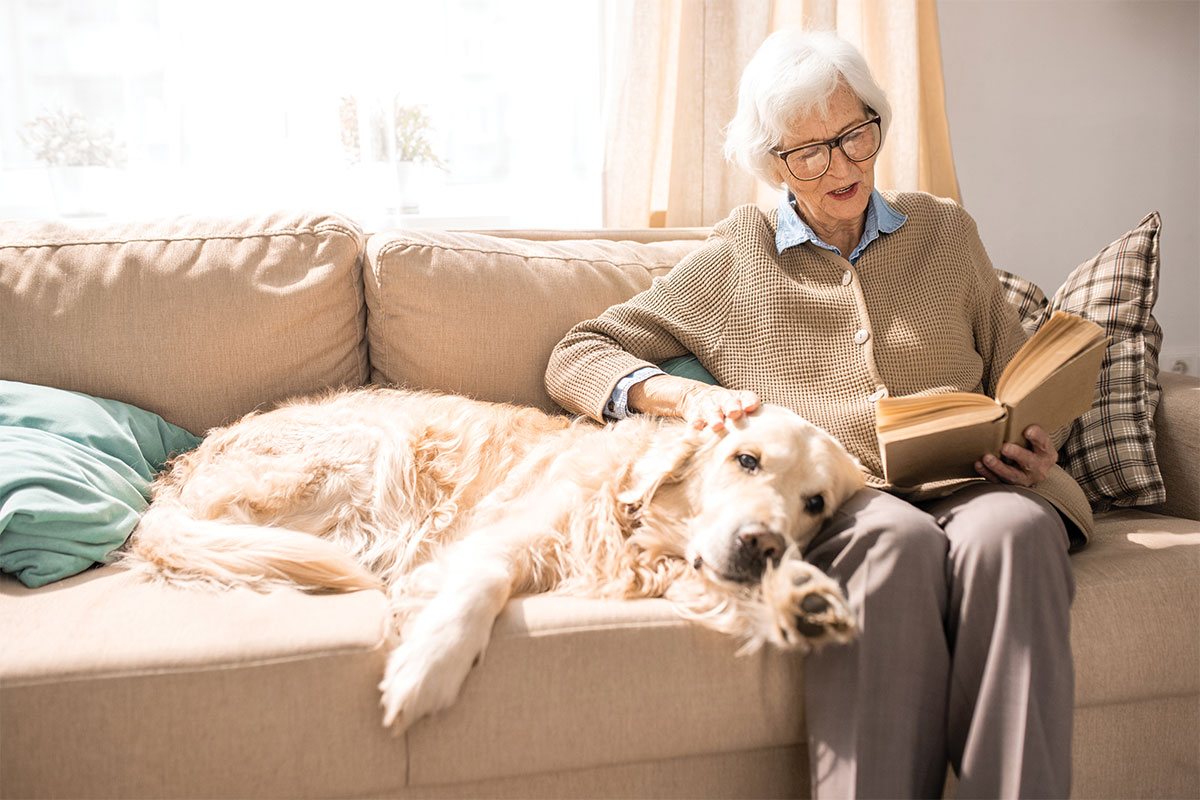
Having a pet can present great benefits for older adults, but for some seniors, pet care might be more complicated than it was when they were younger. Here are some of the factors to consider before taking on a pet as a senior.
A Sense of Community
An unfortunate fact facing the senior population is that many older adults experience social isolation and loneliness, especially if they live alone, can’t leave their homes, or have recently lost a spouse or other loved one. Twenty-four percent of adults aged 65 and older are considered socially isolated and 43 percent over 60 feel lonely, according to a 2020 report from the National Academies of Sciences, Engineering, and Medicine.
This is more than just an emotional issue. The same study indicates that social isolation can be associated with increased risk of dementia, heart failure, stroke, and depression.
Having a pet can give a senior a constant companion to take care of and interact with, serving as a powerful tool to fight loneliness and social isolation.
“It actually gives the seniors some meaning, that they have someone to take care of now,” says Wayne Mitchell, the owner of Caring Senior Service of Northern Virginia.
Caring for a canine or feline companion also opens seniors to a network of other owners and professionals with whom they can connect. Activities, such as bringing a dog to a dog park, walking the neighborhood and chatting with neighbors, and taking a pet for regular visits with the veterinarian and groomer, allow seniors to get out of the house and spend time talking with fellow pet lovers.
Physical Activity
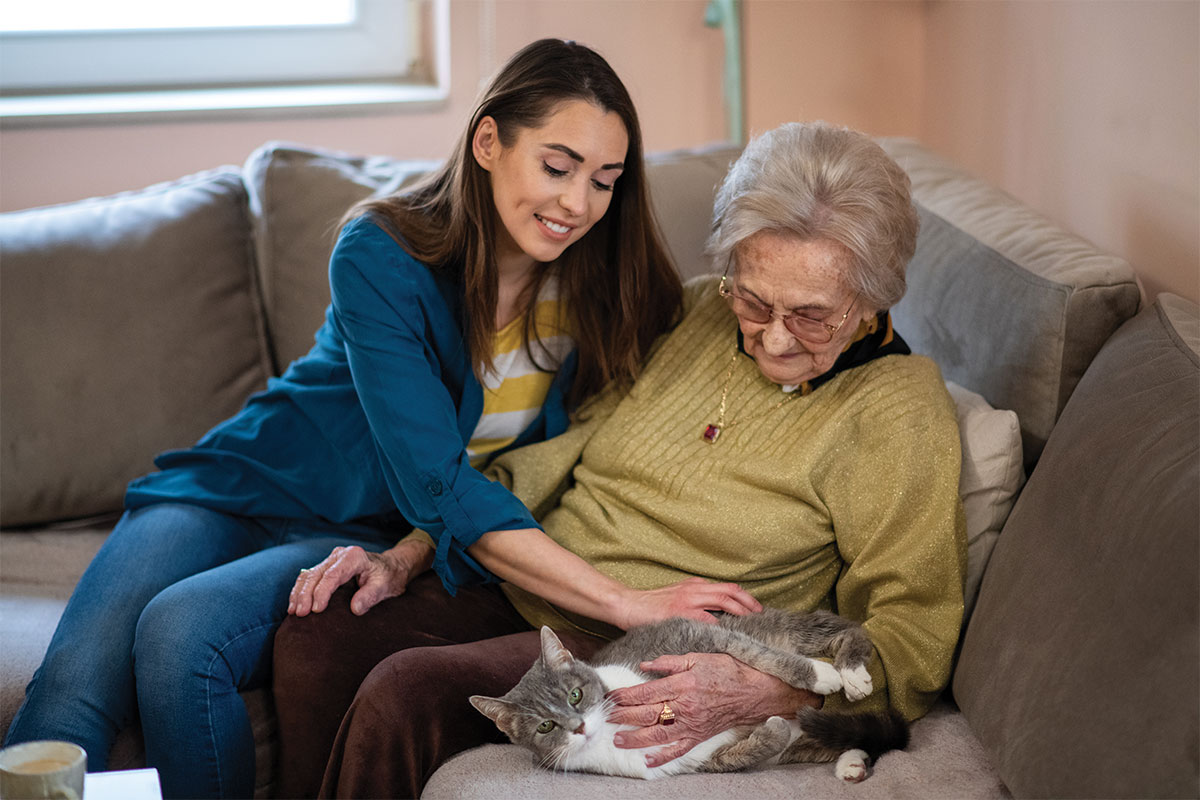
Beyond the emotional benefits, pet ownership comes with a set routine and structure. Pets need to be fed regularly. Litter boxes need to be cleaned. And pets need some time to run around. Going for daily walks with a dog or playing with a feather toy with a cat all guarantee that seniors incorporate some exercise into their daily routines. It may not seem like much, but those little actions can add up.
“Sometimes even just playing with the pet and throwing a ball, and they bring it back to you, at least there’s physical exercise,” Mitchell says, adding that it also serves as mental exercise. However, those activities do introduce the risk for falls, if the senior has medical concerns or problems balancing.
Mitchell says he always recommends that older adults speak with their physicians to discuss their physical limitations before taking on a responsibility like a pet. This can clue them in on issues they may not have considered.
Choosing the Right Pet
Like anyone considering pet adoption, seniors should seriously consider what type of pet is a good fit for their lifestyle. An important step is to talk with people at the shelter or rescue in order to get a good match. For example, a large, rambunctious dog that might pull on the leash or jump likely isn’t a good fit for older adults, especially if they have balance issues or use a cane or walker to get around.
“The difficult [breeds] for anyone who’s not super physically active are, you know, the Border Collies, a lot of the working dogs, who not only need a lot of physical exercise, but require a lot of mental stimulation to stay happy,” says Sue Bell, founder and executive director of Homeward Trails Animal Rescue, adding that Australian and German shepherds are other examples of such breeds.
Peggy Coleman, a volunteer at Shepherd’s Center of Northern Virginia, had such an experience when she adopted a dog that weighs about 70 pounds.
“She’s a sweet thing, but she’s dog-reactive — she hates other dogs. I cannot walk her,” she says. “So, one of the big no-no’s for anybody elderly getting a dog is to make sure that the dog is able to be walked and is not dog-reactive.”
While Coleman made her situation work by letting her dog run in a fenced-in yard, she says she should have been properly informed of the dog’s needs prior to adoption.
Seniors for Seniors
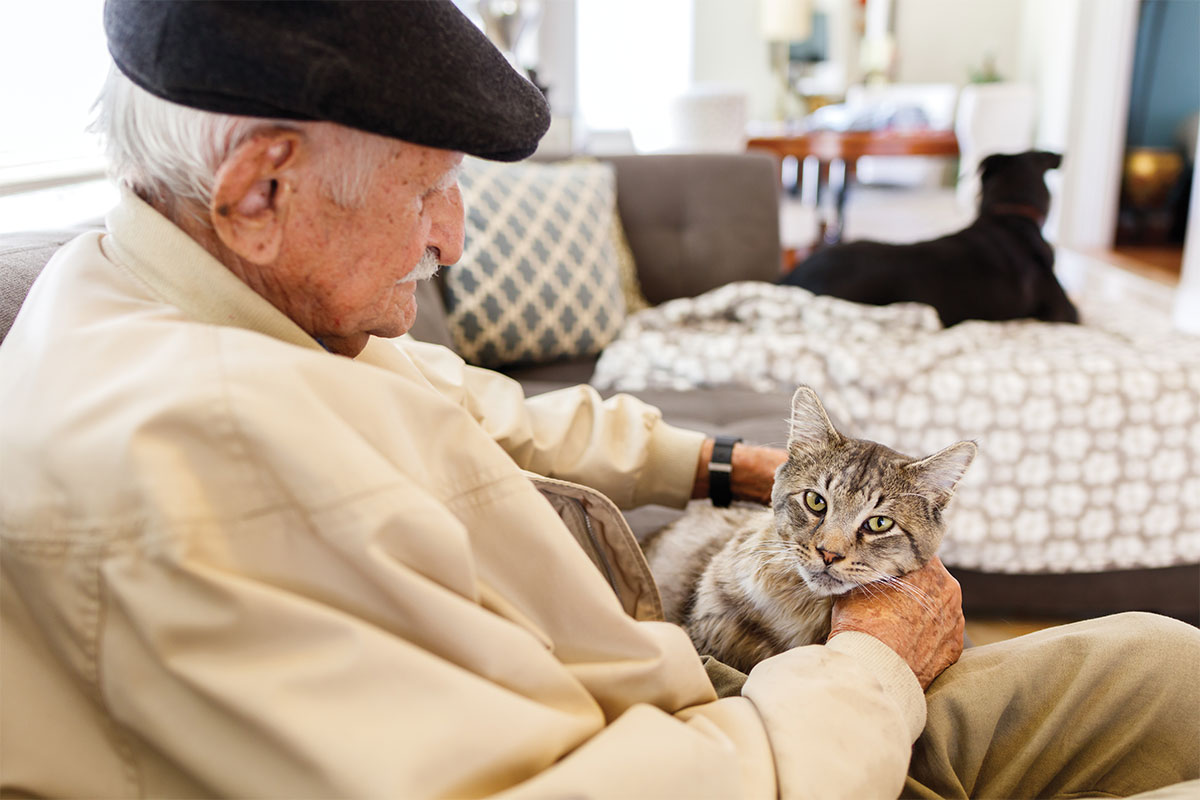
Oftentimes, senior pets make a great match for senior humans, as they will likely be less energetic than young pets and require either less frequent or shorter walks.
But pets can come with a hefty price tag. A 2023 survey commissioned by USA Today Blueprint found that dog owners spend an average of $376 per month, once vet fees, grooming, toys, and food are factored in. And senior pets can be even more expensive if they have or develop health conditions that require increased medical attention.
“Just like senior humans, senior pets can often come with some additional medical needs,” Bell says. “The plus side is senior pets and senior humans are lovely together, because there’s some obvious matches, but making sure the financial commitment is able to be met is important.”
If an older adult is retired and living on a fixed income, there might not be that much extra cash available for pet care — especially if extra care is needed. Before adopting, seniors should consider whether their budget can sustainably support a pet.
Fostering pets is another good option for seniors who may not be able to commit to taking an animal long-term but want that sense of companionship, Bell says.
“For anyone who’s unsure if they’re ready or willing or able to commit to a pet long-term, we always suggest fostering.” Bell says. “It’s a great way to save a life and kind of tiptoe into the responsibilities and benefits of having a pet at home.”
In those cases, they can take home a pet that fits their needs at that moment, without having to worry about whether they will become physically, financially, or otherwise unable to care for it later in life. Bell says that she has even known seniors who fostered long-term, partnering with a shelter to split the responsibilities of owning the dog with the understanding that the shelter would eventually take the dog back.
Tips for Care
It’s possible that, as people age, taking care of a pet might not be as easy as it used to be.
For older adults who struggle with memory, Mitchell suggests using timers as a way to keep on top of pet care. While forgetfulness is one of the primary concerns that comes with senior citizens living alone, setting reminders for things like mealtimes, pet medications, and litterbox cleanouts can make sure those things don’t slip through the cracks.
When a senior begins to feel a little extra help is needed to care for their pets, having a support network of family, friends, and neighbors comes in handy. Bell recommends joining social media groups for pet owners, such as Facebook groups or neighborhood-specific platforms like Nextdoor to connect with people who live nearby.
“Join those groups, and don’t be afraid to ask for help from other pet lovers,” Bell says. “Because I think you will be surprised at how many people come out to offer their support.”
Feature image, stock.adobe.com
This story originally ran in our February issue. For more stories like this, subscribe to Northern Virginia Magazine.