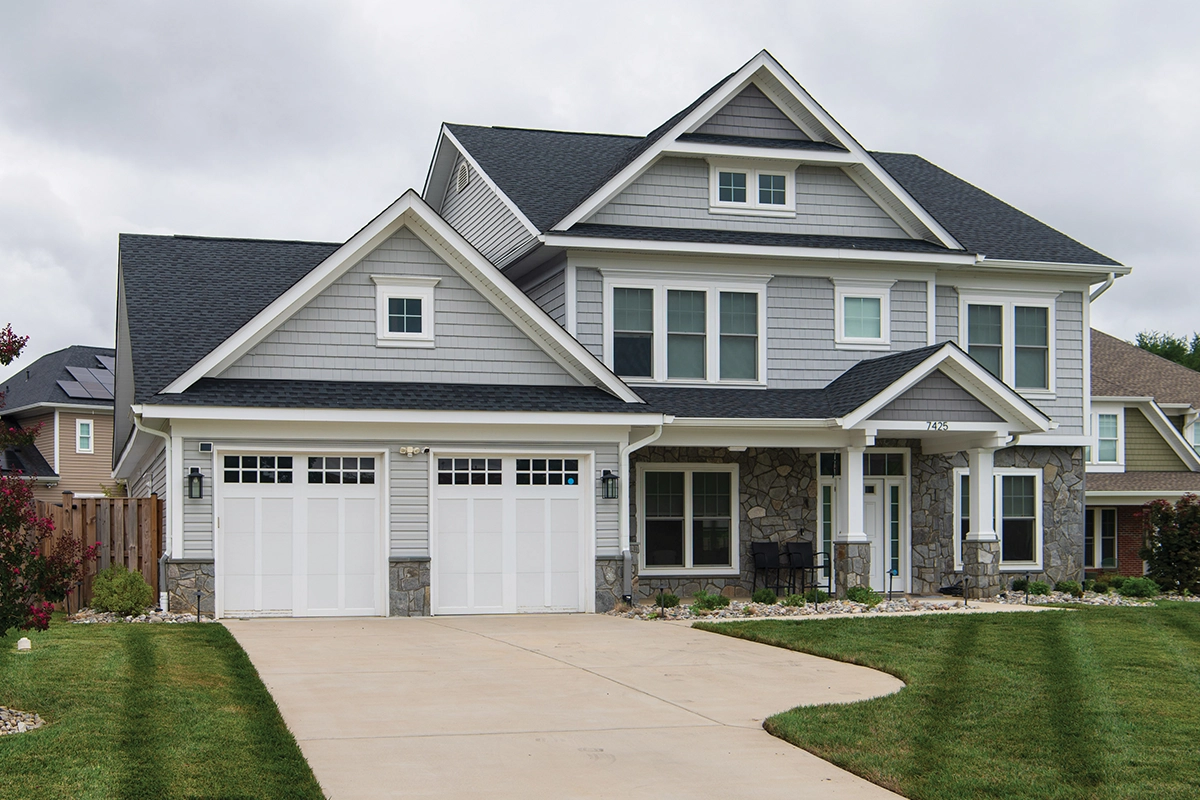
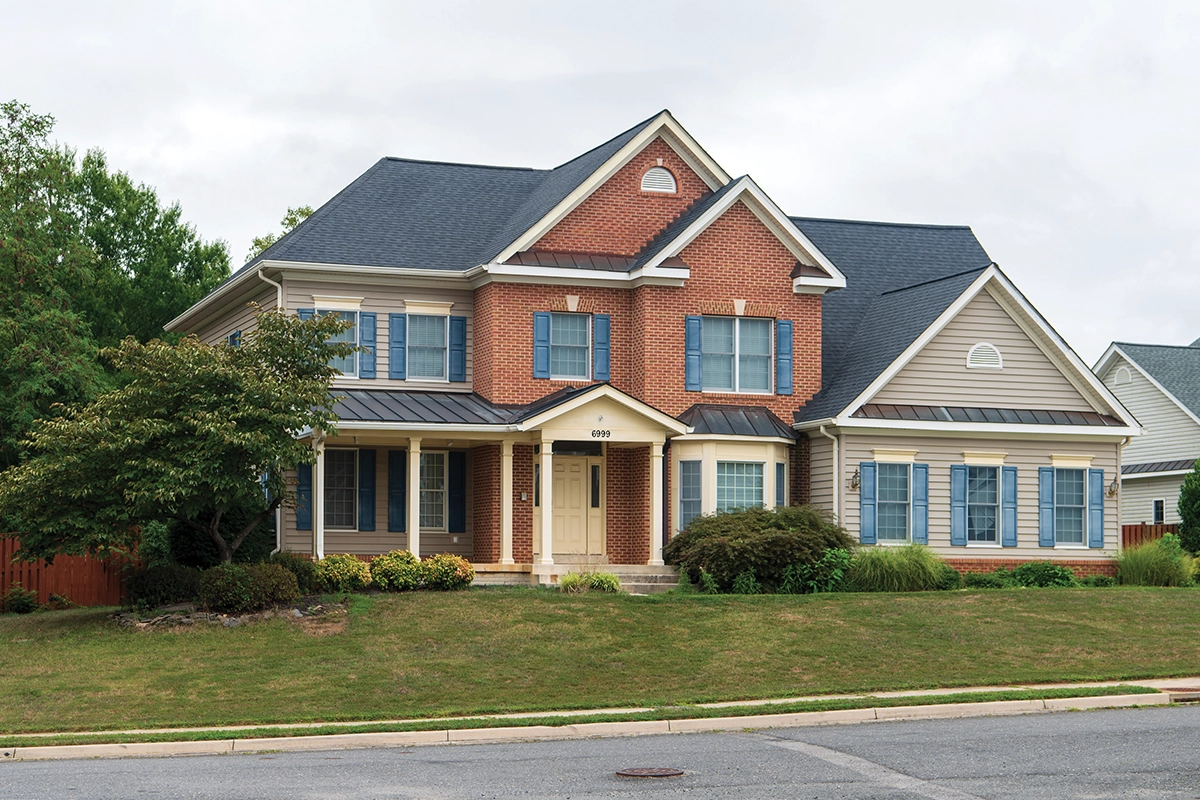
Spring Village Estates in Springfield may look like many other Fairfax County neighborhoods. It’s a quiet development, made up of two cul-de-sacs and lined with fresh-faced recent builds with manicured lawns, brick facades, and gabled roofs. But for those in the know, one thing makes the neighborhood stand out: It was built with the help of high school students.
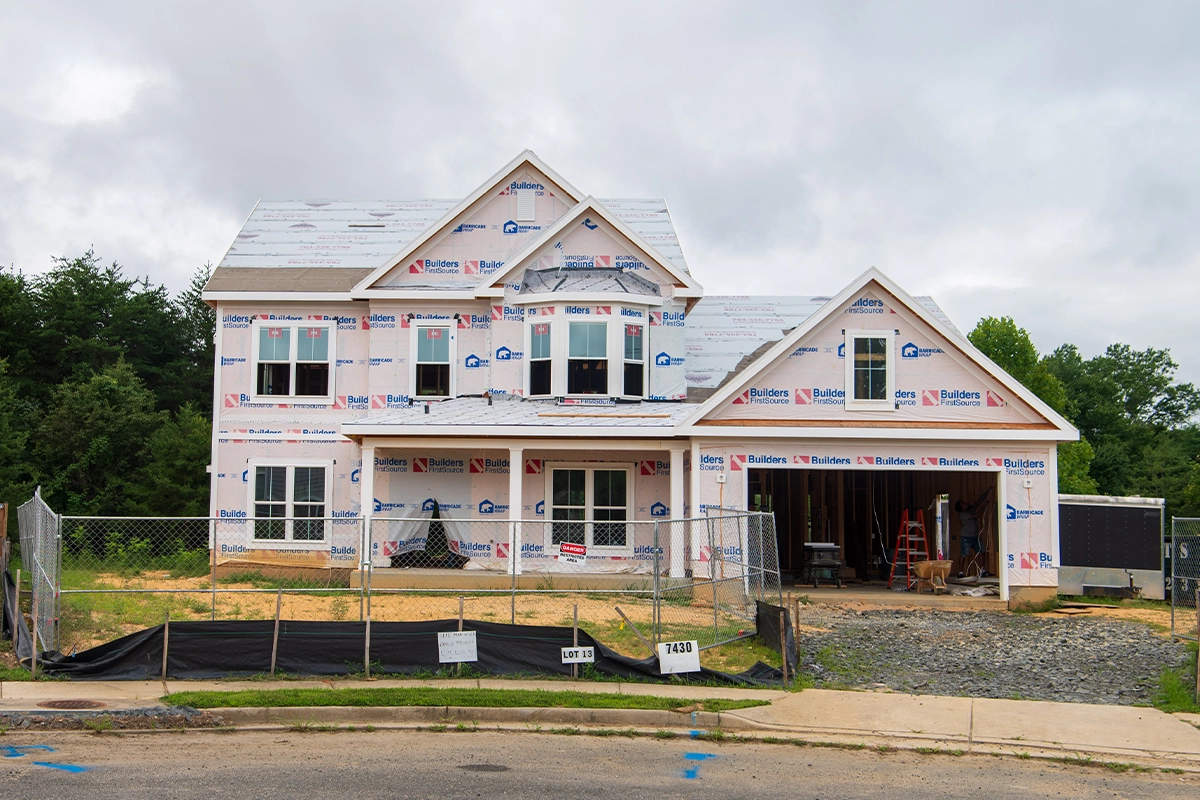
This is the residential construction program, a decades-long collaboration between Fairfax County Public Schools and a nonprofit called the Foundation for Applied Technical Education, Inc. This course, one of FCPS’ many Career and Technical Education courses, gives students the chance to learn about the construction industry while building houses from the ground up.
“With career technical education, field trades, and these other programs, it’s all about work experience,” says Craig Lewis, program manager for trade and industrial education at FCPS and a liaison to FATE. “How do we get them workforce experience? How do we tie it into real world experience for them?”
In this case, the construction program gives students a chance to get their hands dirty and learn real life skills so they can apply for positions in construction, engineering, and related fields.
A Working Classroom
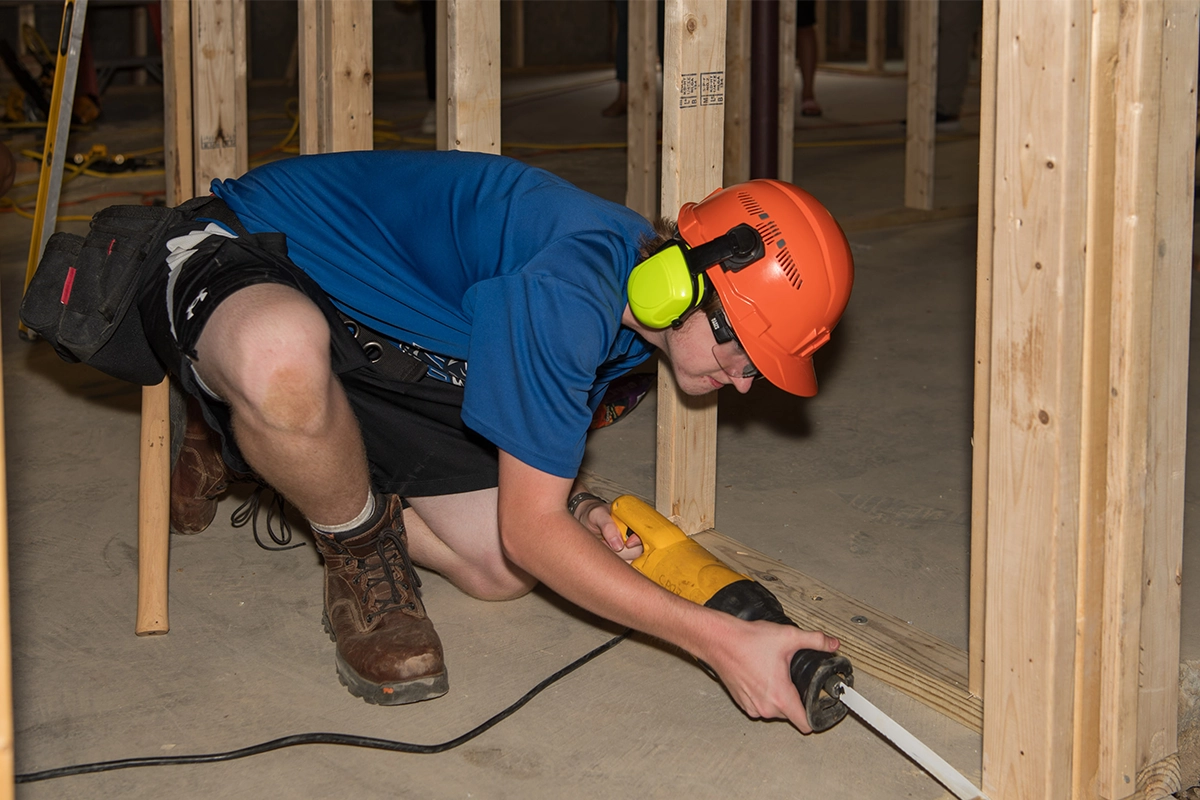
With funding from FATE, the Fairfax County School Board purchased the land in Springfield, with plans to develop 18 houses. While professional subcontractors are hired for some elements, such as laying foundations and installing roofs, students get to do plenty of hands-on work, from kitchen installation, framing, and electrical and plumbing work to adding finishing touches like flooring and trim. The course curriculum is developed by the National Association of Home Builders.
The residential construction program began in the 1970s. Over the years, students built 12 homes at a site in McLean before shifting to Spring Village Estates, where the first home sold in 2010. Lot 13 of Spring Village is currently in progress, with plans to start Lot 14 during the first half of this school year.
The program is available through FCPS’ Edison Academy, which offers a variety of CTE courses in subjects like culinary arts and automotives. Up to 20 students per year can sign up for the class.
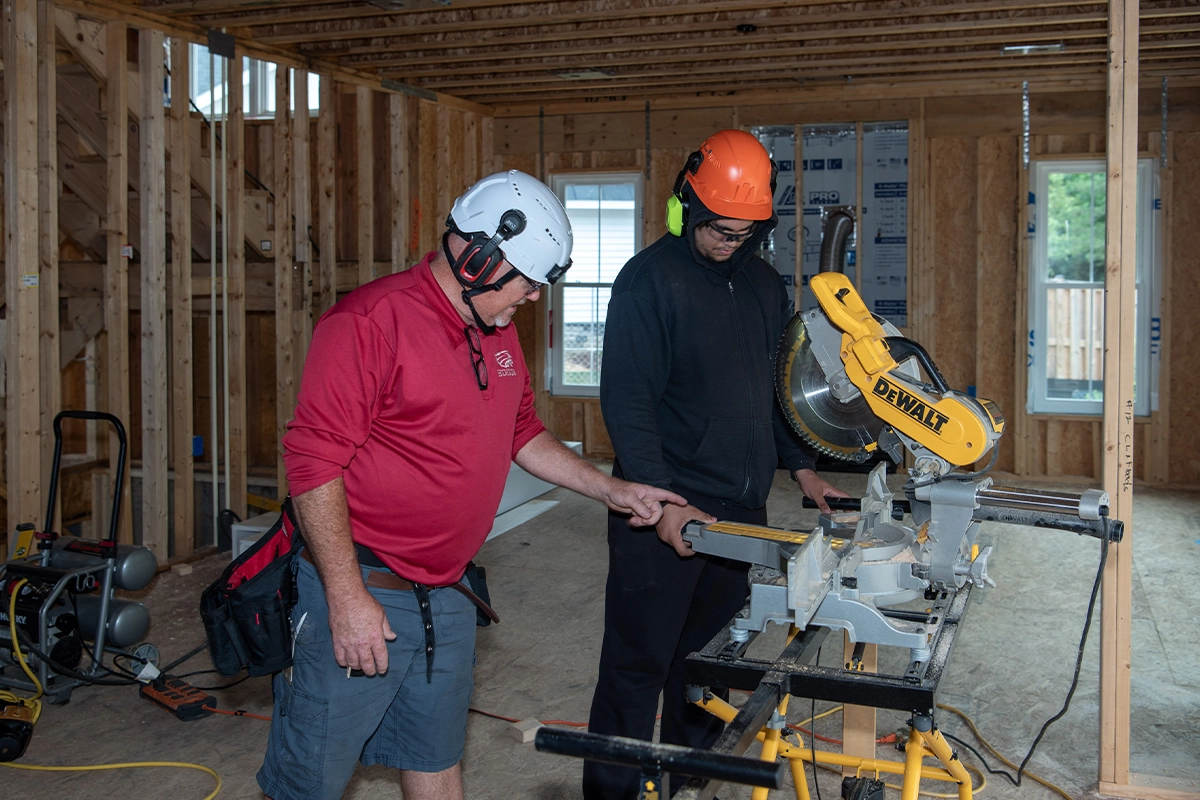
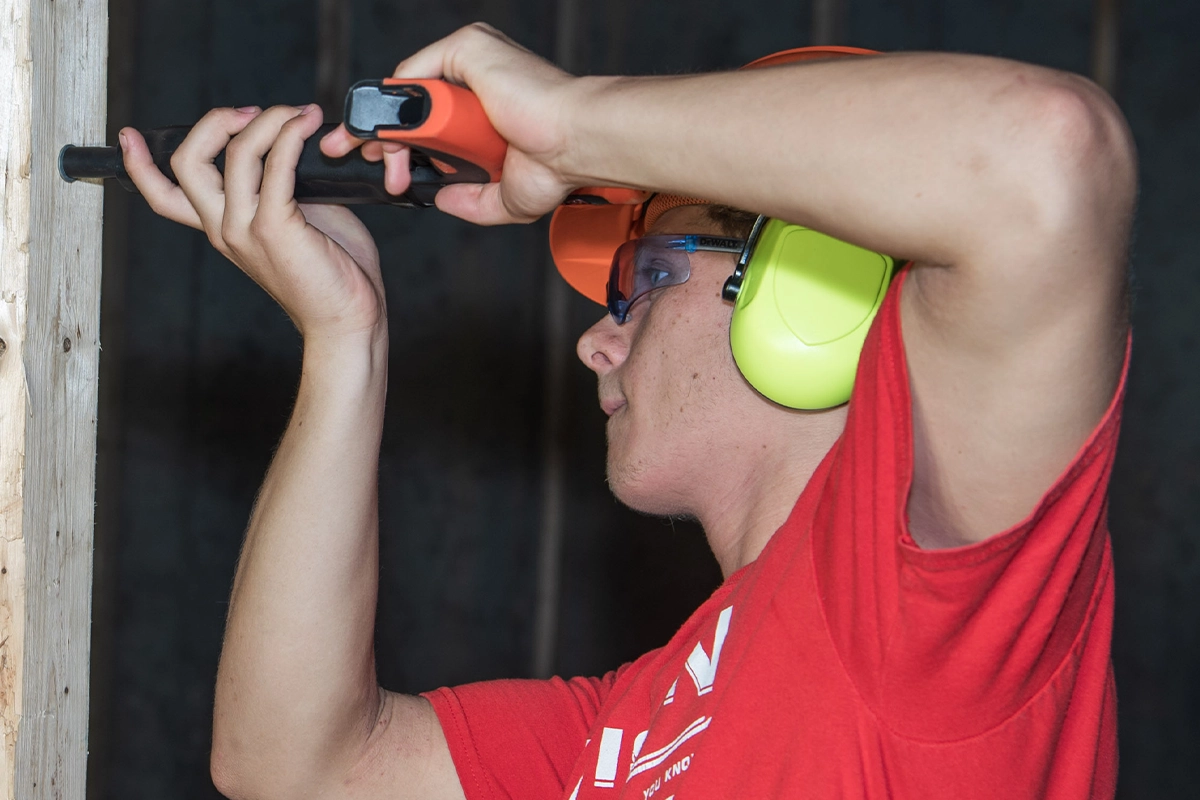
Before anyone picks up a power tool, safety and training are top priorities. “Our goal is to take each incoming class and teach them enough that they walk away with real industry-recognized certifications,” says instructor Bruce Morrow, who worked in construction for years before taking this role last year.
Each student undergoes a thorough training process that includes OSHA 10 certification, the core curriculum in carpentry from the National Center for Construction Education and Research, and additional on-the-job instruction from Morrow.
Since the students are working on a real house, there are no shortcuts. “I tell them, ‘You are going to be working. Don’t come to this class if you think you’re going to get to just sit around,’” Morrow says.
Students face some challenges: They may install something wrong and need to fix it; their work may be interrupted by a subcontractor or inspector; an architect may change the plans. As a result, students then must think critically to solve problems, skills that stick with them. Beyond the technical skills, Morrow ensures students learn about other aspects of a construction company, like managing business taxes, the cost of materials, and interacting with professionals to ensure everything is up to code throughout the process.
Lewis says Morrow speaks to students about the real world. “Not just how do you build a house, but how do you start a business? How do you advertise it? How do you make sure you do it legally? How do you get the best prices?”
“I thought I would be in a classroom, but I actually got to work,” says student José Rivas, a senior. He says he had some experience in construction from a summer job, but in the course, he learned “so much about the whole field,” from Morrow’s business expertise and interacting with other industry professionals on the site. He says he plans to study construction management at Northern Virginia Community College after graduation.
How It Works
The nature of an interactive classroom means the home construction process takes about 16 to 18 months, which is a little longer than it might take with a typical building company.
“We know we’re going to do it wrong one, two, three times, and we’re going to go back and fix it,” Lewis says. “And we’re OK with that, because it’s a learning experience.”
There are typically two homes under construction. One is getting its finishing touches while foundational work is just beginning on the next — that way, students can be involved in multiple stages of the homebuilding process.
When a home is complete, it hits the market. Prices have ranged from around $750,000 for Lot 1 in 2010 to $1.3 million in 2023 for Lot 12, according to Greg Stiger of Integrity Real Estate Group, who has sold each home in Spring Village Estates. Proceeds from each sale are split between FATE and the Fairfax County School Board and used to continue funding the program.
In addition to the residential construction program, FATE supports a student auto sales program where students troubleshoot, repair, and sell used cars, plus an entrepreneurial program and scholarships for students from FATE-associated programs.
For potential homeowners eyeing houses in Spring Village Estates, the program makes an impression. “They’re realizing when they make this purchase that they’re giving back to Fairfax County public school system and providing opportunities for students that they wouldn’t have otherwise,” Lewis says. “I think that is a selling point.”
The students’ hard work pays off for high-quality homes with desirable features. One key element incorporated into the most recent builds is the concept of universal design. There are no steps leading up to the front entrance, and each home has a full bedroom and en suite bathroom on the ground level. That way, it is accessible for those with limited mobility and allows residents to age in place.
The finishes, too, make the houses stand out, Stiger says. They incorporate touches buyers love, such as hardwood floors and “exquisite” tilework, he says. An interior designer selects all the finishing details that the students install.
Bright Futures
After their time in the program, some students go right into construction careers, and some go on to college.
“Construction has got a lot of jobs that are very technical nowadays: all the engineering, all the urban planning, all what I call infrastructure — which is going to be funded heavily into the future — the sewage treatment plants, the water treatment, the bridges, the roads, heavy highway,” Morrow says. “All of those really require much higher levels of learning.”
Getting this hands-on experience, he says, helps students gain a foundation of field-related knowledge and begin to understand what direction they want their careers to take.
For those who go right into construction, the early experience, training, and safety certifications they earned can help them proceed with confidence and an understanding of workplace safety.
Raul Vasquez, a senior, says he’s been involved in construction with his dad since he was young. After graduation, he plans to go into construction and potentially start his own business. “When I got here, there were a few things that I knew already, but you learn a lot of new stuff,” he says.
Vasquez says it’s something he would recommend to fellow students. “If they don’t know what they want to do when they grow up, maybe they’ll find some interest in this field. I think it’s a good opportunity.”
Feature image by Jeff Heeney
This story originally ran in our October issue. For more stories like this, subscribe to Northern Virginia Magazine.