Parents who believe that public schools are not meeting their children’s needs may want to enroll their kids in private schools. While the search for a private institution can be intimidating, the variety of options and personalized settings those schools provide could prove beneficial. Here’s what to think about when assessing the options and helping children to make the transition.
Karyn Ewart, who founded and heads The Sycamore School in Arlington, says that families often make the switch to private school because “something isn’t working” in the student’s current setting.
If a student is struggling with something in public school — maybe they seem distracted in class, they’re having difficulty understanding new concepts, or they’re less excited to go to school — something about the child’s education may need to change.
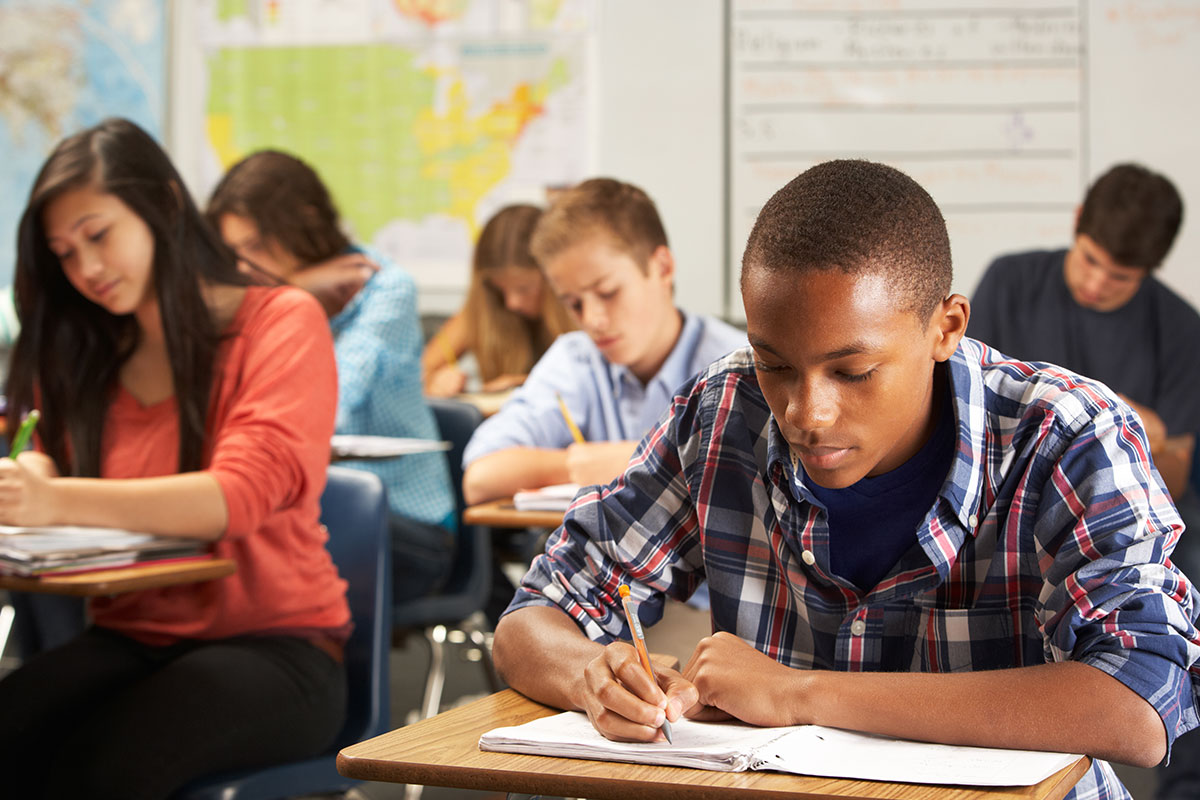
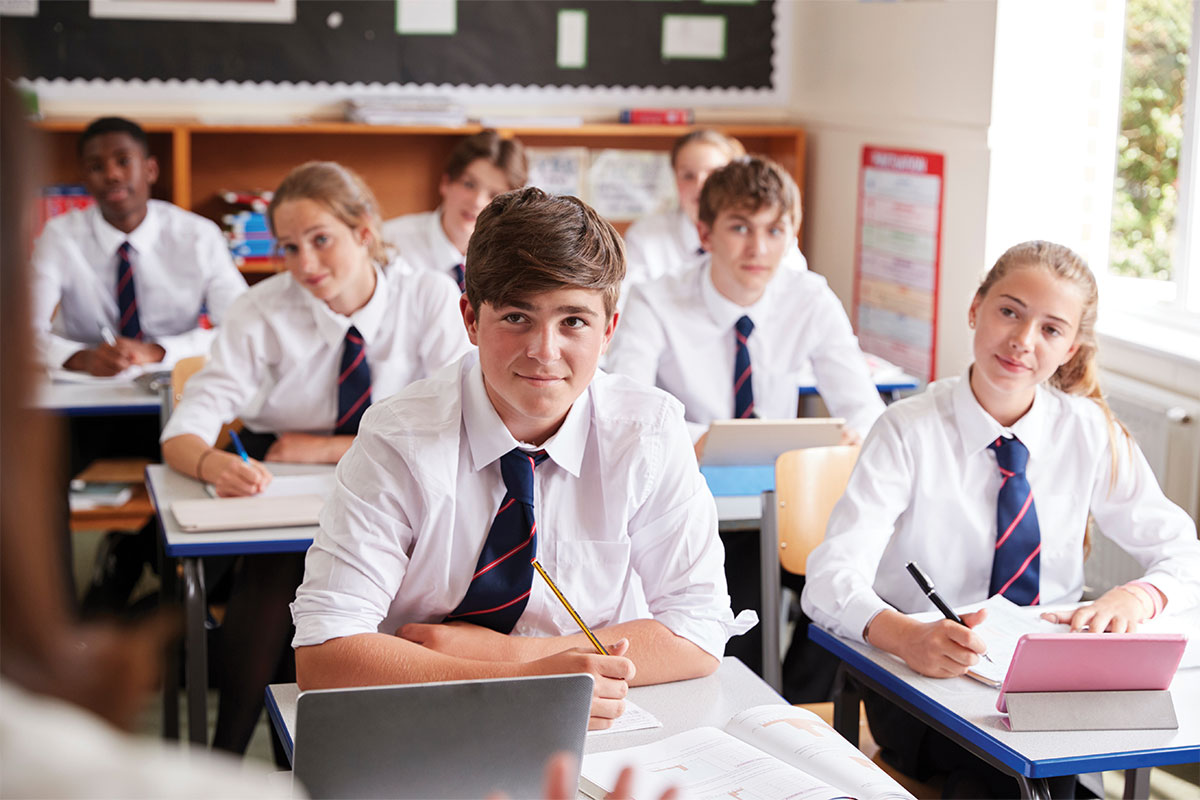
Private schools tend to have smaller classroom sizes and teachers offer more one-on-one time. Many private schools employ learning models that deviate from the standard lecture format.
Ewart, whose school teaches children from grades five to 12, says that what often attracts interested families are the smaller class sizes, “engaging learning” like project-based activities, and classes where students spend time outdoors.
Similarly, Amanda Carbury, the director of enrollment management and financial aid at Congressional School in Falls Church, said in an email that having smaller class sizes, flexible curricula, and individualized attention are some of the appealing factors at the school that has programs for infants through eighth grade.
“In a smaller learning environment, everyone can be seen and heard,” said Carbury.
Not to mention, 2022 data from the National Assessment of Educational Process (also known as The Nation’s Report Card) shows that private school students performed better than public school students in assessment tests in nearly every subject.

Understand Learning Styles
The very first thing to consider is how a student learns. To figure out a student’s learning style, it’s useful to take multiple perspectives into account: teachers, parents, coaches, and, of course, the student.
Ask: What are the subjects where the student excels? What assignments most excite them? Do they thrive with competition or prefer to work independently?
Educational consultants can help facilitate the process to gain a holistic understanding of how the student learns and help find schools with values that align.
“The goal is to really understand each child, and the child’s strengths and weaknesses, and how that child learns best,” says Mary Killay Lavayen, an educational consultant at Independent School Options.
This step can be important for children who are gifted learners or have learning differences like attention-deficit/hyperactivity disorder, dyslexia, or autism. Private schools may offer an environment where gifted and neurodiverse children thrive and get the support they need.
Narrow the Field
Next, it’s time to do some research on schools that will fit. There are many options in the Northern Virginia area that utilize different learning models and methodologies. First, narrow down a list based on black-and-white factors, such as distance from home, day- or boarding-school structure, and whether the school has a religious affiliation. Then, research the schools’ learning models and philosophies.
To understand the different options, think of them on a spectrum. On one end are the traditional schools where learning involves structured lectures, note-taking, and worksheets. On the other end are progressive schools that focus on inquiry, discussions, and project-based learning.
Students may fit in best at a totally traditional or a totally progressive school, or they may want to find an environment that utilizes elements of both.
Many schools host fall open houses or learning sessions to show prospective families what to expect, and they may talk one-on-one with the families of prospective applicants.
Don’t lose track of deadlines. Fall is the time to research schools, and many applications are due in December or January. Remember to keep track of how and when to apply for financial aid and get that application in as early as possible.

How Applying Differs
When it comes to the application process, each school will have its own method and requirements. Some schools require tests such as the Independent School Entrance Exam or the Secondary School Admissions Test that measure readiness for school.
But some schools have turned away from tests and now focus on other measures. They may consider school transcripts, teacher recommendations, or student interviews.
For example, the application at The Sycamore School includes transcripts, recent educational assessments, recent work samples, teacher recommendations, interviews with parents and students, then a shadow day at the school.
At Congressional School, the application involves transcripts, teacher recommendations, and a visit day for younger students. For middle school students, there are essays, writing samples, and questionnaires. Standardized testing is optional.
These often are ways for the school to understand whether a student would be a good fit in terms of learning style, personality, and attitude toward learning.
“The school’s going to be looking at ‘How did that child interact? How was that child in the classroom?’” Lavayen says.
Joining the Community
When a child switches from a public to a private school, there’s a transition period, not only academically but also socially.
To help with that transition, parents may want to set up meetings or play dates for their child with other families that live nearby and have children in the school or with private school students who share similar interests. At Congressional School, Carbury said the school counselor can set up a “buddy program” with students their age, as well as with some older students to help them get acclimated.
It also helps when parents are in contact with teachers and guidance counselors so everyone can work together to help the student adjust.
Keep in mind that the process doesn’t have to be scary or uncomfortable. “There’s a lot of anxiety. It’s easy to get caught up in that,” Lavayen says. “But we also really want the families that work with us to feel like this is something that’s joyful.”

Ways to Pay
One of the biggest practical differences between public and private schools is the cost to attend. The average annual tuition and fees for private K-12 schools in the United States is $23,839, according to the Education Data Initiative. Here are some potential ways to make the cost more manageable:
Institutional Aid: Many private schools offer need-based financial aid. Inquire about the process and apply as early as possible for the best chance at receiving aid.
Outside Sources: Organizations like Children’s Scholarship Fund and the Cooke Young Scholars Program offer merit- or need-based scholarships to help families afford private school. Emerging Scholars is an Arlington-based program that supplies STEAM instruction, private school application guidance, and tuition assistance for DMV-area students in fourth grade with significant financial need.
Savings Plans: For families planning ahead to send their children to private schools, educational savings plans can help set money aside efficiently. 529 Plans are tax-advantaged savings plans designed for education expenses and can be used for tuition at K–12 schools as well as colleges. Education Savings Accounts are tax-deferred trust accounts for educational expenses.
Feature image, stock.adobe.com
This story originally ran in our November issue. For more stories like this, subscribe to Northern Virginia Magazine.