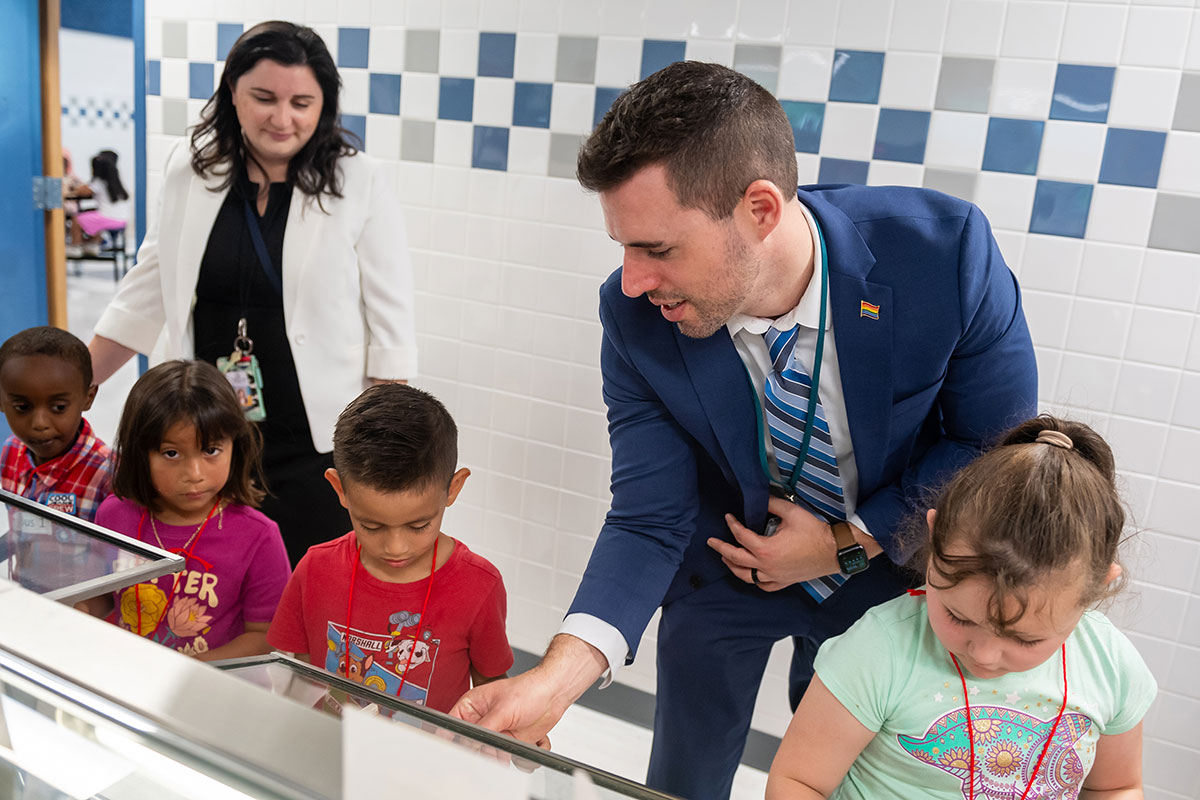
In Fairfax County, the school lunch menu has gotten a lot more interesting and a lot healthier. And the man behind the changes says he’s just getting started.
Shaun Sawko, the executive director of nutrition services in Fairfax County Public Schools, has been on the job for a little over three months, and he’s hit the ground running. The menu for the school system has become more focused on food made from scratch, and food that reflects the desire to represent all the various ethnic groups that Fairfax County students come from. The school system is adding plant-based proteins that include vegan, vegetarian, kosher, and Halal options.
So far, the schools have introduced black bean burgers and chicken Parmesan sandwiches, with chicken fajitas and black bean tacos coming up soon, Sawko says. They’ve also expanded salad bars to every school in the system, and are in the process of bringing them to all the county’s alternative high schools.
You can check out all the schools’ menus on the FCPS website.
“We’re trying to hit the ground running when it comes to scratch-made foods,” Sawko adds. “So we’re looking at what we have currently available to us, and what we can utilize to make it more inclusive and increase more variety to our students.”
Inclusive School Meals
Inclusivity and equity were two of the things Sawko was charged with when he took the job in Fairfax County, and he says food can do a lot to promote those values.
“If students are able to see themselves reflected into their school meals, they’re going to be more inclined to participate,” he says. “They’re also going to be more feeling that they’re more included into broader decisions, broader aspects of their school themselves.”
That includes input on new menu items. “Everything needs to be student-approved and student-tested, too.”
Toward that end, the department will hold its first student food show next month. The Future of FCPS Student Food Show will allow more than 200 students from 24 schools to sample more than 30 dishes, all made from scratch, including piccadillo, empanadas, tikka masala, and bulgogi.
“We have a whole bunch of different flavor profiles that we’ll be featuring,” Sawko says. “We’re immediately sampling those to our students, and they’re going to be giving us direct feedback. And whatever they rank as the highest, they’ll be able to see on their menus coming up.”
He adds, “We really want to showcase what the potential future of food within FCPS can be. It’s elevating student voice to be a more inclusive, more engaged food service operation.”
All these changes have required some new thinking. “I nixed a whole bunch of things” such as old-fashioned prepackaged sandwiches on his first procurement bid, Sawko remembers, “which probably gave a heart attack to my procurement team,” but Sawko credits senior management and his own team with being able to make it all work.
“They’re really amazing at taking an idea and making sure it’s executable,” he says of his staff.
Making school food from scratch takes more time and work, and Sawko says the school system is expanding workers’ hours to accommodate the extra labor and will look at increasing staff down the road if necessary.
‘That’s Where My Passion Lies’
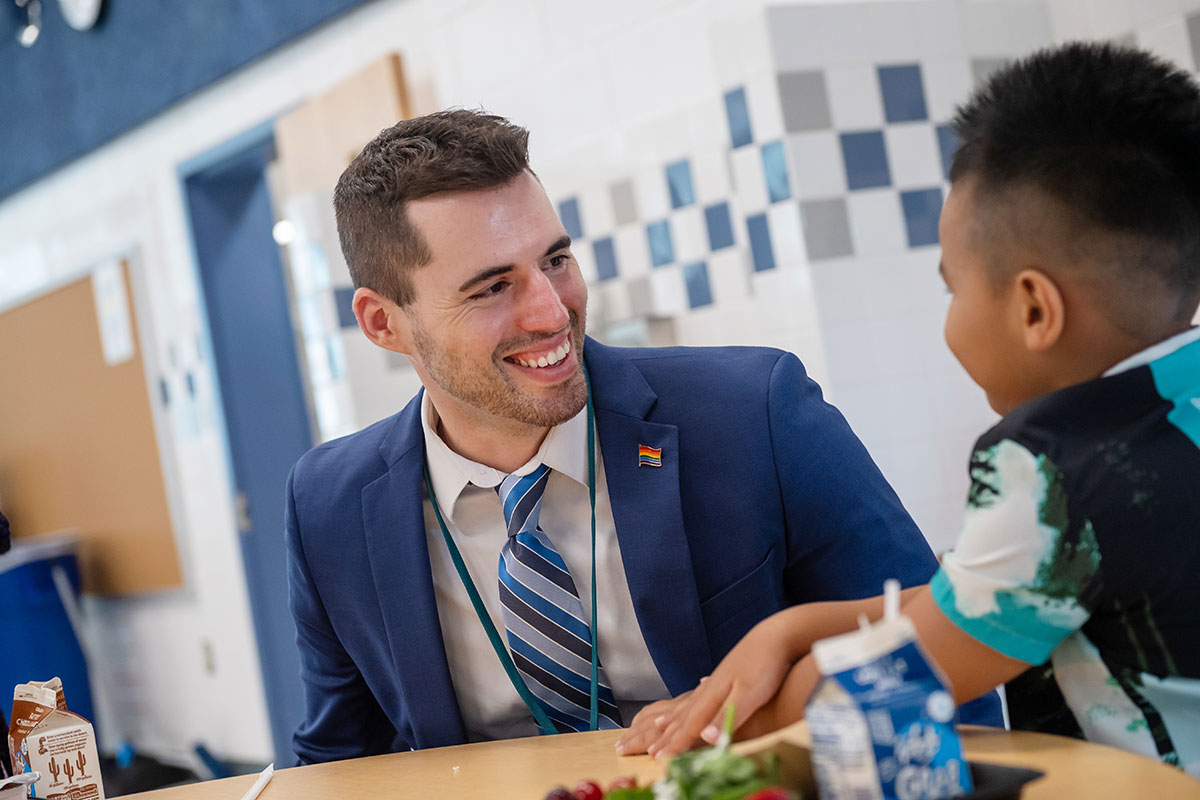
But it’s all worth it to Sawko, a dietitian by trade who comes to Fairfax County from similar jobs in DC and Montgomery County, Maryland, as well as in the Tampa, Florida, area. “My entire career has been around child nutrition,” he says. “That’s where my passion lies.”
That passion comes from two places. “Adults, we can make our own decisions,” Sawko says. “We already are aware of the impact of our decisions. Children are just — they’re so fragile. They’re so precious, and they’re so innocent when it comes to their decisions.”
And child nutrition pays off down the road: “If we provide those healthy habits … it’s really preventing a whole bunch of chronic diseases later on in life. I see this as a huge public health initiative, and we’re able to impact every single student in Fairfax County, by just this one program.”
About 35 percent of Fairfax County students meet the threshold for free and reduced meals, Sawko says.
“That’s one in three students who may not know where their next meal is coming from. It’s up to us to make sure that we’re actually able to provide them with food that they want and want to eat, and is going to be nutritious, so that if this is the last meal that they get for the day, we know that it’s going to be a good solid foundation for health too.”
Feature image courtesy Fairfax County Public Schools
For more stories like this, subscribe to Northern Virginia Magazine’s Education newsletter.