Being so close to the District, it’s easy to understand the patriotism that flows throughout the region. And it’s hard to find a place more patriotic than the recently opened National Museum of the United States Army.
The über-modern, Fort Belvoir-based National Museum of the United States Army opened in 2020. Using groundbreaking interactive experiences, the museum tells stories of extraordinary actions performed by ordinary American soldiers, military milestones, and events that shaped the course of our nation’s history. “We try to present the information in a variety of ways that will appeal to the different learning styles of our visitors,” says Susan Smullen, the museum’s public affairs officer.
The architecture is striking. The campus and building are stretched across 84 sprawling acres that can be visited via a publicly accessible base entrance in southern Fairfax County. Incandescent, stainless steel design represents the strength and resiliency of the U.S. Army while simultaneously acknowledging the service’s reflective nature.
Soldiers come from all walks of life. Near the entrance are 41 metal pylons poised in formation and etched with images of soldiers from all eras. Among others, you’ll find 1st Sgt. Chikara “Don” Oka, a Japanese American who translated intelligence documents during World War II, and Sgt. 1st Class Leigh Ann Hester, who received a Silver Star for her heroic actions during the Iraq War. A black granite wall — and corresponding flags hanging from the ceiling — lists the campaigns the Army has undertaken during its 247-year history.
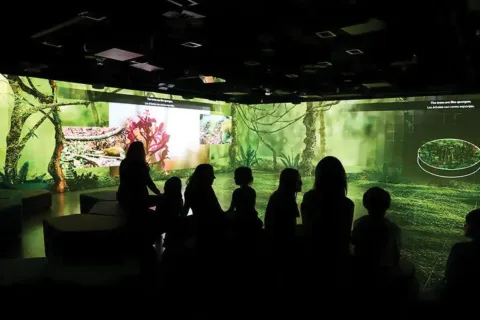
A film that will move you. The theater’s film Of Noble Deeds plays on a 300-degree screen that puts visitors directly into the action and may incite a few teary eyes. Significant battles have been re-created using sight, sound, and movement, with bombs bursting and voice-overs from real-life soldiers and their loved ones. “We’re trying to signal that without the soldier’s service and contribution, there is no Army,” notes Smullen.
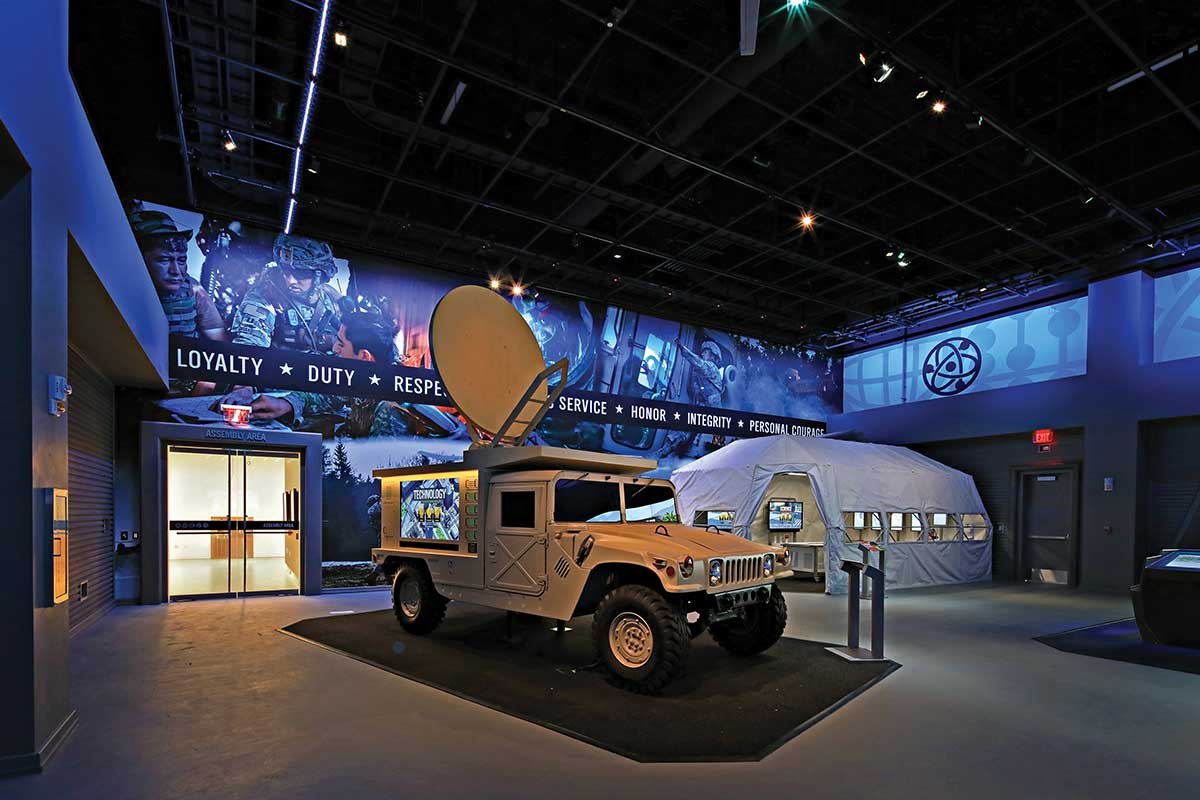
Museum galleries represent major campaigns in American history, beginning with the Revolutionary War. Eleven galleries depict the Army’s role throughout history. Galleries include the Nation Overseas, which features conflicts like World War I and the Cold War, and Global World, which focuses on World War II. The Changing World gallery chronicles engagements since 1990, and Army & Society explains the Army’s development of advanced technologies. Each gallery offers different interactive options — touch screens, motion-triggered visuals, and audio guides — for people who want to go deeper.
The Experiential Learning Center is a free space for GSTEM education. No other museum in the Washington region teaches geography, science, technology, engineering, and math using such engaging methods. Museum-goers can try out bridge-building techniques, practice dropping cargo through the bottom of a Chinook helicopter, and learn how to diagnose medical conditions at a field hospital.
Kids love Fort Discover. Children can participate in lessons from the Experiential Learning Center via age-appropriate play activities. Enjoy hearing plenty of laughter as they launch a rocket, discover how camouflage works, or climb an Army tower.
Volunteer docents have real relationships with the U.S. Army. Meet retired soldiers and family members who enthusiastically interpret the galleries alongside their own stories. “We’re really an American history museum told through the U.S. Army’s perspective,” explains Smullen. “Through the soldiers’ lives, through the soldier experience.”
This story originally ran in our October issue. For more stories like this, subscribe to our monthly magazine.