Do your pets get stressed when they’re home alone? Amy Pike, a veterinary behaviorist with Animal Behavior Wellness Center and one of our 2026 Top Vets, offers advice to help with separation anxiety.
What are key indicators of separation anxiety?
Obvious signs include coming home to destruction and house soiling (urination and defecation) when the pet is left alone. Other signs can include the pet acting nervous or anxious as you prepare to leave, or an over-exuberant greeting upon your return. A definitive diagnosis is made by video surveillance of the pet when left home alone. You may see the pet panting, pacing, or vocalizing. Additionally, anxious pets will often not eat or drink when their caregivers are away.
What are the best ways to address this problem?
Separation-related behaviors are best addressed through a combination of:
- Management (avoiding leaving the pet home alone)
- Mental stimulation (to tire the pet out especially before a departure, but also for enrichment purposes)
- Behavior modification (appropriately desensitizing and counter-conditioning the pet to being home alone)
- Anti-anxiety medication in some cases
Consulting a certified separation anxiety trainer or veterinary behaviorist achieves the highest success rates for overcoming this panic disorder.
How do you know how long is OK to leave a pet home alone?
A pet should not be left home alone longer than it can tolerate without showing signs of anxiety, and no longer than necessary for elimination (going to the bathroom). Every pet is an individual, so there is no true “standard” guidance.
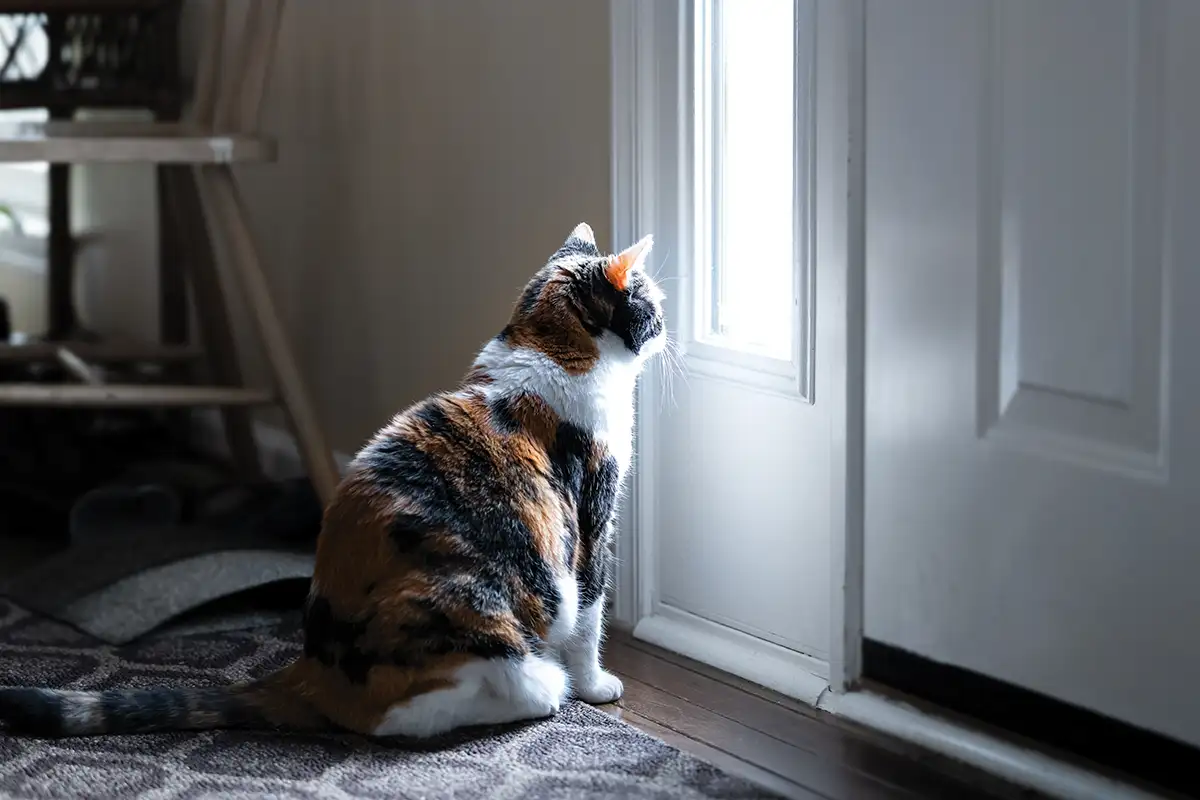
Feature image, stock.adobe.com
This story originally ran in our July issue. For more stories like this, subscribe to Northern Virginia Magazine.