By Dr. James A. Murphy, Division Chief, Child & Adolescent Psychiatry
Bullying is intimidation, whether that is verbal, physical, or emotional. It doesn’t always present as bruises and scars but can cause pain and trauma in children who experience it. In a world of social media, video games, and virtual communities, bullying can happen anywhere, not just in a school or social setting. It is crucial that parents can recognize when a child is being bullied, and that we teach kids to recognize what bullying is so we can have conversations about why it’s not OK and how they can address bullying.
Potential Signs of Emotional or Verbal Bullying
While there may not always be physical signs of bullying, there may be warning signs. Parents may notice their child is:
- Acting differently or seems anxious.
- Not eating or sleeping well or looks tired all the time.
- Experiencing mood swings or is more easily upset.
- Avoiding certain situations, like riding the bus or going to school.
- Withdrawn or not excited about doing the things usually enjoyed.
- Isolating in a bedroom.
- Suddenly experiencing emotional outbursts.
- Mirroring some of the bullying behaviors.
Potential Signs of Physical Bullying
While some kids might be a little more accident prone than others and have bumps and bruises, it’s important to recognize injuries that are severe and might indicate the child is being physically bullied. Marks — like fingerprints on their arms, legs, or torso, or a black eye — are an immediate cause for concern and need to be investigated.
There are also more subtle behaviors that may indicate a child is being bullied. If chidren repeatedly come home hungry, someone may be taking their lunch or lunch money and they’re too afraid to tell you. Some children may react by stealing money from home to replace the money taken from them, so they don’t have to tell their parents.
Talking to Your Child About Bullying
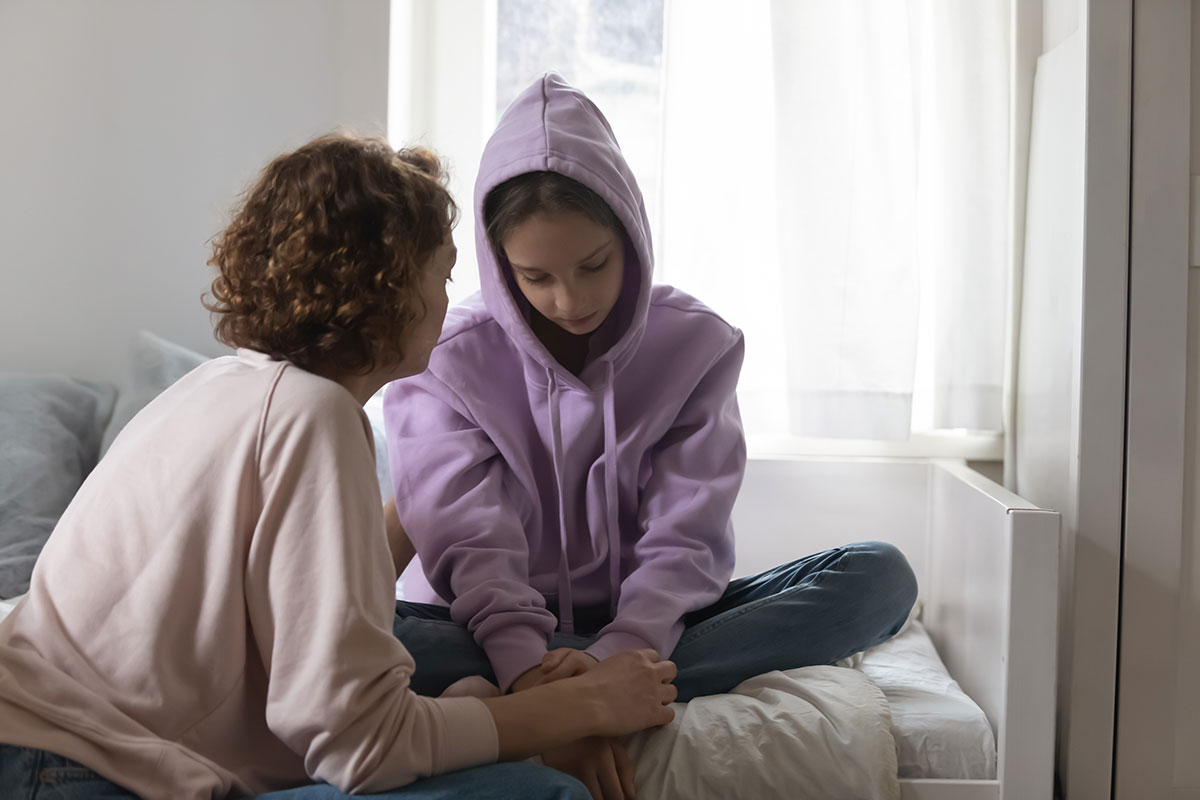
If you suspect your child is being bullied, it is important to take it seriously. Having a conversation right away is crucial in order to get a sense of what is going on and begin to work on solutions.
- Set aside private time for your discussion so there are no distractions.
- Try not to be too assertive to encourage your child to talk more readily. Teenagers may not feel as comfortable talking to you because they are afraid that someone may intervene or that it may make the situation worse, but you need to reassure them that you only want to protect them.
- Let your child know you’re concerned and want to understand what’s going on.
- Stay calm. Ask questions about the experience and listen.
- Provide support and talk about ways to prevent bullying from happening again.
- Let your kids know that if they’re being bullied or harassed — or see it happening to someone else — it’s important to talk to someone about it, whether it’s you, another adult (a teacher, school counselor, or family friend), or a sibling.
Once you get the conversation going, take as many mental notes as possible to get a sense of who is involved, what is happening, where it is happening and when, or how often it has been happening.
Addressing Bullying with Authorities
Every state has anti-bullying protections in place for kids and school districts are responsible for protecting students from bullying. If the bullying is happening at school, never confront the other child’s parents. It rarely ends well. Instead, set up a dedicated appointment with the principal and the school counselor to talk about your concerns, review the school policy, and make sure a concrete plan is put in place to work toward a resolution. Schedule a follow-up meeting to make sure progress is made.
When children are being bullied, it’s common for them to want to skip school. While it is easy to say yes, the best thing to do is to have them go, unless there is an issue of safety. It’s an important lesson for kids to learn that despite being bullied, they can bounce back and continue their lives.
If your children are in after-school programs, on sports teams, or involved in another activity where they are being bullied, talk to the adults who are responsible for the supervision and mentorship of the kids. Bring as much information as you can to express your concerns and insist on a plan to prevent bullying from happening again.
Cyberbullying and Social Media Platforms
Social media platforms are increasingly being held accountable for online bullying. Serious incidents can be reported to the police or even the FBI. You can also make a report directly to the specific social media platforms. There are many advocacy groups that are pushing state governments to implement policies and laws around social media use for minors.
Advocacy Groups Focused on Bullying
Here are several ways to get help:
- The federal government site: stopbullying.gov
- The Bullying Resource Center at the American Academy of Child and Adolescent Psychiatry;
- Inova Kellar Center: Northern Virginia’s premier behavioral health service for children and families has been providing comprehensive mental health services for over 30 years. Contact us to learn more about our services or call the team at 703-218-8500.
When adults respond immediately to concerns of bullying, they help send a message that it is not OK. Parents, educators, coaches, and other adults can help prevent bullying by initiating conversations and fostering an environment of support and guidance to prevent and safely stand up to bullying.
Feature image, stock.adobe.com
For more expert advice, subscribe to Northern Virginia Magazine’s Family newsletter.