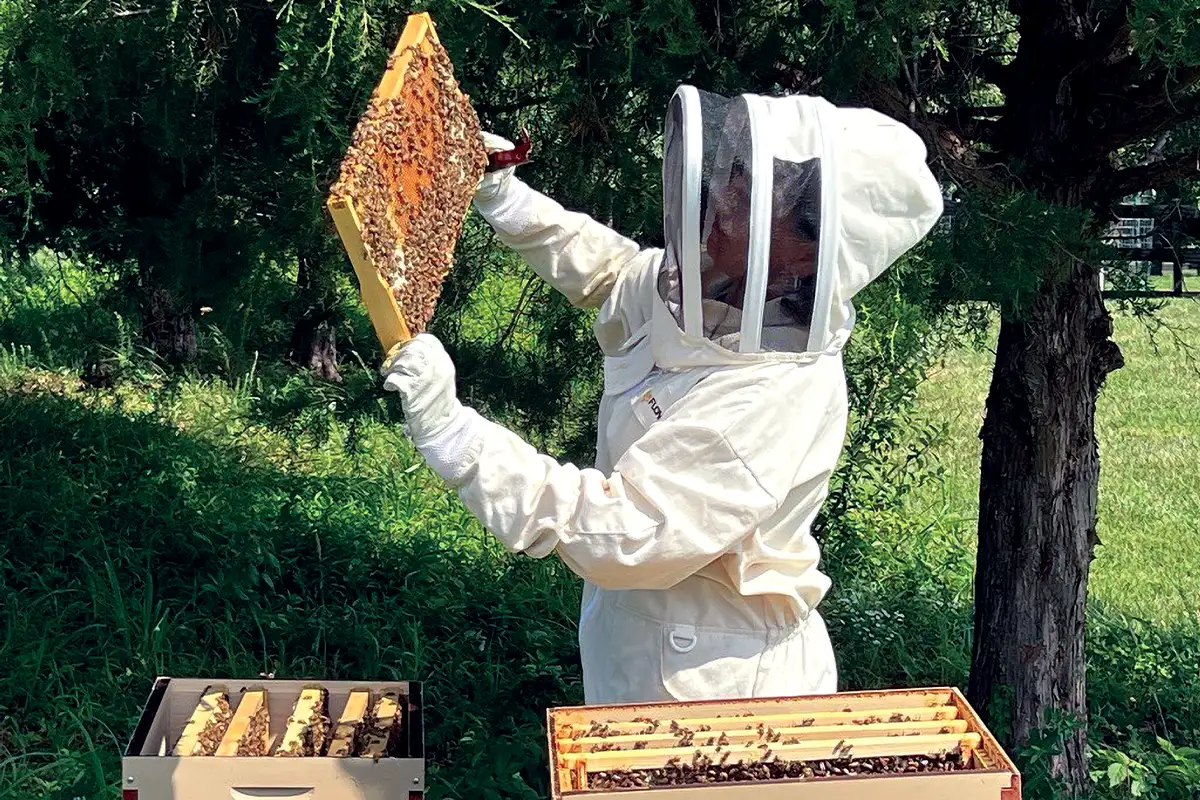
For Vanessa Escobar, the path from scientist to beekeeper wasn’t planned — it was personal. A National Oceanic and Atmospheric Administration (NOAA) scientist who served 18 years in the U.S. Army and worked with NASA, Escobar runs Beacon Hill Honey from her Leesburg home. But her work goes far beyond honey. It’s about healing.
She first turned to beekeeping while searching for ways to manage PTSD. She read about an Apache helicopter pilot who recovered from PTSD following a bad crash by listening to bees, and she was intrigued. But to pursue her curiosity, she had to overcome a lifelong fear.
“I was petrified of bees,” she says. “I used to run faster than anyone when I heard one.”
A trained hydrologist who once worked on satellite science and environmental data, Escobar approached beekeeping the way she approaches everything: through research. She studied for a year, earned certifications, and immersed herself in the science before installing her first hive. Within weeks, one hive turned into several — and something shifted.
“I felt present for the first time in so many years,” she says. “I felt grounded … I felt normal.”
Today, that transformation has become her mission. Escobar works with the Boulder Crest Foundation, a nonprofit focused on post-traumatic growth for veterans and first responders. There, she is helping develop a “Bee Well Garden,” introducing beekeeping as a form of nature-based therapy.
“It grounds you in a way that’s hard to explain until you experience it,” she says. “You can feel it, not just hear it.”
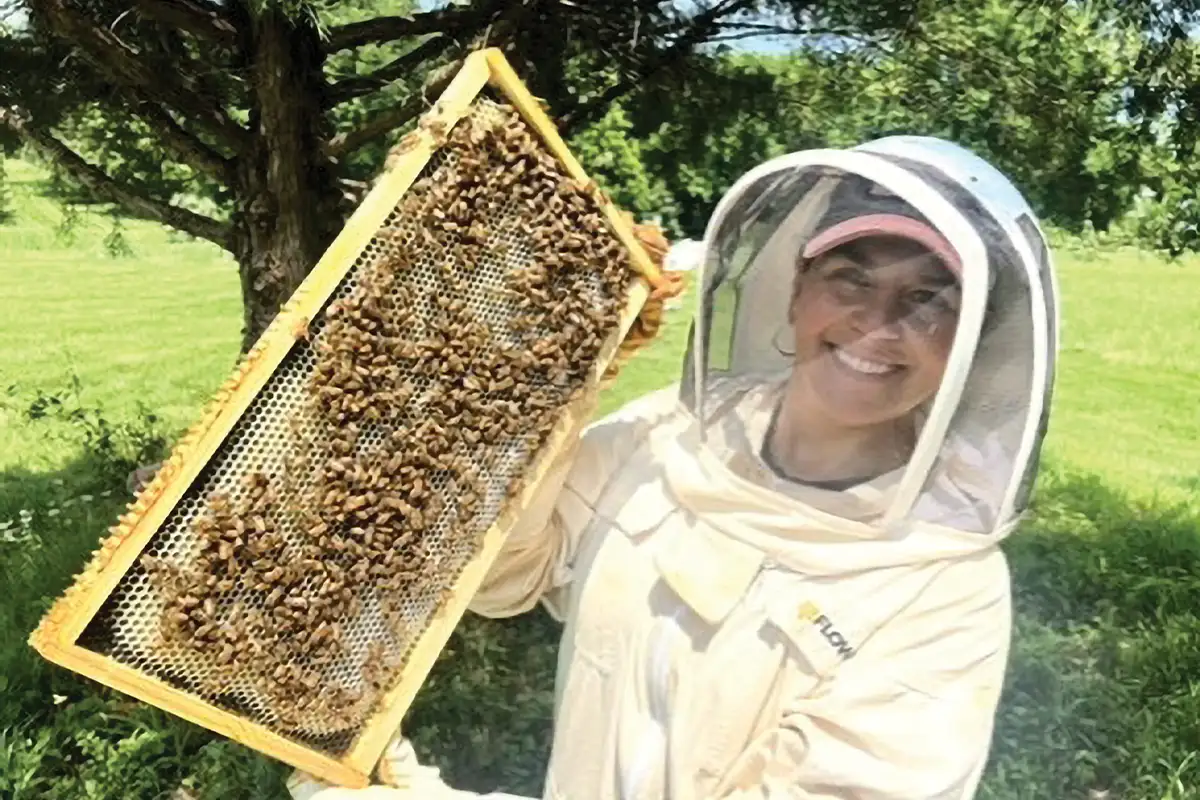
The gentle hum of honeybees has been linked to relaxation, helping to reduce stress hormones and activate the body’s natural calming response. Escobar describes it as “frequency work” — a combination of sound, scent, and rhythm that creates a deeply grounding experience.
“When I’m beekeeping, the world melts away,” she says. “I’m not thinking about stress. I’m just present.”
She also mentors through Hives for Heroes, part of a growing national movement using beekeeping to support veterans with PTSD.
“There’s a whole community out there,” she says. “People are just starting to discover it.”
At home in Leesburg, her husband and their two children, ages 10 and 9, are part of the journey.
The family has embraced honey as a lifestyle, using it in place of sugar, in skin care products Escobar makes herself, and even as part of her mother’s care routine. Raw honey, she notes, contains natural enzymes and has been studied for its potential health benefits, from soothing allergies to supporting healing.
Through Beacon Hill Honey, Escobar builds apiaries, educates the community, and hosts hands-on experiences designed to demystify bees and invite people into a slower, more intentional way of being.
“It’s the sound, the scent, the rhythm — it all works together,” Escobar says. “The hum of the hive is incredibly calming.”
She also partners with local organizations and fundraises to expand access, particularly for veterans and first responders.
“We are very quick to look to pharmaceuticals before we look to nature,” she says. “But nature has always been our first resource.”
For Escobar, the lesson is simple but powerful. “It doesn’t have to be PTSD; it could be stress or anxiety,” she says. “Nature gives us a way to reset.”
Feature image courtesy Vanessa Escobar
This story originally ran in our June issue. For more stories like this, subscribe to Northern Virginia Magazine.