If the walls of Bias Studios could talk, they would sing. And it would sound amazing.
Hiding next to a firehouse in Springfield, this unassuming one-story brick building has been quietly cranking out hit after hit since 1980. That’s when Bob and Gloria Dawson, along with Bill McElroy, took a leap of faith on an empty shell of a space and transformed it into one of the country’s most sought-after recording studios. Armed with $15,000 and the expertise of legendary Los Angeles acoustician Tom Hidley, they crafted an interior that would make any sound engineer swoon.
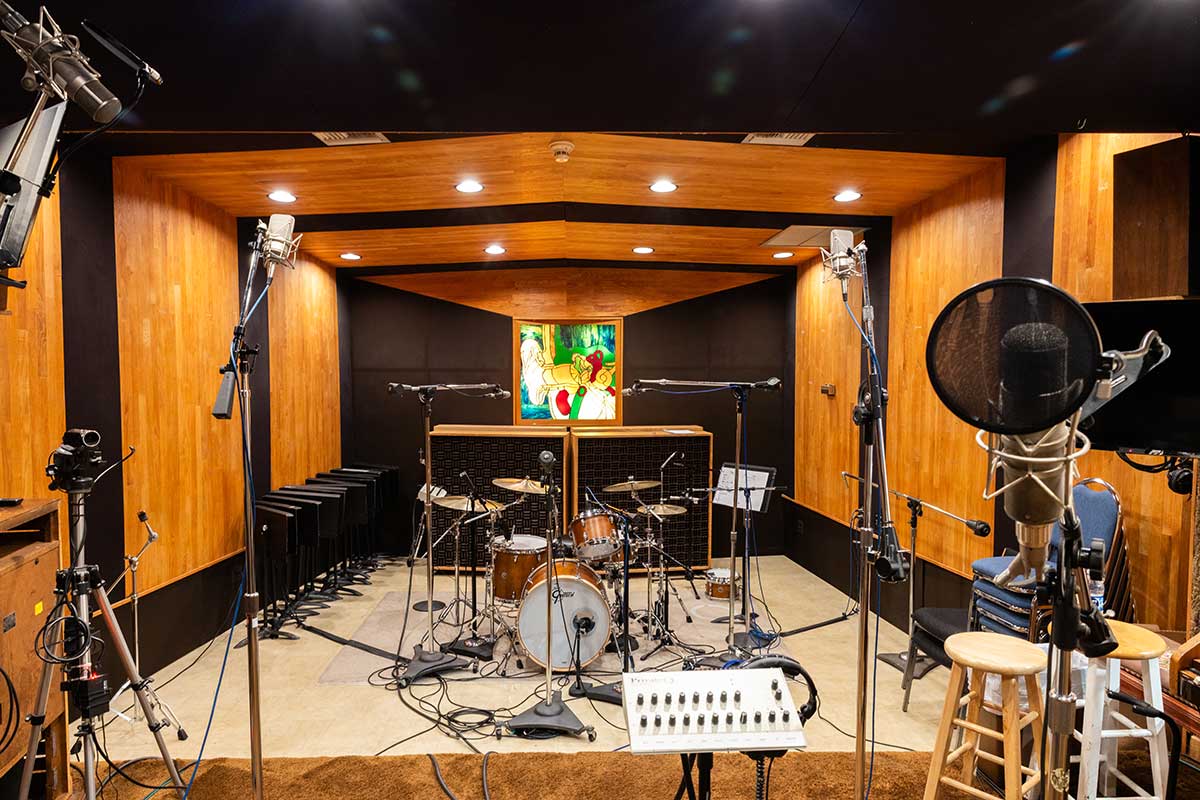
“There are no parallel surfaces,” Bob points out during a tour of Studio A, one of three recording spaces. A boxy square or rectangle would produce an echo. Not so here. The funhouse-like interior is all wood, stone, and Portuguese cork tree bark. “The guy was really detailed,” Dawson says of Hidley. The lush carpet also dampens stray sounds.
Dawson himself did the grunt work of soldering every connection, as well as shouldering the frustrations that came with building inspectors who weren’t quite sure of what they were inspecting.
Once completed, word soon got around in the music community that this was a go-to recording studio.
Prince sauntered through the Bias doors, recording an early version of “Baby I’m a Star,” which became a hit in the 1984 film Purple Rain. Ariana Grande worked on her 2019 “Monopoly” duet with Victoria Monét at Bias. Chuck Brown’s go-go classic “Bustin’ Loose,” Shawn Colvin’s “Fat City,” and the Dave Matthews Band’s 1993 debut album were all touched by the Dawsons at Bias.
The Seldom Scene, Tony Rice, Gil Scott-Heron, Tom Principato, Tom Paxton, Sweet Honey in the Rock, Eddie from Ohio, The Nighthawks, and Doc Watson all have music that was recorded, produced, engineered, and/or mixed at Bias. The Dawsons have run out of room on the lobby walls to display all of the prominent CD and album covers they have helped create.
Sound Advice
“You know you’re in good hands and you don’t have to micromanage the engineering aspect of it, which is a huge load off your shoulders and a huge relief,” says Nils Lofgren, the lead guitarist for Bruce Springsteen and the E Street Band since 1984.
Lofgren began working with Bob Dawson at Bias’ earliest iterations in the early 1970s, first in a basement in suburban Maryland and later at a small office building in Falls Church. Lofgren, who also tours with Neil Young and Crazy Horse, a band he joined when he was 18, has worked in studios around the world. Face the Music, a 10-CD box set with 169 tracks, reflects just that. (Included are Lofgren’s Bias-recorded jingles familiar to locals of a certain age for Jhoon Rhee’s tae kwon do schools and the ditty “Bullets Fever” for Washington’s NBA team. In 1997, the team was rebranded as the Wizards.)
“I don’t talk frequencies and hertz, but you can tell Bob, ‘The middle’s kind of muddy in the high end of it,’ and he knows what to do. You can say, ‘The bass needs to be a little richer in the low end without being boomy,’ and he knows what that means. Not every engineer can do that. And Bob’s great at it and always has been,” Lofgren says.
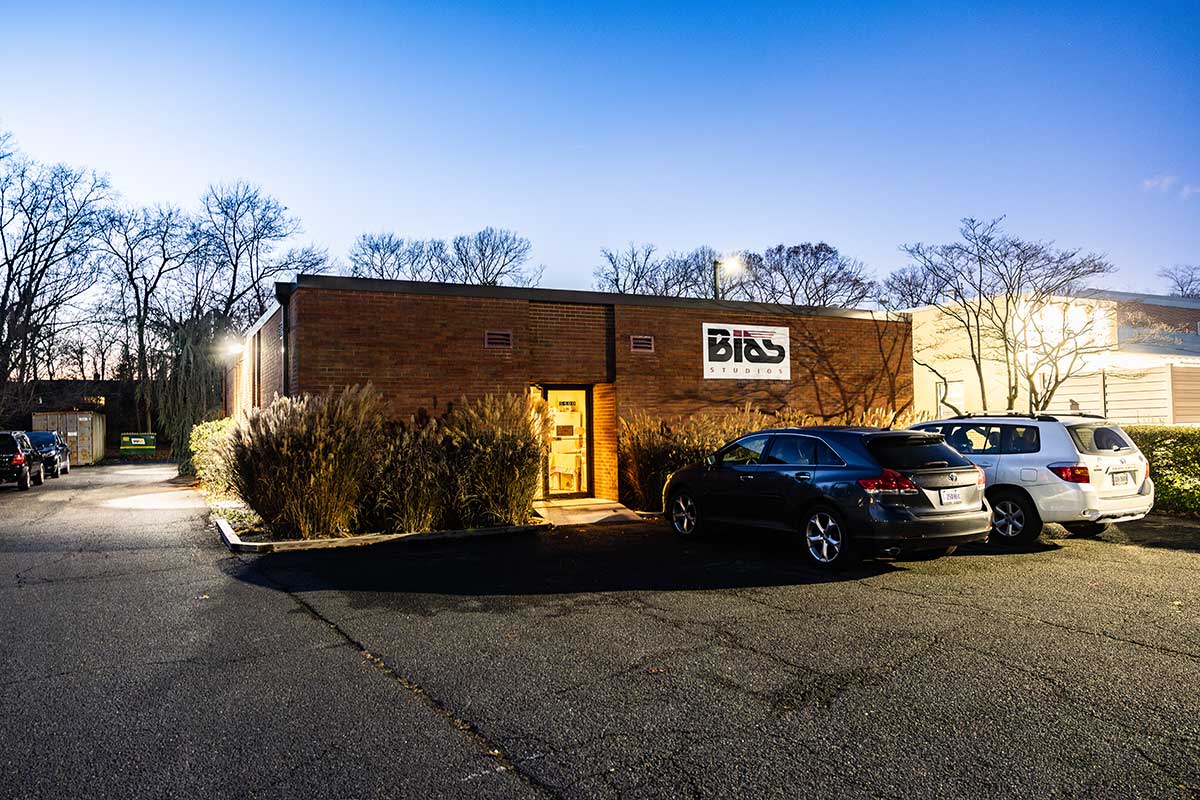
“I’m huge fans of Bob and Gloria,” he adds. “I was so happy when [Gloria] started working there, and then they started dating, and they got married and they had kids and now they have grandkids, and they’re still sharing their gifts and running the great Bias Studios.”
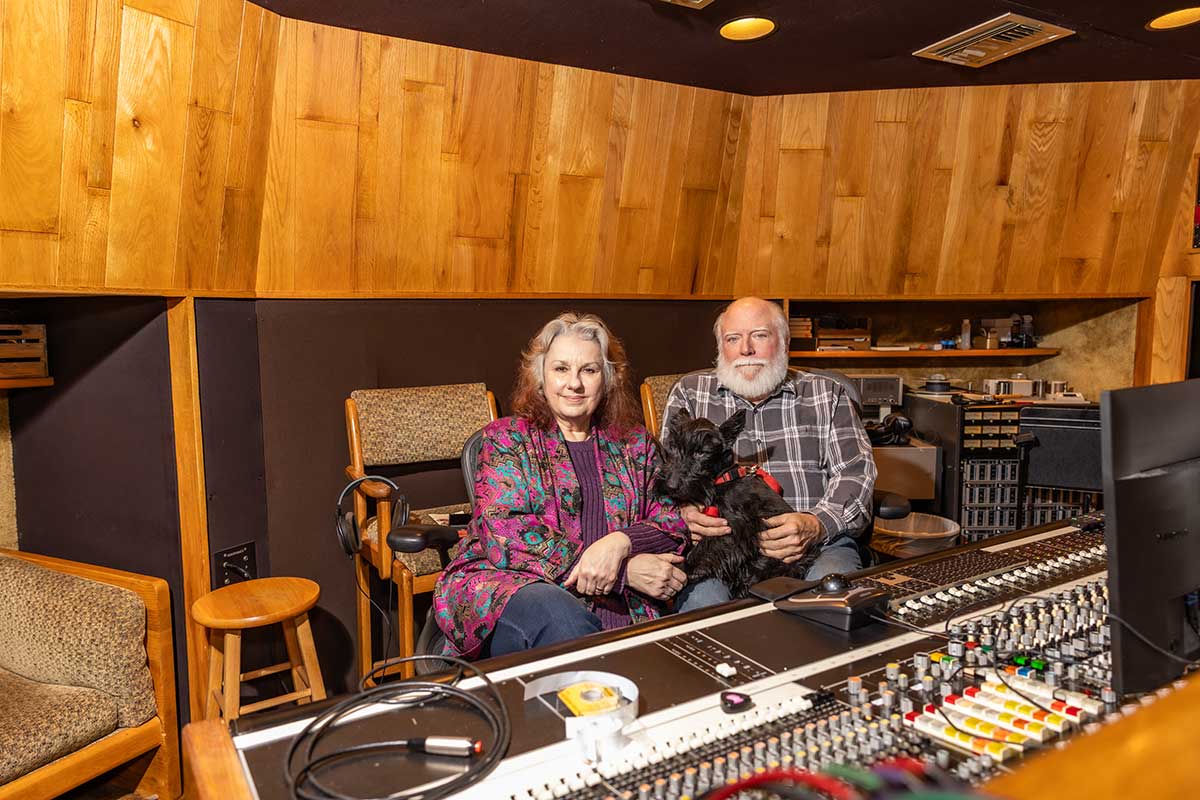
Gloria is the studio manager and de facto president of the company; Bob’s business card says “chief engineer/producer.” He’s also chairman of the board — most likely because someone has to be identified as such — but he’d rather be turning knobs in Studio A on the custom 40-input API Gold Seal recording console, one of only three in the world (the other two are in Japan) than shuffling executive paperwork.
“I love them both! They are like peanut butter and jelly,” singer-songwriter Mary Ann Redmond says of the Dawsons. “I’ve always referred to Bob as Bob ‘God’s Ears’ Dawson. And Gloria is the sweetest lady on the planet.”
Making the Magic Happen
Redmond, a Great Falls resident, has recorded or worked on several of her soulful albums at Bias over the years. In fact, it’s where she polished the music for her recent award-winning children’s book, Boopable!
She recalls a session around 2000 when country star Mary Chapin Carpenter was in the studio at the same time.
“We were hanging out a little bit, and she said, ‘I wrote this song called “Alone But Not Lonely,”’ and she played it for me, and I just said, ‘Wow, can I record that?’ And she said yes,” Redmond says.
Chapin Carpenter played guitar on the session while her guitarist, the late John Jennings, sat in.
“And Bob is in [the studio] with God’s ears making it perfect,” Redmond says of the finished song. It’s included on Redmond’s 2000 album, Here I Am.
Jennings recorded 11 top-10 singles with Chapin Carpenter, most of them recorded at Bias, including songs on the quadruple platinum 1992 album Come On Come On, which sold 4 million copies.
It was Jennings who introduced Chapin Carpenter to the Dawsons. “The first time I ever worked there it was like being welcomed into a beautiful, loving family that operated not only a world-class studio but also knew how to have a blast doing it,” Chapin Carpenter says by email.
After the runaway success of her first two albums, Hometown Girl and State of the Heart, both recorded at Bias, Chapin Carpenter could have worked at better-known studios in Nashville or Los Angeles. But she came back to Bias for her next five albums.
“I made a lot of records there with Bob and their wonderful staff,” she says, “and all these years later, it’s always a pleasure and a thrill to walk into the lobby and see all of the hundreds of gorgeous recordings on the wall that have been made within those studios. The DC area has a treasure in its midst with Bias Studios.”
Another Bias regular who understands the studio’s magic is Jon Carroll, a multi-instrumentalist who found early fame with the Starland Vocal Band. The group’s song “Afternoon Delight” won two Grammys in 1977.
In the early ’80s Carroll says he was in the studio with a piano riff stuck in his head. “I stopped at the piano and played it so I could remember it, and Bob hollered out, ‘Hey man, what’s that?’ I said it was a riff going through my head, and he said, ‘That’s a good riff, man. Keep that. Do something with that.’”
The short burst of notes became the song “Get Closer,” the title track to Linda Ronstadt’s 1982 album. Carroll played keyboards on the song, which reached No. 29 on the Billboard Hot 100 chart. “That riff was invented right there,” Carroll says.
While Bob’s engineering skills put the studio in a class of its own, Carroll says, “The center of the whole thing is Gloria. You want to get there early so you can have a visit with Gloria. She’s the greatest.”
A Winning Duo
Not only do the artists recording at Bias win Grammys, but so do the Dawsons. Bob won in 2003 for his work on Bon Appétit! Musical Food Fun, a children’s album by local stalwarts Cathy Fink and Marcy Marxer, and for best Latin jazz album in 2008 for the Afro Bop Alliance’s Caribbean Jazz Project. He’s also been nominated multiple times, including five times for his work with longtime folk music mainstay John McCutcheon, another Bias regular.
“The thing I’m struck by lately are the people who are coming back,” Bob says. “People from the ’80s — Trouble Funk, Mary Ann Redmond, John McCutcheon. It’s just heartening to work with people and have them go elsewhere for a while and then come back.”
“We do quite a bit of hip-hop and rap,” says Gloria. “We work with The Kennedy Center. We did something for NPR recently. If a big artist is coming through the area on tour and they need something, they’ll come in. That’s how we got Prince and Ariana Grande.”
Big bands fly in from Germany to take advantage of Bob’s expertise in recording that specialized genre. “I’ve had to have done at least 50 big band records,” Bob says. “The last one was 103,” Gloria says, to which Bob admits, “As usual, Gloria’s right.”
A 1988 newspaper story quoted Gloria as saying the rate to rent the studio was $100 an hour. And now?
“It’s $120. That’s Bob’s rate,” Gloria says. “With our youngest engineers in Studio B, it’s $80 to $100 an hour.” Setting up your gear in the room is $30 an hour. Bob’s clock starts when he puts on the headphones behind the control board. But musicians rarely rent a studio for an hour. “If you’re going to book it 24/7 for a week or two at a time, you get a significant discount,” says Lofgren. “You don’t want to tear down and set up every day.”
Bias’ widespread good reputation is generated by word of mouth, Gloria says, “Mostly because we are just awful at advertising.”
The Dawsons have been together for 42 years and have two grown children and seven grandchildren. Daughter Emily lives in Suffolk, Virginia, and son John is director of operations and plays saxophone in the United States Air Force Academy Band in Colorado.
Gloria is a youthful 72, and Bob is an energetic 77, so they are both at an age when retirement is not out of the question. But musicians need not worry.
“I don’t think he’s ever going to retire,” Gloria says. So neither will she. “It’s a package deal,” she quips. “I have to keep him in line.”
Feature image by Michael Butcher
This story originally ran in our February Issue. For more stories like this, subscribe to Northern Virginia Magazine.