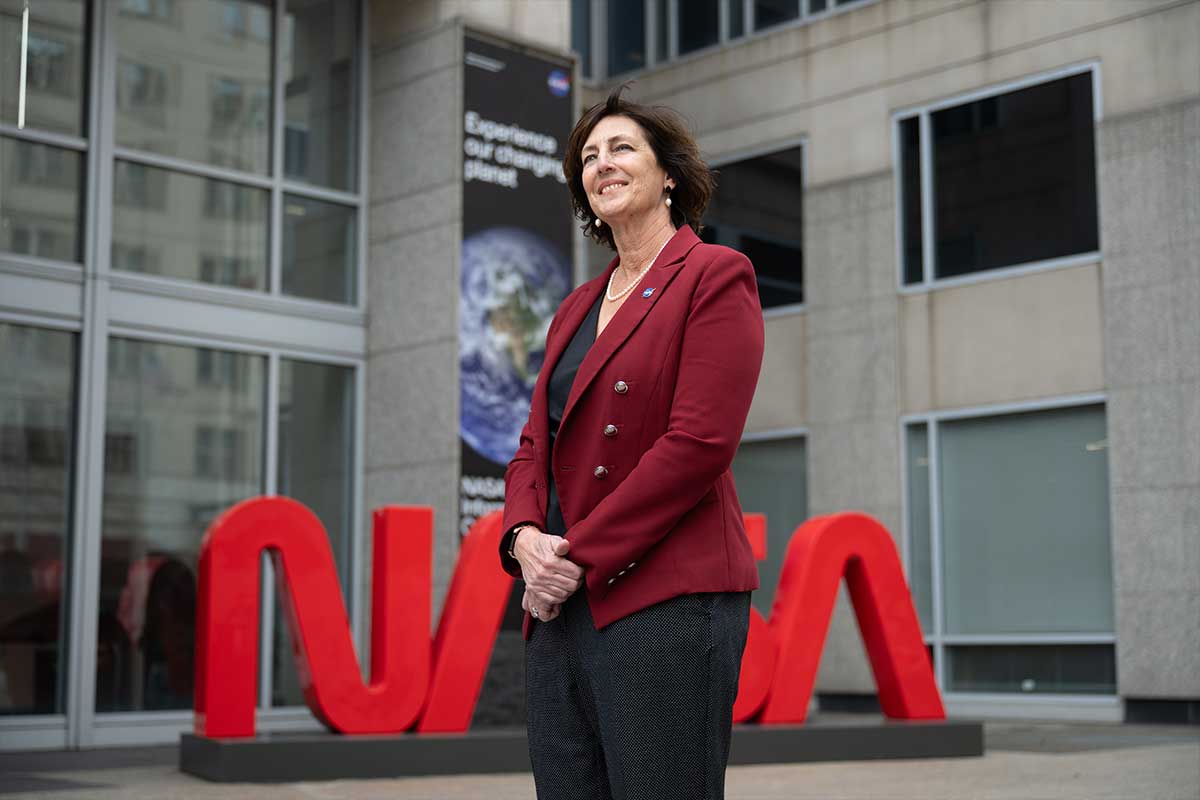
In 2012, when Robyn Gatens considered working with the International Space Station at NASA Headquarters in Washington, DC, she had one hesitation.
“I looked around and I thought, ‘Oh, my gosh, I don’t know if I’m going to fit in here,’” she says. “Everybody is Type A; everybody has this real political savviness about them. I just don’t know.”
But after 27 years at NASA’s Marshall Space Flight Center in Huntsville, Alabama, working on ISS life support systems, the chemical engineer was supremely qualified to lead NASA’s efforts. Her hesitation didn’t last long.
“It just took time. I didn’t have to become Type A. I didn’t have to take on that sort of persona,” she says. “I can be myself and be in this role.”
The role is a big one: Director of the International Space Station in the Space Operations Mission Directorate at NASA Headquarters — and Gatens is the first woman to hold the position. Add to that her work as a senior expert for environmental control, life support, crew health, and performance systems. But the Georgia Tech–educated engineer and mother of two handles the extraordinary pressure with grace.
“She is absolutely unflappable in every situation,” says Jacob Keaton, NASA senior policy adviser for the ISS and colleague of Gatens’ for over a decade. “She’s just very, very, very even-keeled, and this is a very stressful business.”
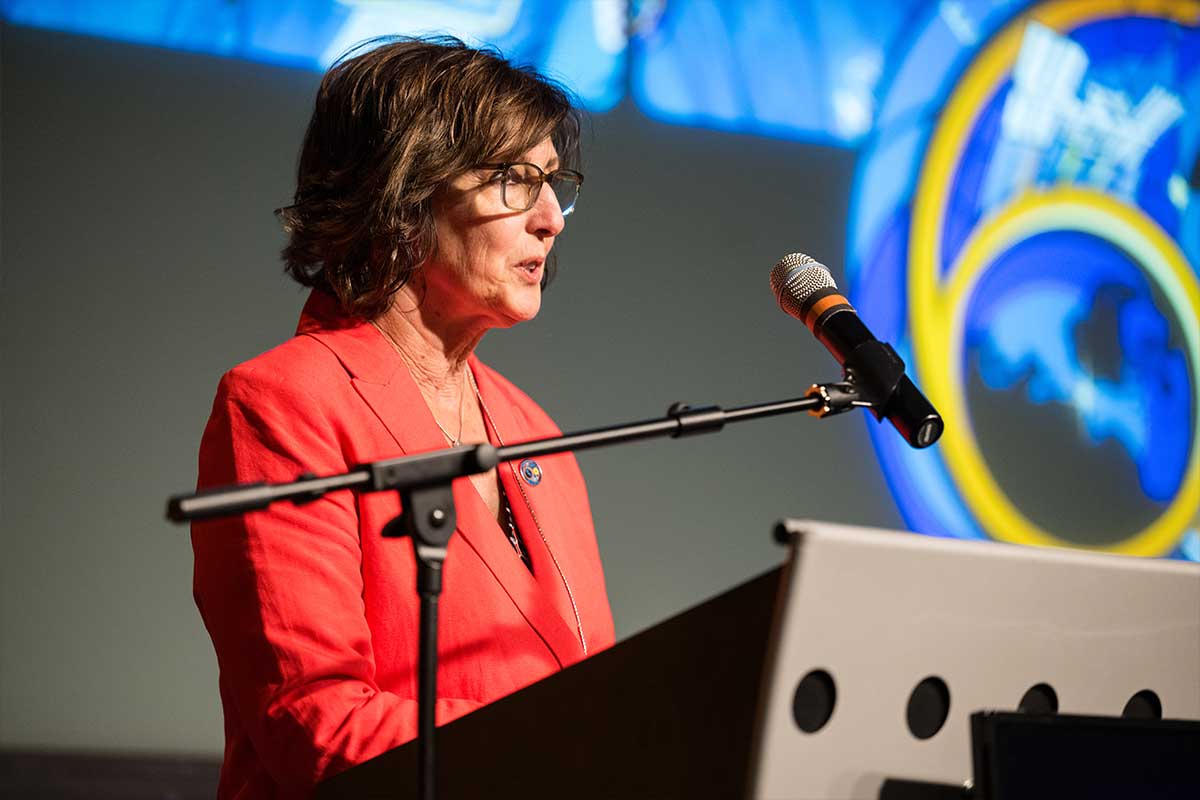
The Ashburn resident is NASA’s big-picture person for the ISS, leading strategy, policy, budget, integration, and stakeholder engagement. She casts vision and lobbies NASA’s interests to leaders on Capitol Hill and at the White House, while being the face for the agency at launches of crew and cargo to the station and speaking engagements.
Looking to 2030
“A lot of what I’m working on now is, how are we going to transition from this International Space Station, that we’re in our third decade, over to commercial space stations after we retire the space station in 2030?” Gatens says. “How is that going to work?”
The trick for NASA, she says, will be to create a seamless, uninterrupted transition to commercially owned and operated platforms when it hands over the keys in 2030. The International Space Station Program has had a continuous human presence in the laboratory 254 miles above Earth for over two decades, delivering invaluable data scientifically, educationally, and technologically through its experiments.
“We’re very involved with these partners who are developing future capabilities,” she says, noting NASA will move its resources and energy to exploration of the moon and Mars, and become a customer for the commercial space station.
Culture Shift
Gatens’ prestigious NASA career started 39 years ago, but the winner of NASA’s Outstanding Leadership and Exceptional Achievement Medals never considered a career at the esteemed agency.
“I didn’t always want to work for NASA or be an astronaut,” she says. “It wasn’t even on my radar.”
As a recent college graduate who experienced a 5-to-1 ratio of men to women in Georgia Tech’s engineering program, she chose to join her fiancé, who worked at NASA’s Marshall Space Flight Center in Huntsville. He passed her résumé on to his boss, who hired her sight unseen.
It was the mid-1980s, and Gatens experienced her fair share of misogyny in NASA’s propulsion department during the early design stage of the ISS.
“A peer of mine who was a male got opportunities that I did not get, and I was pretty frustrated with that culture,” she says.
Gatens transferred to the life support systems group, which is where her career took a meteoric rise. Though shooting for the stars professionally, she struggled balancing parenting young children with being an engineer. Guilt and juggling responsibilities became constants, and outdated expectations didn’t help.
“When I was pregnant with my first child, I was down in the test facility with these old codgers, and one of them said, ‘How are you going to deal with the loss of income when your child is born?’”
Gatens explained that she would return to her job three months after having her baby. The man was flabbergasted.
“He said, ‘Oh! That’s what’s wrong with the world today!’” she says. “I wish I could find that guy now and tell him, you know, my kids turned out all right.”
As a high-achieving woman in a male-dominated industry, Gatens came to terms with what success looked like for her.
“I came up in a generation where you were told you could have it all,” she says. “You can have it all, but you can’t do it all perfectly all the time.”
Gatens noted there were very few women in leadership positions when she started at NASA, but now there are many.
“It’s great to see that culture shift,” she says.
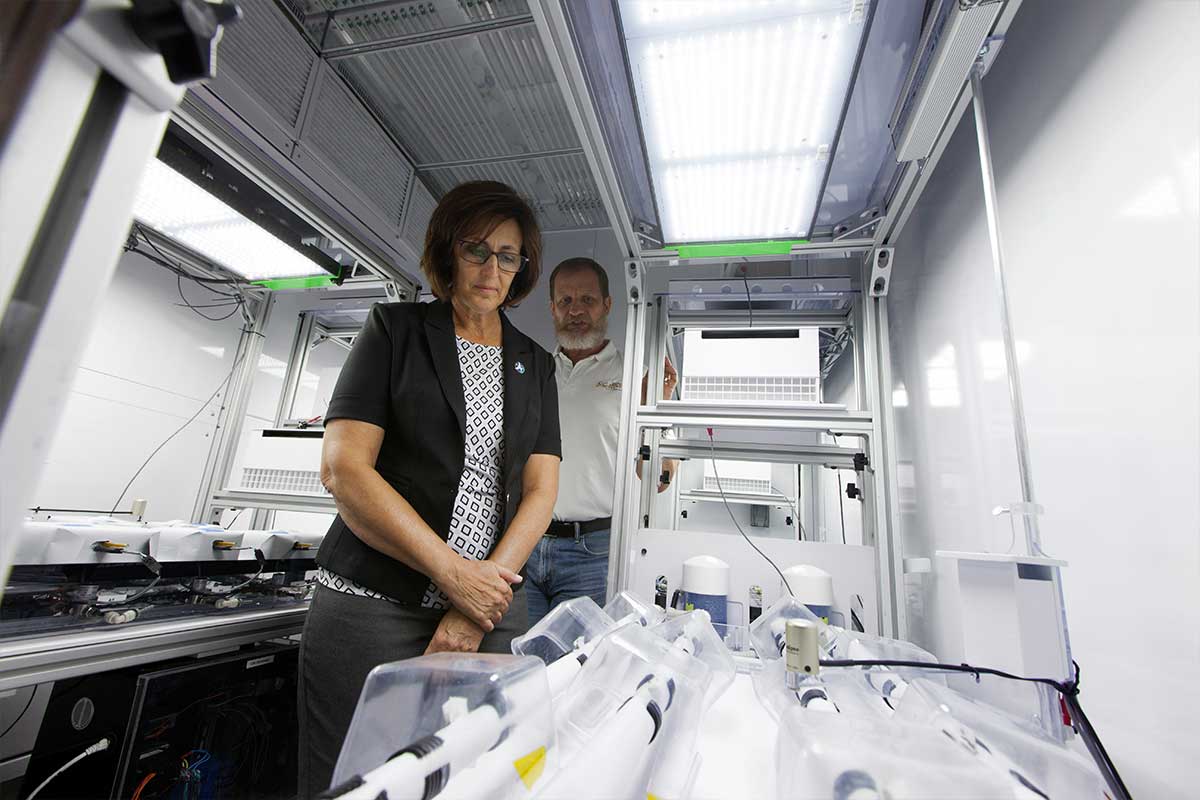
In her almost four decades at NASA, the trailblazer has championed life support and habitation systems for spaceflight. She’s the mastermind behind making sure astronauts have water, a comfortable cabin temperature, and oxygen for breathing. (Fun fact shared by Gatens: 98 percent of all water in the space station is recycled. “The urine, the sweat, the humidity … we recycle all of that through our water recovery system.”) She is an inspiration within the agency by holding various leadership positions, including manager for the Orion spacecraft crew support and thermal systems.
“She really is a role model; when she started at NASA it was an all-boys club, for sure,” Keaton says. “She just kept moving up the ranks and she was always willing to do the next challenge. … She’s doing a fantastic job.”
Time for Wine (and Cheese)
When she’s not traveling internationally representing the ISS, downtime is cherished by this mover and shaker. Gatens and her husband, Dennis Gatens, whom she married in 2013, own a boat docked at The Wharf, and she also likes to delve into her creative side.
“My husband and I make wine. I started making cheese during COVID,” she says. “I guess it’s the chemical engineer in me that likes that kind of thing.”
The novice cheesemaker whips up charcuterie classics, like cheddar, gruyère, havarti, and mozzarella, but says her camembert is “probably the best.”
And there’s no better complement to homemade cheese than handcrafted vino. Gatens notes she and Dennis create about 30 bottles of chardonnay, rosé, and red blends in a batch. Someday, when she has more free time, she’d like to learn more about winemaking.
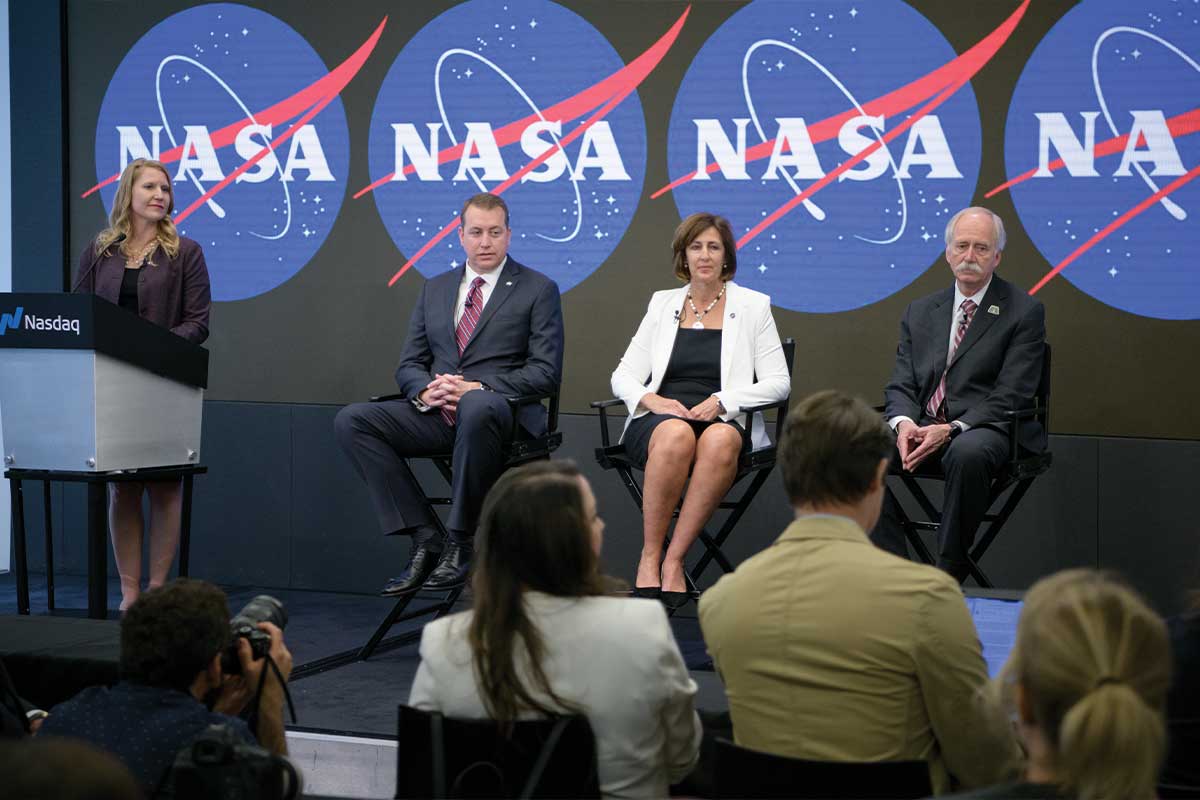
An Eye to the Future
Gatens turns 60 this year and says she has no intention of slowing down. With so much to do before the 2030 ISS changeover, she’s only picked up her pace. As her tenure at NASA continues, Gatens is far more interested in solidifying the legacy of the International Space Station than her own.
“I’m really passionate about the legacy of the space station — the research and the science, all the benefits that we’re finding from that for life here on Earth,” Gatens says.
On her watch, NASA’s ISS program will continue to foster international partnerships, pursue educational opportunities, and advance efforts for long-term moon exploration and visits to Mars. Gatens says human missions to the moon and Mars are the next challenge on the space agency’s to-do list.
As far as Gatens’ impact, colleagues sing her praises.
“Dealing with the rest of NASA, dealing with Congress, dealing with the White House — it’s important stuff — those are the people who enable all this to happen,” says Keaton. “She sometimes will be the quietest person in the room, but her voice is always heard.”
Feature image by Michael Butcher
This story originally ran in our June issue. For more stories like this, subscribe to Northern Virginia Magazine.