By David Hodes
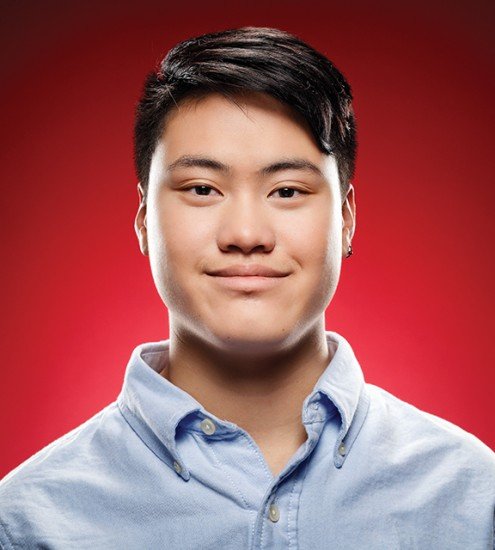
Evie Priestman, a 16-year-old boy going to school at Wakefield High School, was born as a girl. He recently came out publicly and talked about being a transgender teen in the area and, with the support of the school and his mother, Sarah Priestman, has changed his life into one of acceptance by others just by being the person he always knew he was.
NVM: You wrote an editorial for the New York Times where you said that you see the person you want to be, and you know you will run into bumps on in the road, but that now you are free. What do you mean by that?
Evie Priestman: I feel at this moment in my life that I am accepted by everyone. I could get a job offer and they don’t respect who I am and won’t accept me. But I can’t predict the future.
NVM: Was there one moment when you realized that you had to live the way you were born to live, that you had to change your appearance and be who you really were?
EP: I was very confused about whether I was a boy or girl in elementary school and middle school. It wasn’t just the physical appearance. It was mentally what I wanted to do, to either fully transition or to stay like a tomboy as a female. I decided that my life would be more positive if I decided to pursue this realization that I had in my heart. So the summer before freshman year, I went and met with a bunch of transgender youth and gender nonconforming youth and saw how positive their lives were after they came out and started transitioning. I said to myself that is what I want to do. I want to transition now because I could feel how all of these other youth feel about their lives. Their lives are more positive and they are into more activities because they are themselves.
NVM: You are saying that you are free to be the gender that you feel instead of the gender that someone else decided you should be.
EP: People like boxes. They want to put jocks in boxes. Jocks are school athletes who are rough and tough. And then you have nerds that are in another box that are smart, wear glasses, play video games. So people have boxes in their heads for straight, for gay and trans. And when that person asks who you are, they are trying to figure out what box that you go in inside their head.
NVM: Now that you have put yourself out there as a sort of role model for others confused about gender identity and transitioning, what advice would you have for them?
EP: I know that some youth felt the way I did about coming out. You feel that it’s not normal. That you have to feel that the gender that you were born with is not the gender that you feel. And I feel that what they need to hear is that everyone is different. So you can feel as different as you want and that nothing is “normal.” Because everyone is different and everyone has different personalities, different likes and tastes. So why should your gender not be accepted? I was brought up to accept myself, and that being different was good. The reason why I am out and that I want other people to know is because of the way I was raised to tell people who you are. I feel that if I was not sharing my story, if I stayed stealth and hid who I am, that would be not supporting the community.
( January 2016 )