
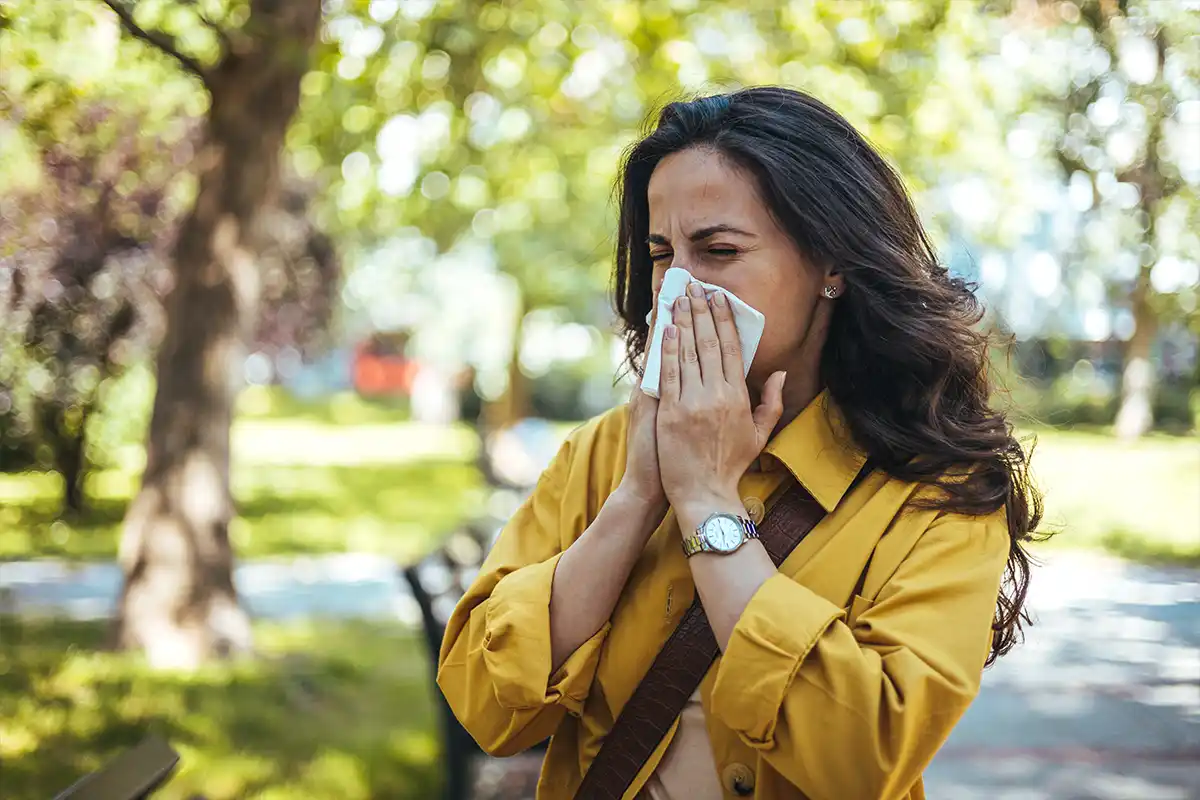
Warm weather is on its way, and along with that comes seasonal allergies.
While peak allergy season in Northern Virginia is usually mid-April to late May, many have already begun experiencing symptoms such as headaches, cough, congestion, sneezing, and itchy, watery eyes.
“Seasonal allergies started a few weeks ago when the warmer weather came in,” says Stephanie Schutter, a nurse practitioner with Sentara Family & Internal Medicine Physicians in Woodbridge. “And we have had a lot of windy weather, too, which can trigger symptoms.”
Determining the Common Culprits
Both pollen and dust or dander are top causes for spring allergies.
“Tree pollen is the primary culprit currently, followed by grass pollens in late May, early June,” Schutter says.
Being proactive with treatment is the best way to tackle allergy symptoms head on.
“I advise my known allergy sufferers to start their medications now in preparation for April so that they can get ahead of symptoms and minimize the impact on their daily activities,” Schutter says.
Allergies or a Virus?
It can be important to fully understand the signs and symptoms of seasonal allergies in order to treat them quickly and find relief. Because some of the symptoms are also common among lingering winter viruses, it can sometimes be tricky to determine whether you have an illness or simply allergies.
One way to help narrow it down is by taking your temperature. Keep in mind that allergies typically will not cause a high fever, notes Schutter.
Symptoms that involve the eyes can be another differentiating factor.
“With allergies, your eyes may be itchy, watery, or red,” Schutter says. “With a cold, however, you typically do not get eye symptoms.”
And mucus can also be a tell-tale sign. Mucus with allergies is usually clear and watery, Schutter notes, whereas mucus from a cold is generally thicker and discolored.
Consider the Timeframe
There is also a difference in the amount of time that the symptoms will last.
“Without treatment, allergy symptoms can last weeks or months,” Schutter says. “Cold/viral symptoms typically go away in about 10 days.”
If you experience wheezing, fever, and/or acute worsening, you should seek medical attention right away, Schutter advises. “If you are not sure what you are experiencing or are concerned, contact your provider. That is what we are here for.”
Combat Seasonal Allergies
Schutter provides these tips for how to fight seasonal allergies:
- The most important thing to combat allergies is to avoid triggers. Limit outdoor activities, especially in the early morning when pollen counts are higher, and keep windows and doors closed — particularly on windy days.
- Shower and change your clothes after being outside.
- Use a high efficiency particulate air (HEPA) filter for your vacuum.
- Consider allergy medications to treat symptoms. Nasal steroids are generally the most effective medication for people with allergic rhinitis symptoms. Antihistamines also can offer additional benefits.
- When severe and recurrent, patients often require immunotherapy. See your doctor or urgent care center if you have any questions or concerns.
Feature image, stock.adobe.com